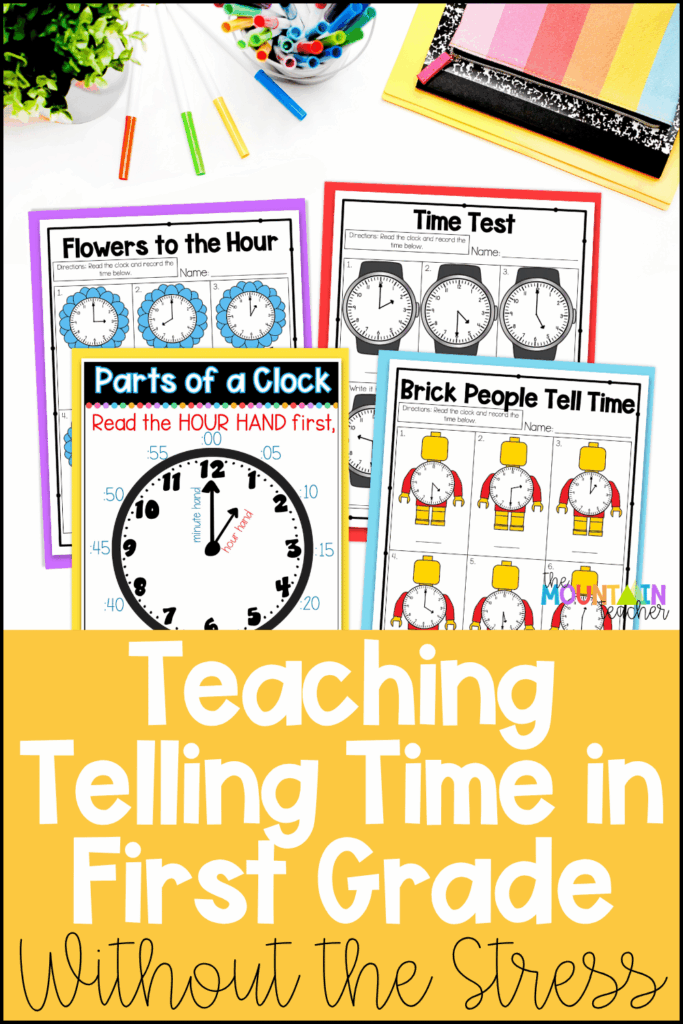
Have you ever noticed how first graders are fascinated by clocks? They’ll point to the hands, ask what the numbers mean, or shout out the wrong time with pure confidence. Teaching telling time in first grade can be full of energy and curiosity, but it can also feel tricky. Students are juggling new vocabulary, analog and digital clocks, and understanding hours, half hours, and even quarters. Without a clear structure, lessons can get overwhelming for both teachers and students! Today, we’re uncovering the secret to teaching telling time effectively. Come along for all my best tips!
Why Telling Time Can Be Tricky for First Graders
Time might feel simple to adults, but for young learners, it involves several new concepts at once. Students must understand the parts of a clock, including the hour hand, minute hand, face, and numbers, while also connecting these parts to the concepts of hours, half hours, and quarters. They’re also learning to read digital clocks and match them to analog clocks, which adds another layer of complexity.
Without a clear sequence, students can get confused, mix up the hands, or guess times instead of understanding them.
The secret to teaching time effectively? Having the right materials in place ensures that lessons are focused, interactive, and easy to follow. With a solid plan and hands-on practice, your students can master telling time, and you can teach with confidence. Let’s dive into a step-by-step approach for first-grade telling time that actually works!
Step One: Introduce the Parts of a Clock
The best place to start is with the clock itself. Use an anchor chart or a large demonstration clock to introduce vocabulary. In first grade, you’ll want to include the hour hand, minute hand, face, and numbers. Make it hands-on by letting students move the hands themselves. You can use a large teaching clock or mini clocks for each student as you teach.
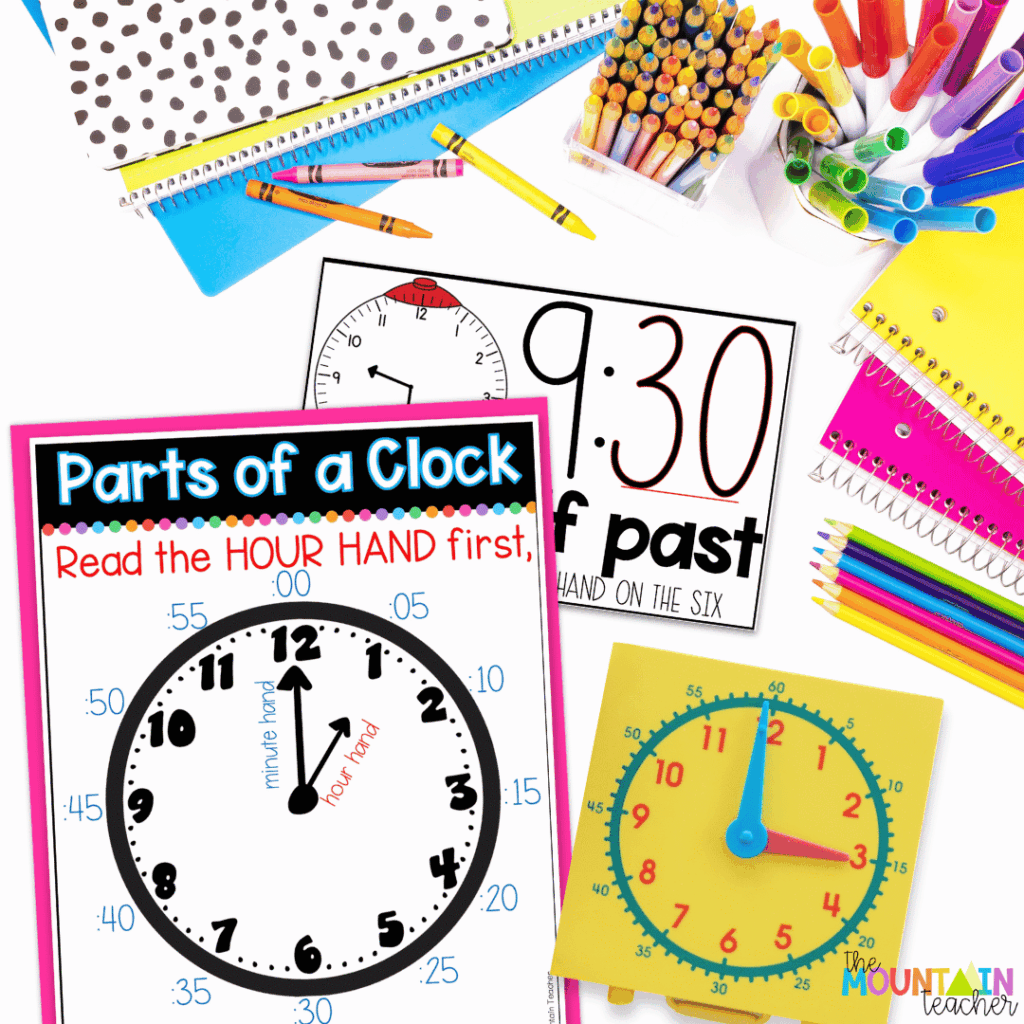
Teacher Tip: Ask students to show you the hour hand on their mini clocks while you show it on the large class clock. Encourage them to explain what each hand does in their own words. This reinforces vocabulary and understanding at the same time.
Step Two: Telling Time to the Hour
Once students know the parts of the clock, focus on telling time to the hour. Model this skill step by step using both analog and digital clocks. Show how the hour hand points to the number and how that relates to written and digital forms.
Teacher Tip: Use classroom objects or routines for practice. For example, “It’s 9 o’clock. What do we do at this time?” Linking time to daily routines makes the skill meaningful and memorable.
Step Three: Telling Time to the Half Hour
After students are comfortable with hours, introduce half hours. Demonstrate how the minute hand moves to the six and explain that it represents 30 minutes past the hour. Combine analog and digital clocks in your lessons so students see the connection.
Teacher Tip: Give students practice with “What time is it?” questions throughout the day. Quick check-ins during transitions or snack time help reinforce learning naturally.
Step Four: Challenge with the Quarter Hour
Once students have mastered hours and half hours, extend to quarter hours. This builds on their understanding of halves and reinforces number sense as they count minutes by fives. Keep lessons interactive and scaffolded for best results. Students can move hands on their mini clocks while matching written and digital times.
Teacher Tip: Use small group games where students read times aloud or set their clocks to match a time you call out. The hands-on element keeps practice engaging and concrete.
Make Teaching Telling Time Stress-Free
Teaching time doesn’t have to feel chaotic. When students start by learning clock parts, progress to hours, then half hours, and finally tackle quarter hours, the concept becomes manageable and meaningful.
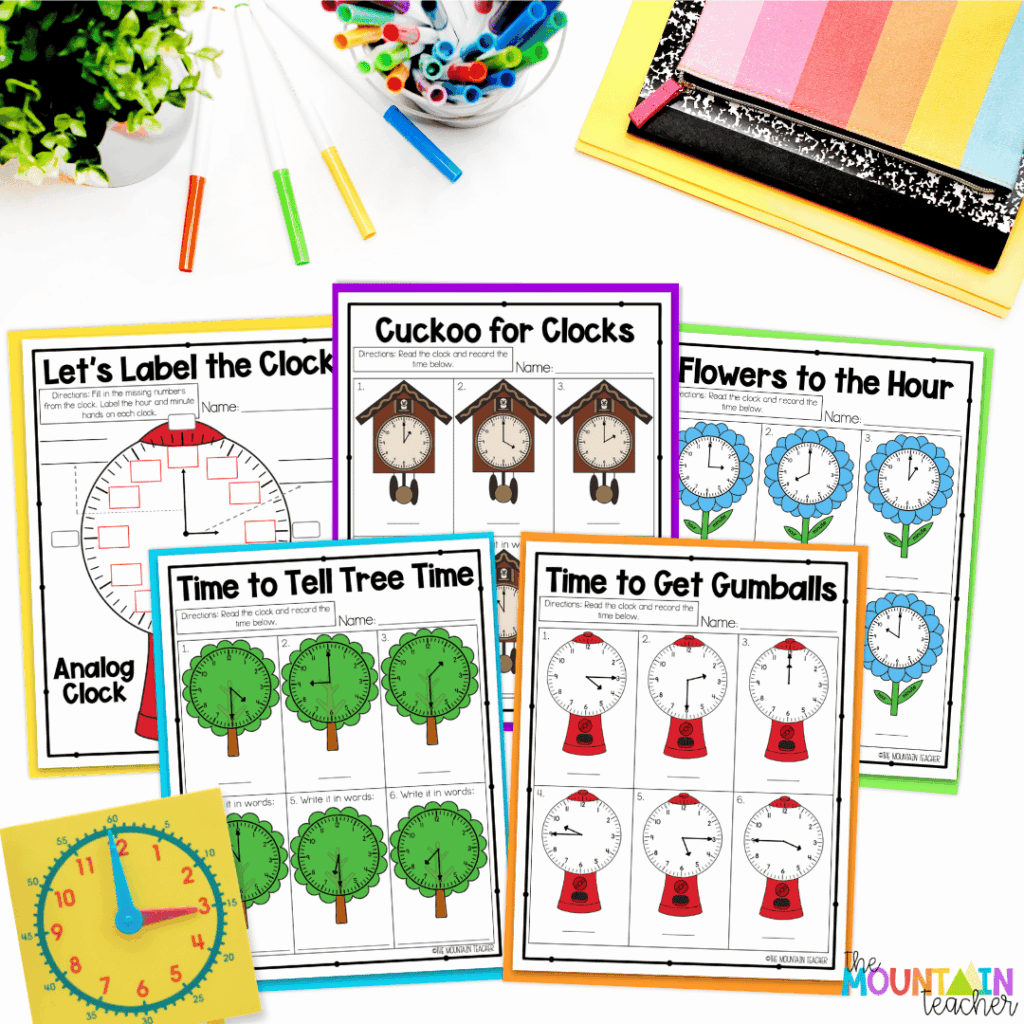
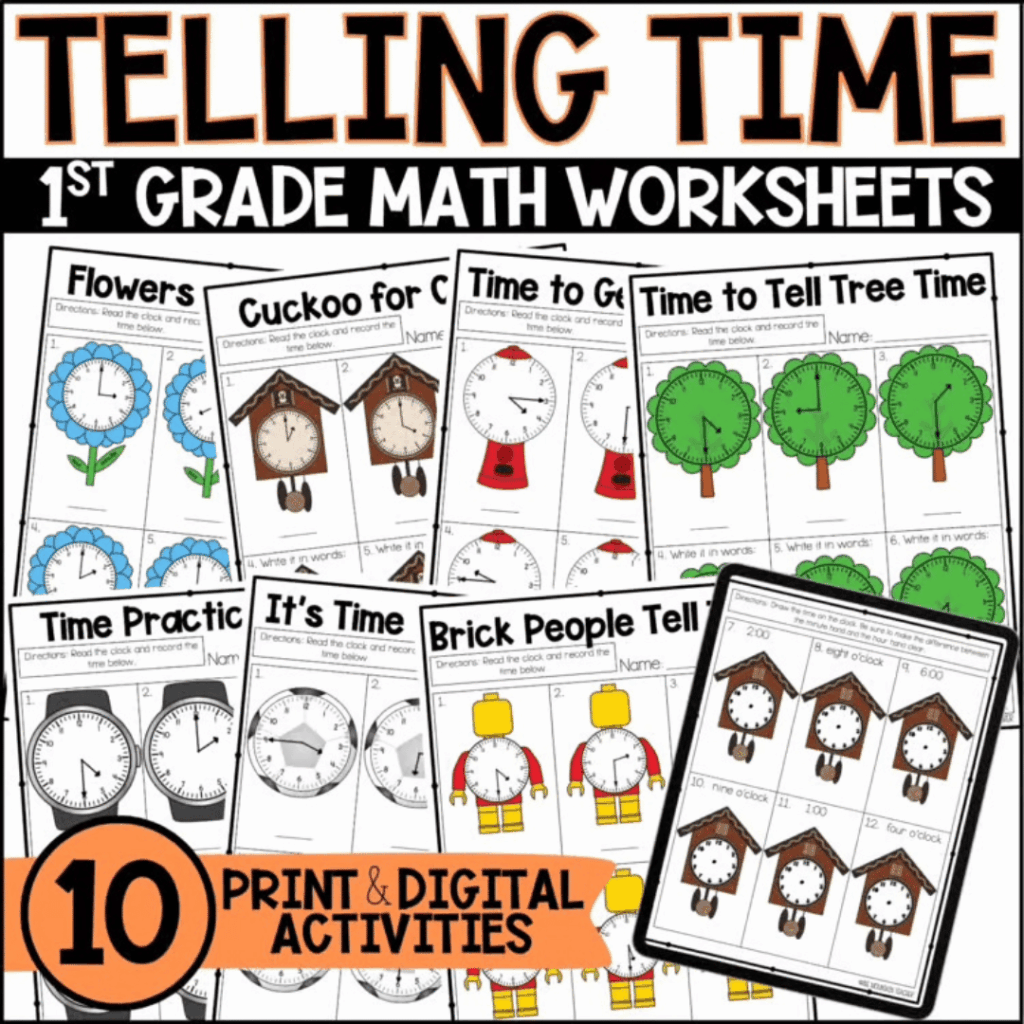
That’s why I love using the lessons, worksheets, and activities in my First Grade Telling Time Unit. Students can practice analog and digital clocks, telling time to the hour, half hour, and even quarter hour. Hands-on practice with mini clocks, paired with worksheets, keeps learning interactive and engaging. Students can trace, draw, match, and write time, making abstract concepts concrete.
Inside this unit, you’ll find everything you need ready to go:
- 10+ days of worksheets and activities
- 1 telling time quiz
- Pre/post tests
- 10+ day teaching guide
- Anchor charts & visuals
- Answer keys
- Digital worksheets and assessments
- 20-page Easel activity set
Lessons are focused, engaging, and designed to help students gain confidence in telling time, step by step. Aside from the worksheets and daily lessons, you’ll also find anchor charts and a teaching guide to make it easier than ever to work through all the skills and concepts for telling time in first grade. And don’t worry, friends, these lessons are standards-aligned, so you’ll know exactly what to focus on every step of the way!
A Simple Routine for Your Telling Time Lessons
If you’re wondering how to use this resource in your classroom, I’ve got you covered! To keep your math block smooth and predictable, try this routine each day:
Warm-Up (2 minutes)
Ask a quick question about the hour or half hour, or have students estimate the time for an activity.
Mini Lesson (5 minutes)
Teach the day’s skill using an anchor chart and a demonstration clock. Keep the focus narrow and clear.
Guided Practice (5 minutes)
Practice together using mini clocks, answering questions aloud, and checking for understanding.
Independent Practice (5-10 minutes)
Students complete a worksheet or digital activity aligned with the day’s lesson. This is the perfect time to see who might need extra support.
Repeating this routine helps students gain confidence and makes your teaching predictable, and using the resources inside the First Grade Telling Time Unit will streamline your planning and remove the guesswork!
Want Your Whole Math Year Planned?
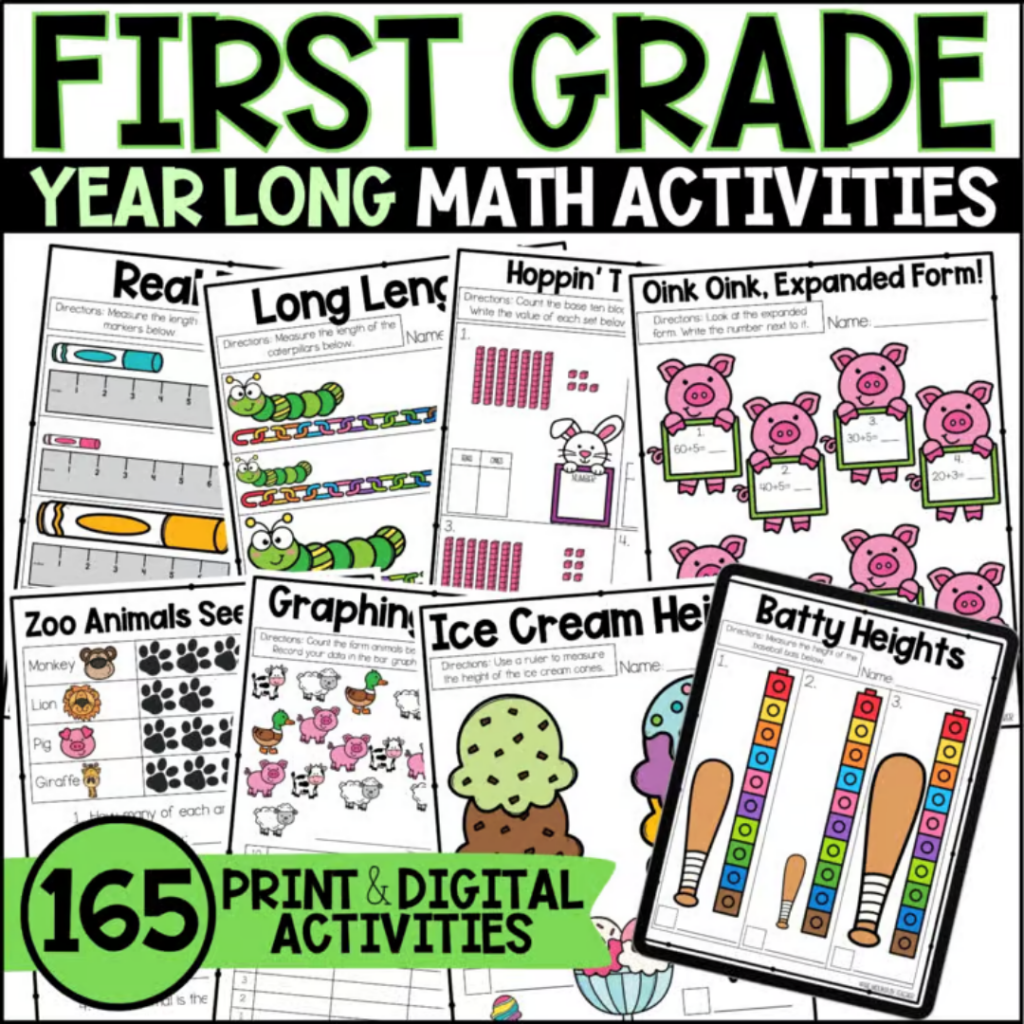
If having ready-to-go units like this makes teaching easier, the Year-Long 1st Grade Math Bundle is a lifesaver. Inside the bundle, you’ll get:
- 8 complete first grade math units
- 165 worksheets and activities
- Teaching guides for each unit
- Assessments, including tests and practice tests
- Weekly quizzes for each unit
- Anchor charts or posters
- A year-long scope and sequence
The bundle covers essential topics like place value, addition and subtraction, word problems, measurement, data and graphing, and more. Grab the bundle today and have your next math unit ready to go tomorrow!
Looking for More?
Be sure to read these posts next for more classroom inspiration!
- Setting Up Practical Math Centers that Show Results
- Teaching Kindergarten Geometry: Ideas for 2D & 3D Shapes
- Easy to Use Measurement Lesson Plans for 2nd Graders
Save These First Grade Telling Time Tips
Make sure to pin this post on Pinterest so that you can quickly and easily find it later!