Kindergarten geometry is such a fun unit to teach because it blends hands-on exploration with real-world connections. Kids are naturally curious about the shapes they see around them. Whether it’s a slice of pizza, a stop sign, or a ball rolling across the floor, shapes are everywhere! Teaching geometry at this age is all about giving students the tools to describe, compare, and build with shapes in ways that make sense to them. Come along to see all my favorite ways to teach 2D and 3D shapes in kindergarten!
Making the Most of Your Kindergarten Geometry Lessons
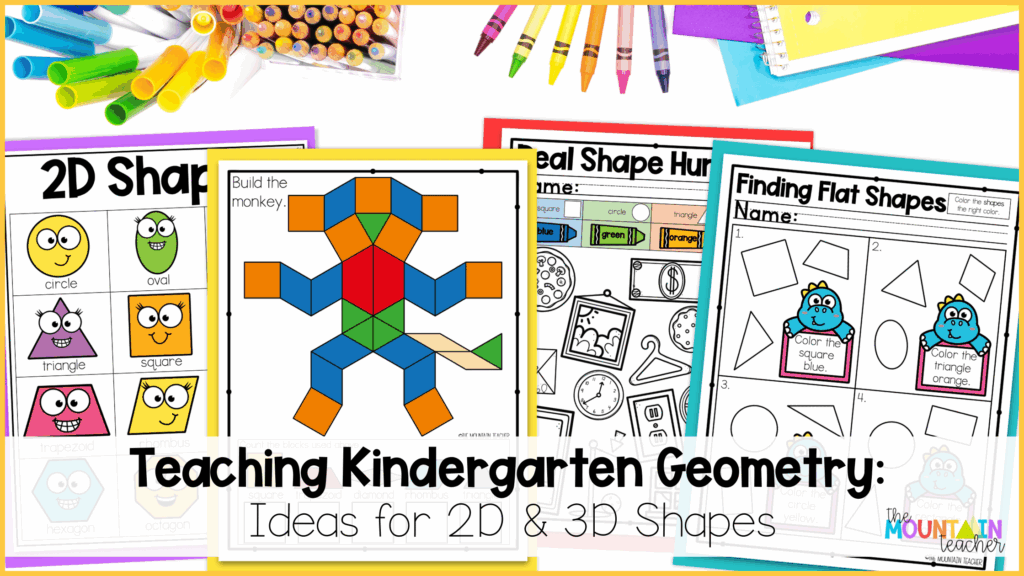
If you’re planning your geometry lessons and wondering how to keep them meaningful without feeling overwhelmed, I’ve got you covered! What you need MOST is a step-by-step plan to ensure you’re covering all the standards and using meaningful activities along the way. In my Kindergarten Geometry Unit, you’ll find anchor charts, practice worksheets, and a step-by-step teaching guide to ensure you can hit all your math standards while keeping students engaged. Let’s dive into some strategies and activities for teaching 2D and 3D shapes in your classroom.
Start with Anchor Charts
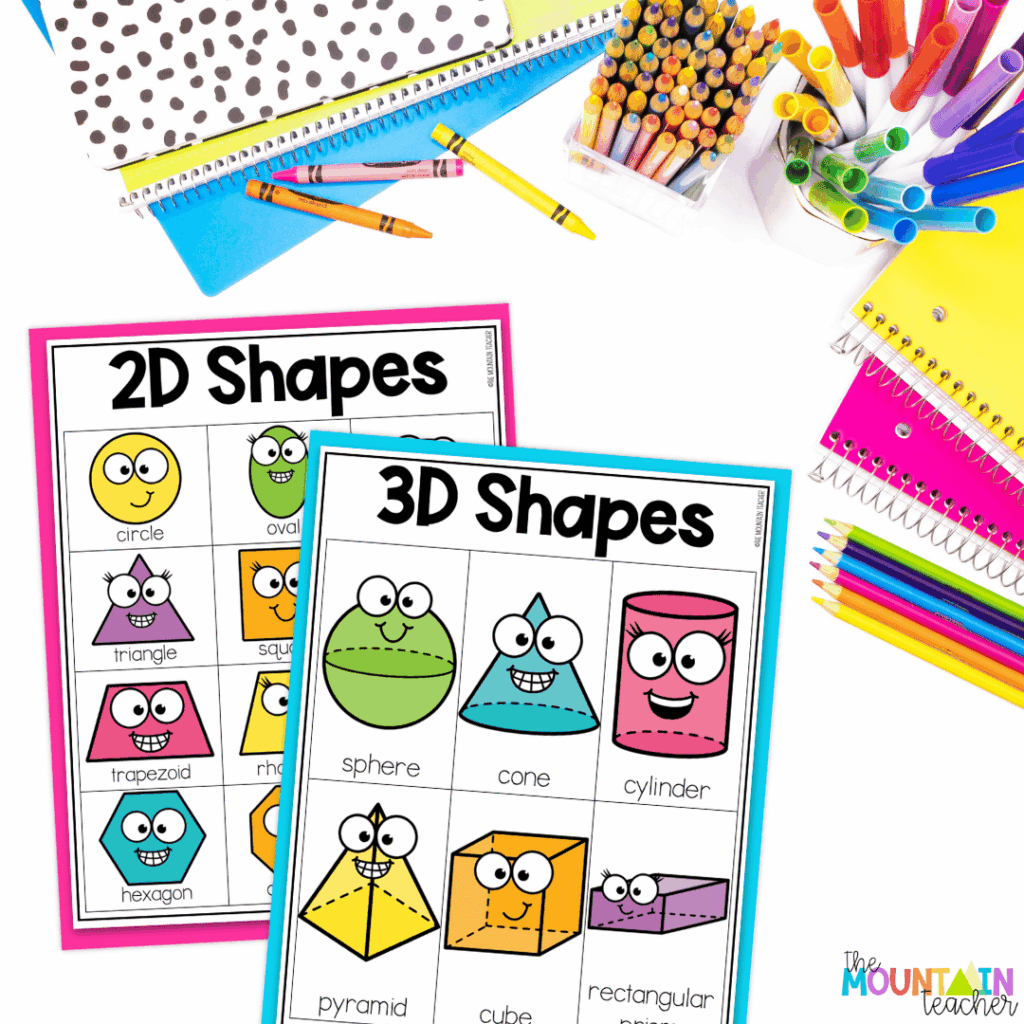
Whether you’re just getting started with introducing shapes or diving into more advanced concepts, anchor charts are going to be your best friend! Anchor charts are one of my favorite ways to introduce and reinforce geometry concepts. In my Kindergarten Geometry Unit, I include posters for both 2D and 3D shapes. Inside you will find everything from circles, triangles, and trapezoids to spheres, cones, and rectangular prisms. I also provide alternate posters with “flat” and “solid” language to help young learners make the connection. Here’s how I like to use them:
- Introduce new shapes: Display a chart as you teach and have students help describe the attributes (sides, corners, faces, edges).
- Interactive reference: Laminate them and post them in your math center so students can refer to them during independent work.
- Review games: Play “I Spy a Shape” using the posters and have students point or name the shape you describe.
Anchor charts become a visual anchor (pun intended!) that supports your entire geometry unit. I know that, if you’re like me, you will find yourself returning to these again and again throughout your whole unit.
Use Hands-On Manipulatives

Manipulatives are an absolute MUST when it comes to teaching kindergarten geometry. This topic comes to life when students can touch, build, and explore shapes. I recommend keeping a small basket of tools handy throughout your unit. We use them in many different ways, but here are just a few ideas to try with your students:
- Real Objects: Collect common classroom items and have students sort them into 2D “flat” shapes and 3D “solid” shapes.
- Build with Playdough: Playdough is a great tool to help your students learn to recognize and name shapes. It’s also great for identifying the number of corners each shape has. I have some fun activity pages inside my unit to help you easily facilitate this activity in your classroom.
- Build with Straws or Toothpicks: These inexpensive manipulatives are great for building 2D shapes. You’ll find a complimentary worksheet included that students can fill in as they build.
- Pattern Blocks: Inside my Kindergarten Geometry Unit, I have also included lots of mats and worksheets to use with pattern blocks in your classroom. You can slip them inside a plastic sleeve and allow students to build animals and explore shapes with pattern blocks.
This type of learning is active and fun, which is exactly what our youngest learners need when learning about 2D and 3D shapes!
Practice with Worksheets That Reinforce Concepts
While hands-on work builds understanding, practice pages help solidify it. In my Kindergarten Geometry Unit, you’ll find 22 days of no-prep worksheets that target every important skill:

- Identifying 2D vs 3D shapes
- Naming shapes in any orientation or size
- Matching real-world objects to shapes
- Counting sides and corners
- Comparing and contrasting attributes
- Determining if 3D shapes roll, slide, or stack
- Composing new shapes from smaller ones
- Using position words like above, below, beside, next to
I like to use these worksheets after we’ve gone over the anchor chart and completed a hands-on learning activity to continue practicing a specific skill. They’re great for whole group, independent learning, and even center time! And don’t worry, I’ve also included answer keys so you can pass off grading to your assistant or parent helper easily.
The best part about the no-prep practice pages, though? You don’t have to spend hours searching for worksheets that match the standards. They’re already sequenced for you in the teaching guide, making sure nothing gets missed.
Teach with a Clear Sequence
One of the hardest parts of teaching geometry without a set curriculum is figuring out what order to teach concepts in. That’s why I created a 22-day teaching guide that breaks down my Kindergarten Geometry Unit into small, manageable lessons. Each day builds on the one before it, so students are gradually moving from simple recognition to deeper comparisons and applications. This pacing guide ensures you cover every important skill to effectively teach kindergarten geometry.
This guide ensures you have the unit already mapped out, without the stress of figuring out what to do next. Plus, I’ve included helpful teaching tips and suggestions throughout the guide to make each chunk manageable and doable for the primary classroom. And as one final added bonus, I’ve even listed the standards you’re covering with each lesson to keep you on track.
Why This Resource Works

The Kindergarten Geometry Unit for 2D and 3D Shapes includes:
- 22 days of lessons, worksheets, and activities
- Anchor charts for all 2D & 3D shapes
- Hands-on building activities
- Oral and written post-tests
- Answer keys
- A clear teaching guide to keep you on track
It’s versatile enough for general ed, special ed, enrichment for pre-k, or even review for first grade. Whether you’re supplementing a curriculum or teaching geometry as a standalone unit, this resource will help your students succeed. I think the best part, though, is that you will feel like you have your teacher-bestie (AKA me!) along with you as you teach kindergarten geometry with confidence! There’s nothing better than a teacher win quite like that, right?!
Simplify Math Lesson and Activities All Year Long
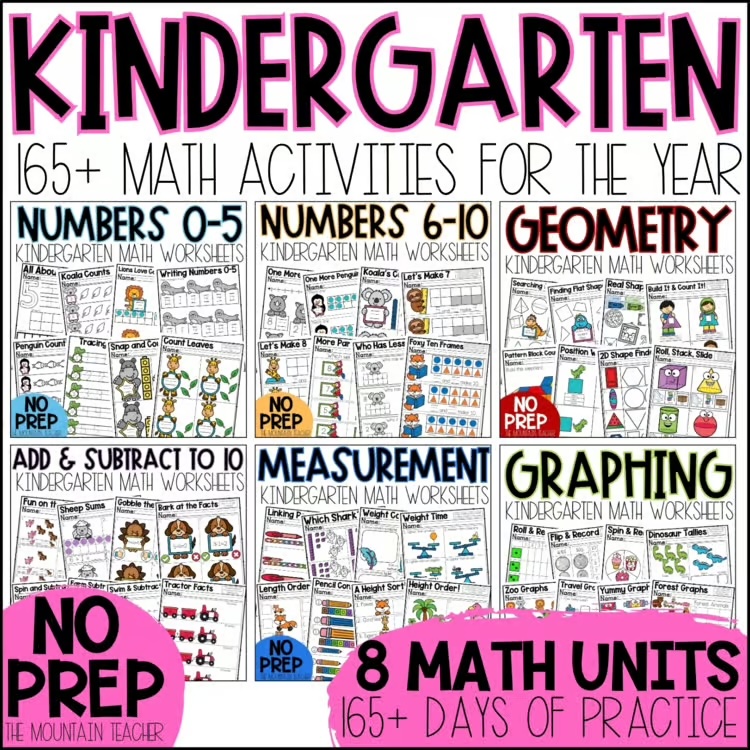
If you’re loving how it sounds to have your kindergarten geometry lessons mapped out, standards aligned, and ready to teach, I know you will be over the moon about my Year-Long Kindergarten Bundle. This HUGE bundle of math activities includes 8 different units and over 165 days of instruction for kindergarten math. Here’s everything included:
- 8 Kindergarten Math Units
- Kindergarten Math Teaching Guides for each unit
- Kindergarten Math Assessments or Tests for each unit
- Hands-on NO PREP activities
- Kindergarten Math Anchor Charts or Posters for each unit
- Answer Keys
How great would it be to have your entire year mapped out and aligned to the standards?! Pretty fantastic, right?! That’s what’s waiting for you inside the year-long bundle, so if you’re ready to streamline your math lessons and take the guesswork out of planning, make sure to snag the bundle at a great price today!
Kindergarten Geometry Made Easy
Teaching geometry in kindergarten is about more than just naming shapes. It’s about helping students see the world differently. With hands-on exploration, anchor charts, no-prep practice pages, and a clear teaching guide, you’ll not only meet the standards but also make math meaningful and fun. I hope that this blog post has encouraged you and given some helpful insight into how to approach this topic with ease and clarity. And don’t forget, you can find my Kindergarten Geometry Unit right here!
Looking for More?
Check out these posts next for more kindergarten math lessons and activities!
- The Best Numbers to 5 Activities for Kindergarten
- 5 Fun & Easy Ways to Teach Numbers 0-10 in Kindergarten
Pin These Kindergarten Geometry Ideas
Be sure to pin this post on Pinterest so that you can find it quickly and easily when you’re ready to dive into teaching kindergarten geometry in your classroom!
