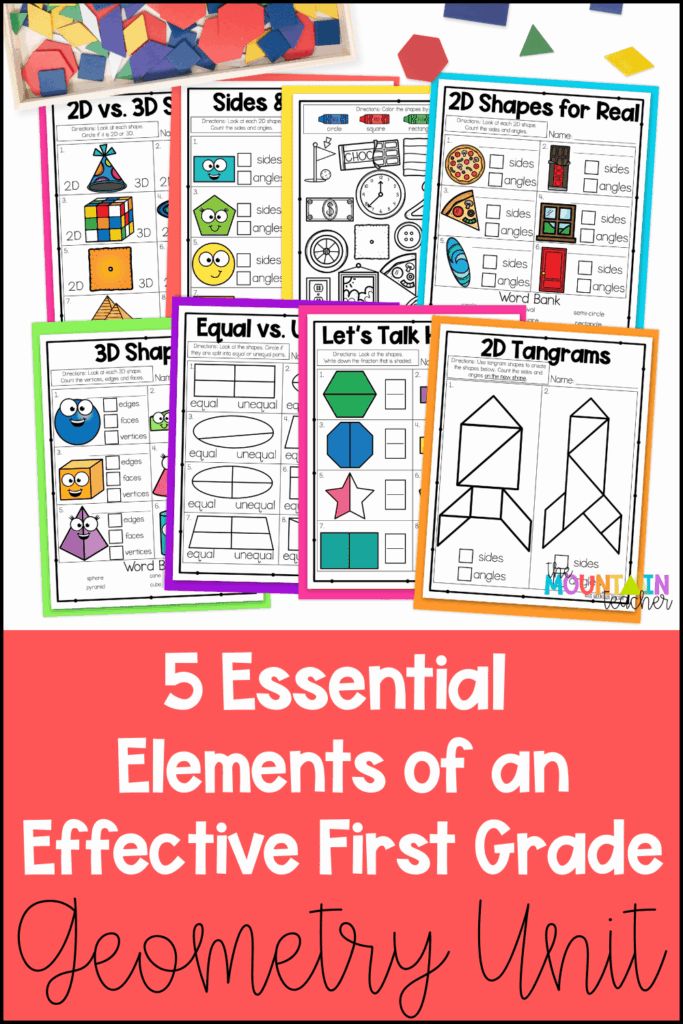
Planning a first grade geometry unit can feel overwhelming. You might start thinking, “We’ll just learn some shapes,” and then realize there’s so much more involved. 2D and 3D shapes, attributes, composite shapes, and even early fraction concepts like halves and fourths, oh my! Without the right materials, lessons can feel scattered, students may struggle to stay engaged, and your planning time can stretch for hours. But don’t worry, friends, come along for a foolproof framework to help you plan (and teach!) first grade geometry like a pro!
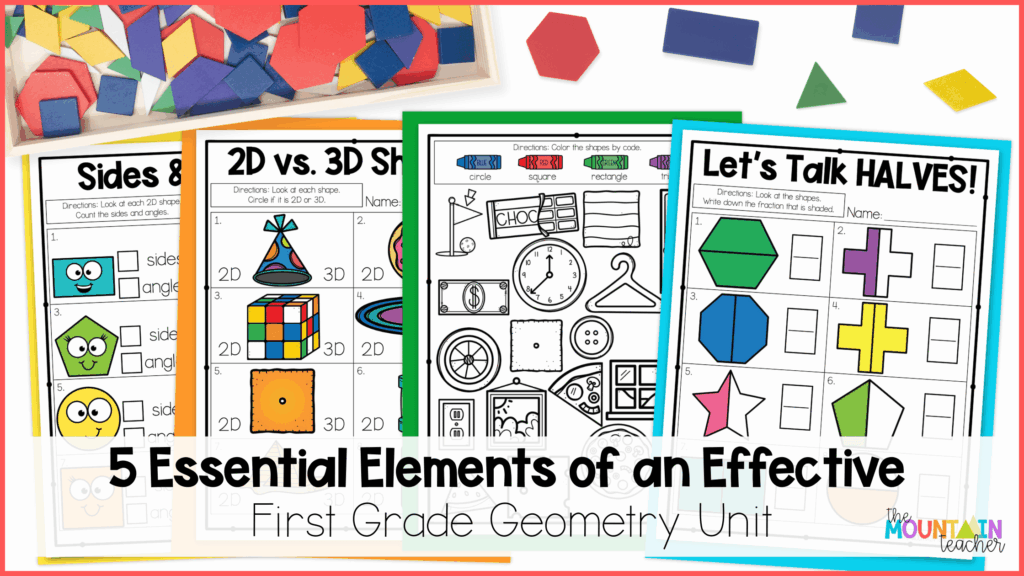
The Key to Planning a Successful First Grade Geometry Unit
The secret to teaching geometry successfully is having a set of ready-to-use materials that guide instruction, reinforce standards, and keep students motivated. When you have the right resources, planning becomes simple, lessons are focused, and teaching geometry can actually be fun.
I know it can be hard to know exactly what you need and how to piece it all together, so today, we’re uncovering it all! Here are five essential elements that make a first-grade geometry unit effective. If you’re looking for an all-in-one solution, I’ve got you covered there, too!
1. Anchor Charts & Visual Supports
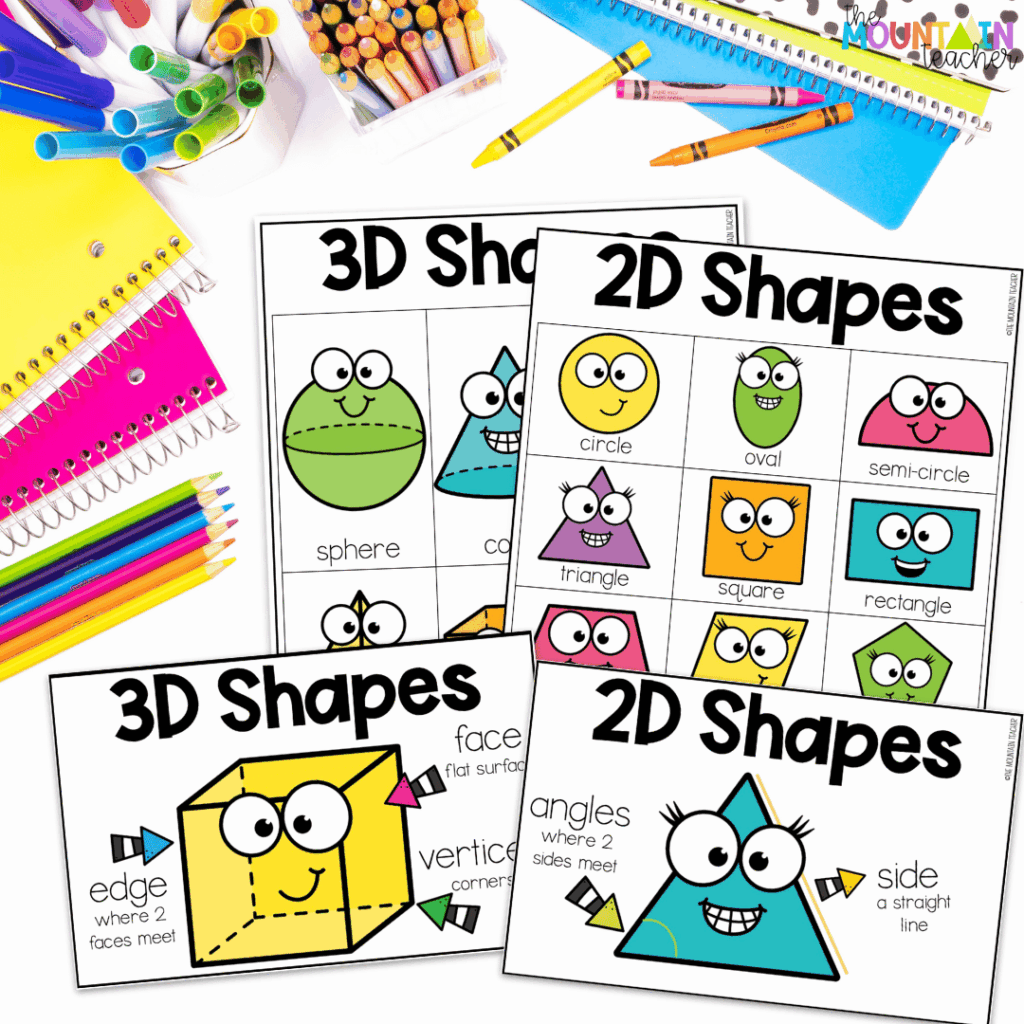
Visuals are critical for helping young learners understand abstract concepts. Anchor charts provide reference points for students throughout the unit, whether it’s identifying sides and angles on 2D shapes, counting vertices on 3D shapes, or remembering fraction vocabulary like halves and fourths.
That’s exactly why you’ll find a variety of these visual supports in my First Grade Geometry Unit. There are 10 different anchor charts included, so you’ll have exactly what you need for each daily lesson.
Having these charts ready to go saves you time and reinforces learning every day. You can display them in your classroom or use them during mini lessons, giving students a clear, consistent way to reference the skills they’re practicing.
Teacher Tip: Point to an anchor chart while asking questions like, “How many edges does this shape have?” or “Which shapes could we combine to make a new one?” This keeps students engaged and ties the discussion directly to the visual supports.
2. Pre- and Post Tests Plus Quizzes
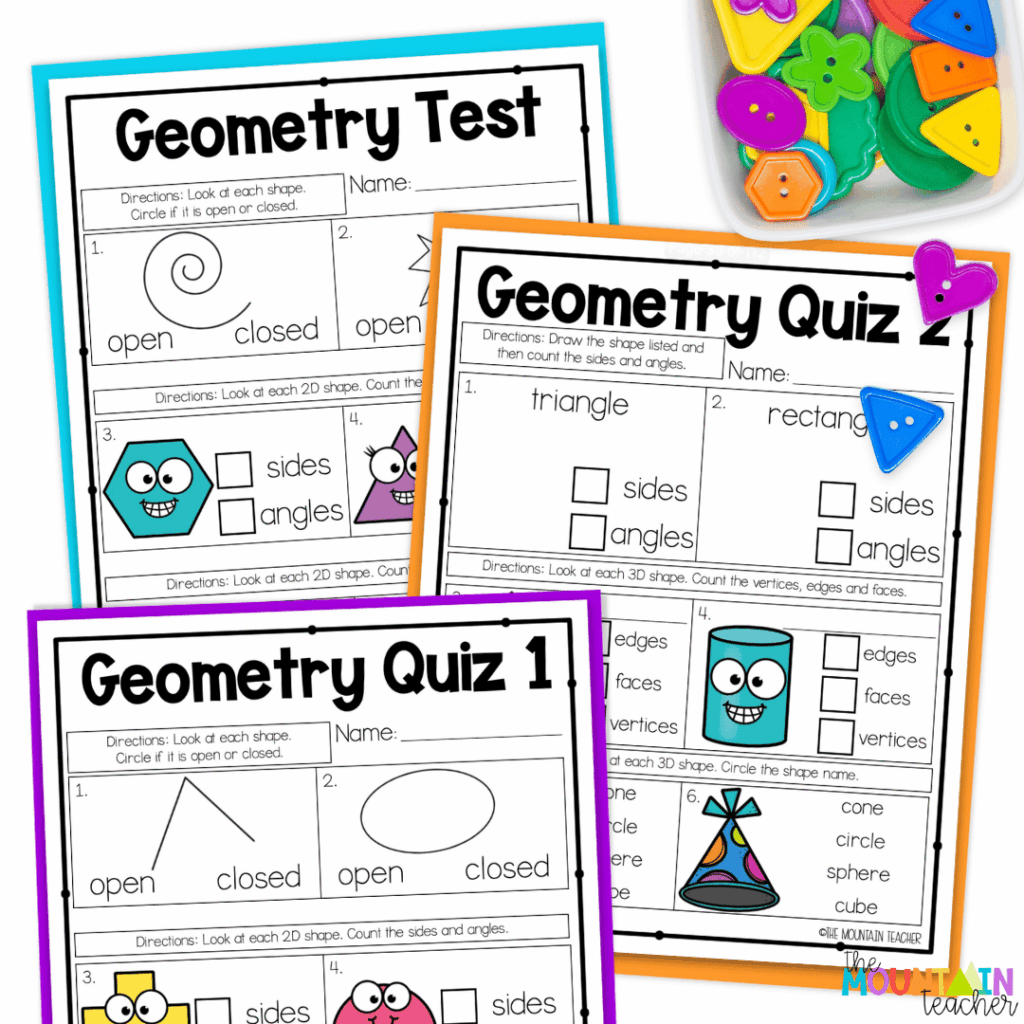
When planning your first grade geometry unit, you’ll want to consider pre and post assessment ahead of time. But don’t worry, assessments don’t have to be stressful or time-consuming. Pre-tests give you a snapshot of what students already know, while post-tests show how much they’ve grown. Quizzes sprinkled throughout the unit reinforce learning in small, manageable chunks and allow you to check in along the way.
You’ll find a blend of all of these assessment tools inside my First Grade Geometry Unit to help you track progress and identify areas that need review without guessing. They also give students a sense of accomplishment as they see how their understanding grows. Just flip open the teacher guide for specifics on when to give out each one.
Teacher Tip: Use quiz results to form small groups for targeted practice. Students who need extra support on shape attributes or fractions can work together, while others move ahead with enrichment activities.
3. Focused Daily Lessons
This might be the most important part of planning a first grade geometry unit! The best way to teach geometry is to break the unit into small, focused lessons. Each day should target one clear skill or standard, whether it’s exploring 2D shapes, composing composite shapes, or dividing rectangles into equal parts.
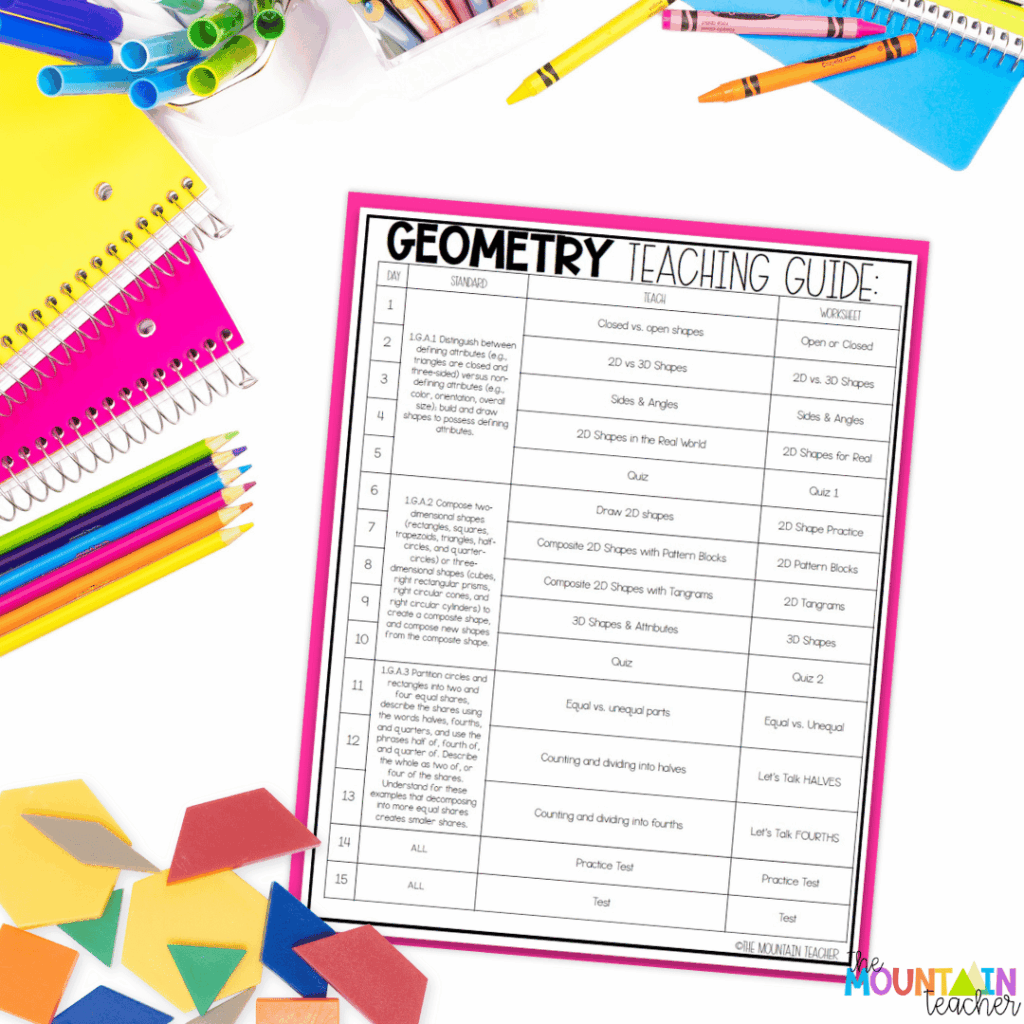
But. . . the question is, what order and pacing should we use for the best results? That question is exactly why I created a step-by-step teaching guide for this math unit. Inside, you get specific instructions for each day that show what you need to focus on, suggestions to teach it, the standard it aligns with, and a handy guide to know which worksheet pairs with the lesson for follow-up practice. I’ve eliminated the guesswork here so you can focus on teaching the material!
When you use these bite-sized lessons, students can fully grasp one concept before moving on to the next. And because each day is structured, teachers spend less time planning and more time teaching.
Teacher Tip: Start each lesson with a short discussion or demonstration, then let students practice independently or in pairs. Keeping lessons short and focused ensures students stay engaged and retain the material.
4. Engaging Worksheets for Continued Practice
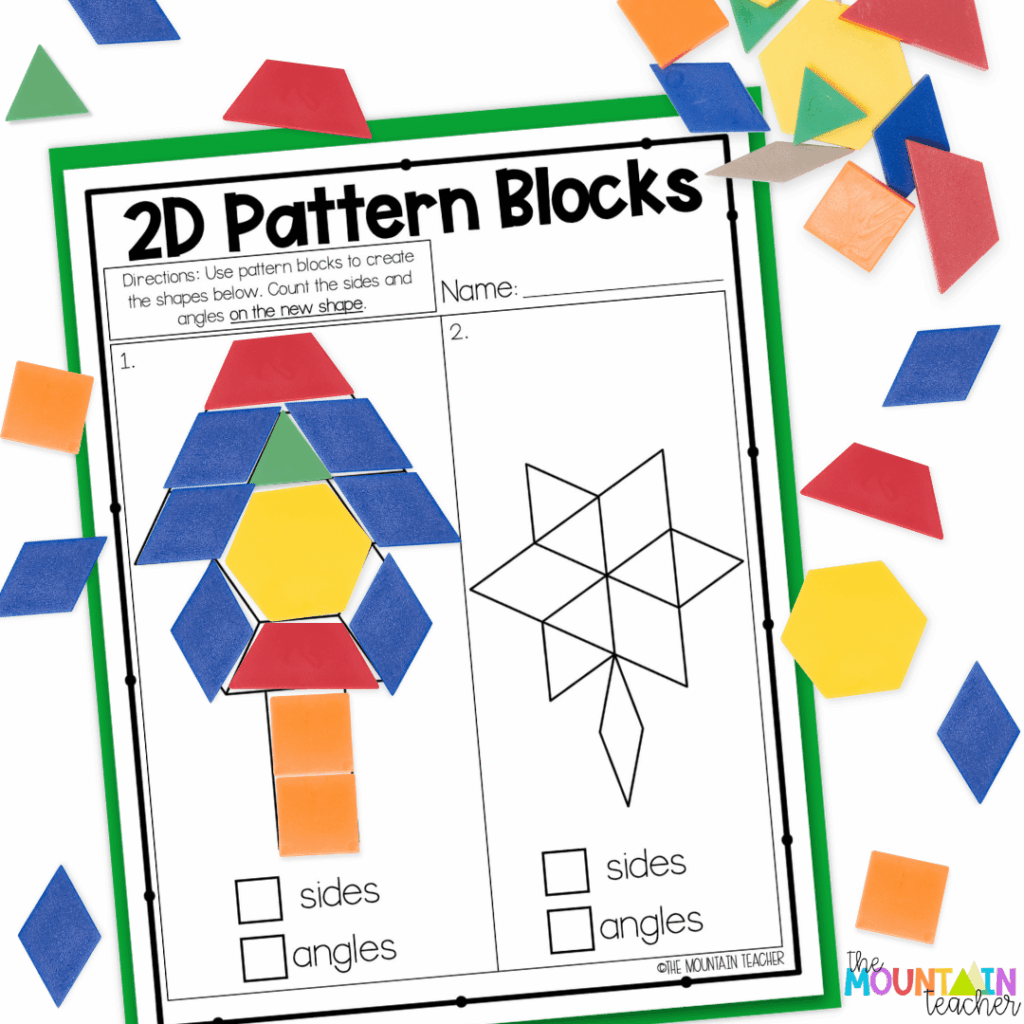
Practice makes perfect, but worksheets don’t have to be boring. The right worksheets reinforce the daily skill while keeping students motivated. Inside my First Grade Geometry Unit, you will find worksheets that are actually fun for your kiddos. Activities might include tracing, sorting, drawing, and composing shapes, as well as fraction exercises that connect geometry to early math concepts.
Each worksheet matches that day’s lesson so that students can practice confidently, and teachers can quickly check for understanding. This consistency builds mastery across the unit.
Teacher Tip: Use worksheets with hands-on activities, like pattern blocks or tangram puzzles, to keep practice dynamic and interactive. Students love moving pieces and building shapes while reinforcing their learning.
5. Digital Options to Bring It All Full Circle
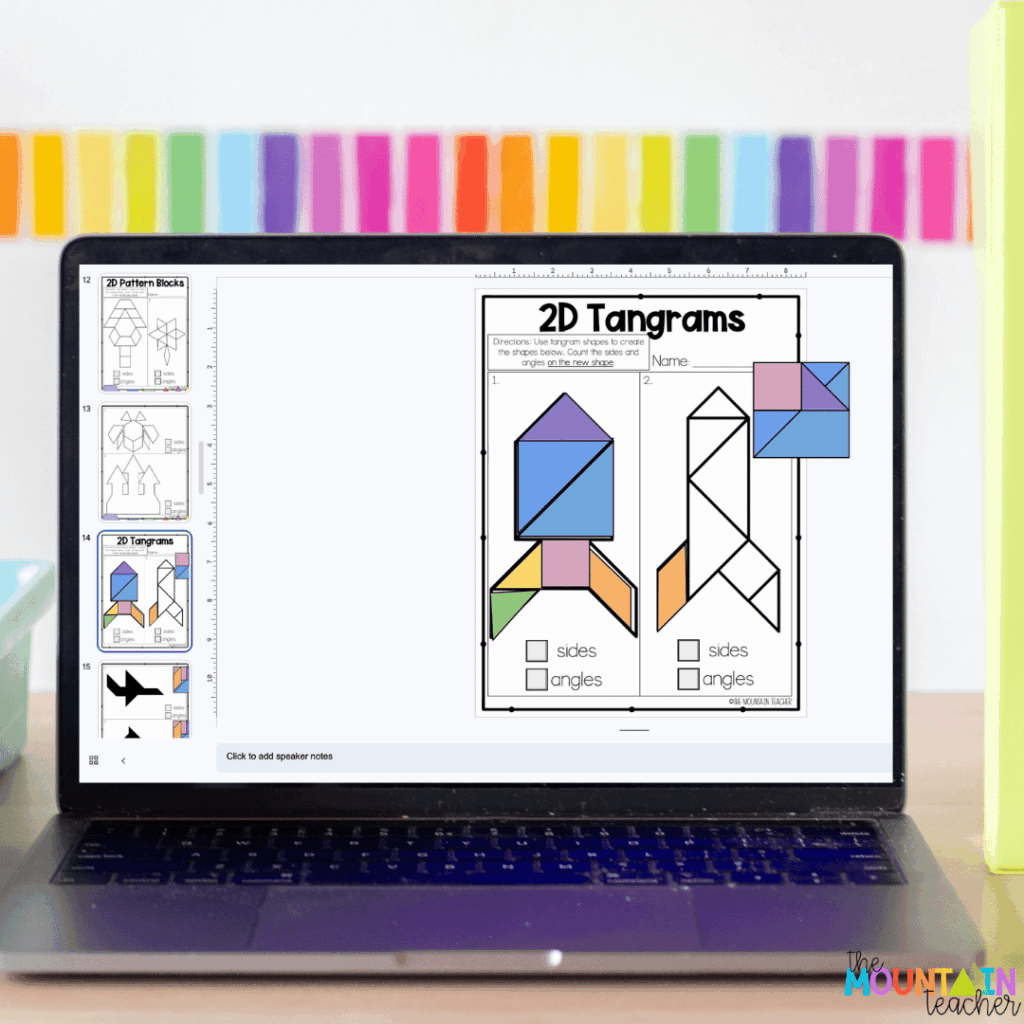
There’s no denying that children LOVE digital activities. And, as teachers, we love the flexibility of them too! Digital activities give students another way to interact with geometry concepts, whether they’re using a tablet, smartboard, or computer. Digital worksheets and assessments are included in the unit to ensure you have a variety of teaching formats to choose from.
Having a digital option also makes it easy to assign homework, independent practice, or remote learning tasks. Students get more exposure to each concept, and teachers can track progress digitally for quick feedback.
Teacher Tip: Pair digital activities with hands-on manipulatives for whole-group lessons or review. For example, after displaying a digital worksheet on 3D shape attributes, students can identify the same attributes on real classroom objects. This bridges virtual and physical learning.
Make Planning Your First Grade Geometry Unit Simple
When you have all five of these elements ready to go, the magic really happens! With anchor charts, assessments, focused lessons, engaging worksheets, and digital options, planning a geometry unit becomes simple, organized, and stress-free.
My First Grade Geometry Unit includes everything you need for a three-week unit covering 2D and 3D shapes, shape attributes, composite shapes, and fractions. With this resource, your math block runs smoothly, students stay engaged, and your planning stress disappears.
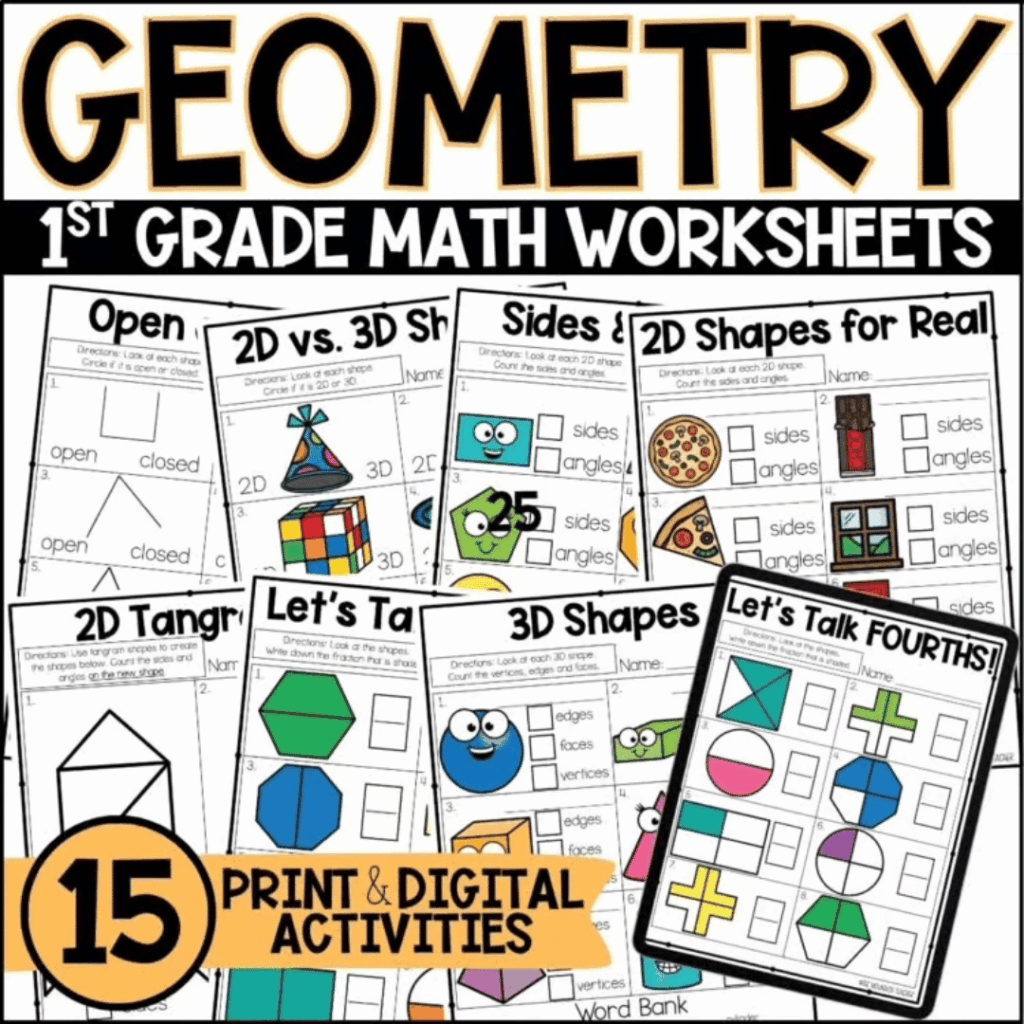
Grab it now to have all lessons, worksheets, anchor charts, and digital activities ready to use immediately! This will save hours of prep time and keep your students excited about learning geometry!
Want to Make Teaching Math Easier All Year Long?
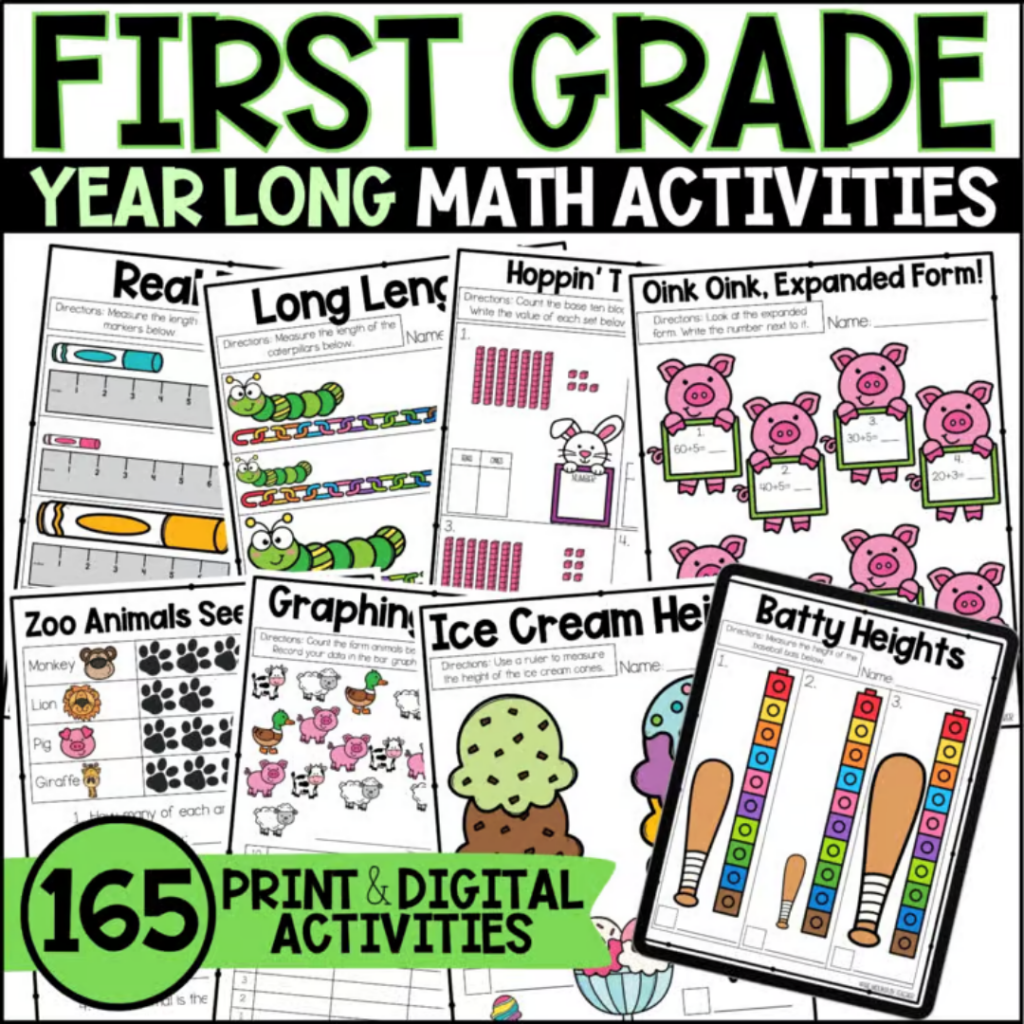
If having a unit like this ready to go makes teaching easier, the Year-Long 1st Grade Math Bundle is a lifesaver. Inside the bundle, you’ll get:
- 8 complete first grade math units
- 165 worksheets and activities
- Teaching guides for each unit
- Assessments, including tests and practice tests
- Weekly quizzes for each unit
- Anchor charts or posters
- A year-long scope and sequence
The bundle covers essential topics like place value, addition and subtraction, word problems, measurement, data and graphing, and more. If you’re looking for a way to streamline planning and keep your math instruction consistent all year long, grab the bundle today and thank yourself later!
Looking for More?
Be sure to read these posts next for more classroom inspiration!
- Setting Up Practical Math Centers that Show Results
- Teaching Kindergarten Geometry: Ideas for 2D & 3D Shapes
- Easy to Use Measurement Lesson Plans for 2nd Graders
Save These First Grade Geometry Teaching Tips
Make sure to pin this post on Pinterest so that you can quickly and easily find it later!