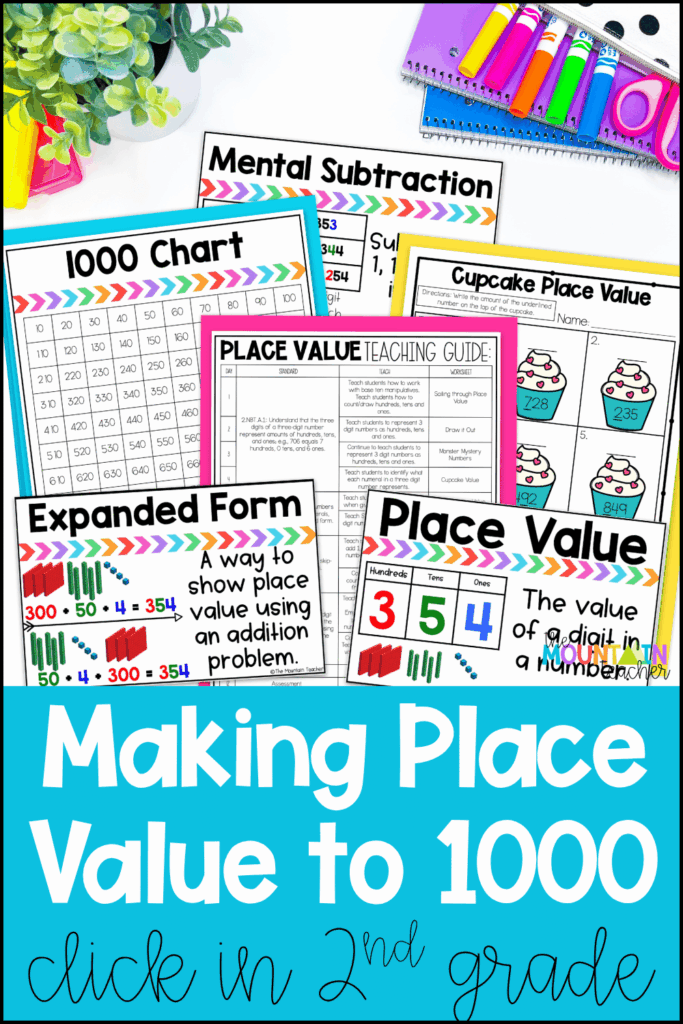
Teaching place value to 1000 is one of those moments where everything starts to come together for your students. When they truly understand that 472 is four hundreds, seven tens, and two ones, you can almost see the lightbulb go on. But getting to that point? That can feel like a stretch! Let’s break this skill down with the right visuals, hands-on practice, and a simple routine so that you can make place value to 1000 feel clear, manageable, and even fun for your students.
Why Place Value to 1000 Feels Tricky
By second grade, students already have some understanding of tens and ones. But moving into hundreds adds a whole new layer. Now they’re working with three digits instead of two. They need to understand that each position has a different value, and that changing one digit changes the entire number. That’s a big shift!
On top of that, they’re expected to read and write numbers, represent them with base ten blocks, break them into expanded form, and compare them using symbols like greater than and less than. Without a clear structure, it’s easy for students to get overwhelmed or fall back on guessing.
That’s why having a step-by-step plan makes such a difference. When you introduce each concept in a logical order and give students plenty of ways to practice, their confidence grows quickly. If this feels overwhelming to you, you’re in the right place! Let’s talk about the tools and steps I use to make teaching this concept simple.
Step 1: Teaching Place Value to 1000 Starts With Strong Visuals
I’ll say it every time. Visuals make all the difference!
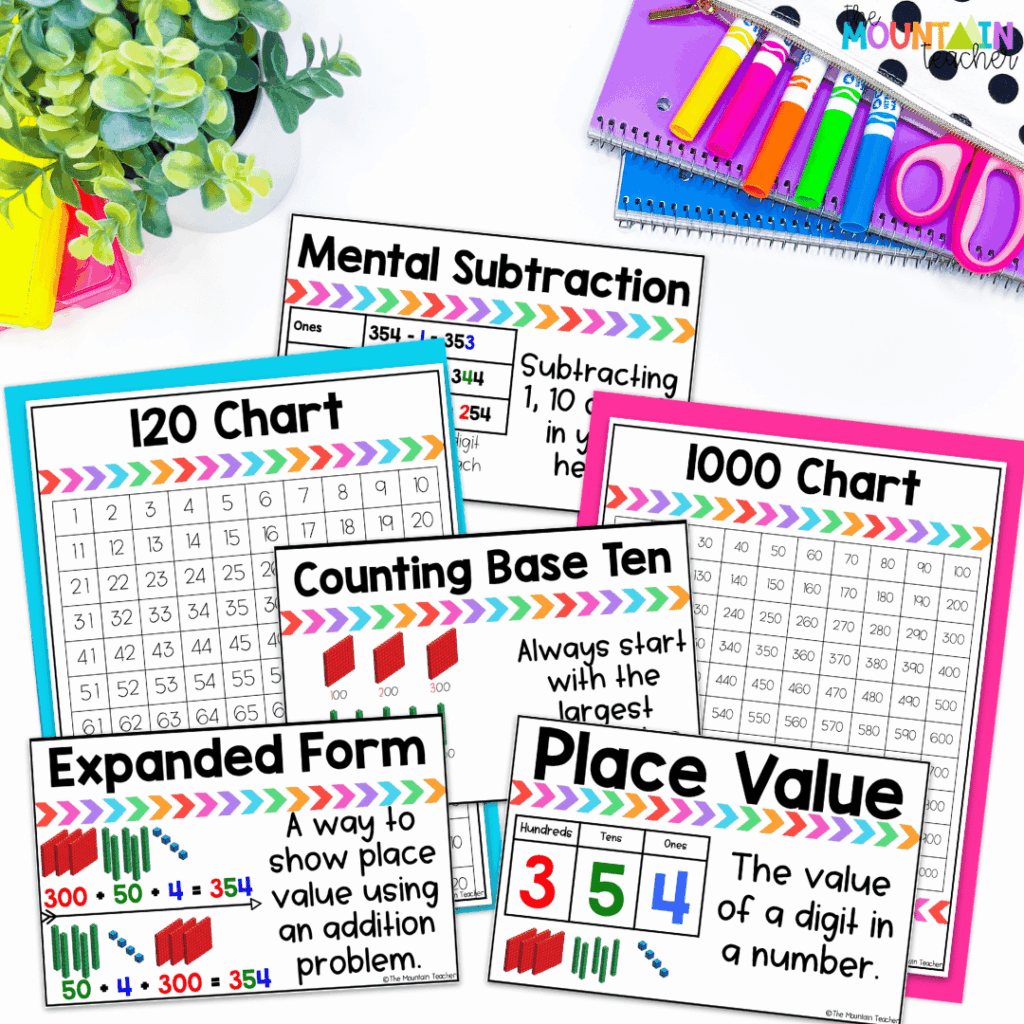
When students can see what hundreds, tens, and ones look like, the concept becomes so much easier to understand. Anchor charts are a great place to start. In my classroom, I like to use charts and posters that help explain concepts like place value, expanded form, and mental math, comparing numbers, and skip counting. They’re a great tool for your initial lessons and as you work with base ten blocks to build those numbers out.
You can even make your students their own copy to keep at their desks. A small printout taped near their name plate or on the inside of their desk folder could come in handy when they are working independently or sitting in a position where it is hard to see the main classroom visual.
Teacher tip: Keep your anchor charts posted all unit long. Students will refer back to them constantly during independent work!
Step 2: Build Understanding With Hands-On Practice
Before jumping into worksheets, students need more time to explore. Base ten blocks are perfect for this. You can also use drawings if you don’t have enough manipulatives for everyone.
For example, try a simple lesson like this one: Start by writing a number like 548 on the board. Demonstrate that the 5 in the hundreds place will need to be represented by 5 one-hundred blocks. Repeat this for each place value until the number is shown using blocks. Then, have the students make the number at their desks. Next, have them draw it using quick sketches for hundreds, tens, and ones. Ask guiding questions like, “How many tens do you see?”
You can even extend the activity by asking your students to change the numbers by removing certain blocks. That might look something like this: First, write the number 354 on the board. Have them build the number at their seats. Then ask, “What would happen if I took away one ten?” and physically remove it. Say, “Our number now has 3 hundreds, 4 tens, and 4 ones. What is our number now?” You can go through different variations by adding and taking away several blocks.
Teacher tip: Let students work in partners. One student builds while the other checks, then they switch. This keeps engagement high and encourages math talk.
Step 3: Make Expanded Form Really Click
Once students understand how numbers are built, expanded form starts to feel much more natural. Instead of trying to memorize a process, they can simply break numbers apart based on what they see. It becomes more about understanding than remembering steps.

A simple way to model this is by writing 472 on the board. Ask your students, “How many hundreds do you see?” and write 400. Then ask, “How many tens?” and add +70. Finally, ask, “How many ones?” and add +2. As you build the number together, students can clearly see how each part makes up the whole. It also really helps to connect this back to base ten blocks or quick drawings, so they can visually match each part of the number.
After you have modeled several numbers, be sure to provide some non-examples. Start with a number like 365 on the board. Ask students how many hundreds they see, then specifically write down 3 instead of 300. If they don’t catch on to your mistake, explain that writing down 3 on its own really means only 3 and not 300. Giving a non-example like this helps students see that they are not simply breaking the number into 3 + 6 + 5, but rather into its place value components of 300 + 60 + 5.
Teacher tip: Connect this step back to your hands-on practice by having students draw out a number, then label it with expanded form.
Step 4: Finish Strong with Number Comparisons
This step can often be the hardest, especially if students still don’t have a strong place value sense. That’s why comparing numbers should come last, so students have lots of practice seeing the numbers broken down in different ways before comparing them.
When you move into comparing numbers, keep that same clear structure as before. Try lining up two numbers like 472 and 458 where students can easily see each place value. It can help to build the numbers out with blocks, or write the expanded forms stacked on top of each other to create a good visual of both numbers side by side. Walk them through comparing the hundreds place first. If those are the same, move to the tens place. If needed, then compare the ones. This step-by-step routine gives students a consistent way to think through each problem. Model clear language, such as “472 has the same hundreds, but more tens than 458, so 472 is the greater number.”
You can make this into a partner activity by having students build out a number individually, then come together to compare. Split the class into partners, then assign a number to the “right side” and the “left side” partners. Each student will build their number, then check each other’s for accuracy. Then, have the students work together through the process above, comparing the hundreds, then the tens, and finally the ones. Repeat this several times, allowing different sides to “win” with different place values.
Teacher tip: Have students explain their thinking out loud using the sentence stems you modeled, like “472 is greater because it has more tens.”
A Simple Daily Routine That Works
If you’re wondering how to fit all of this into your math block, here’s a routine that keeps things running smoothly:
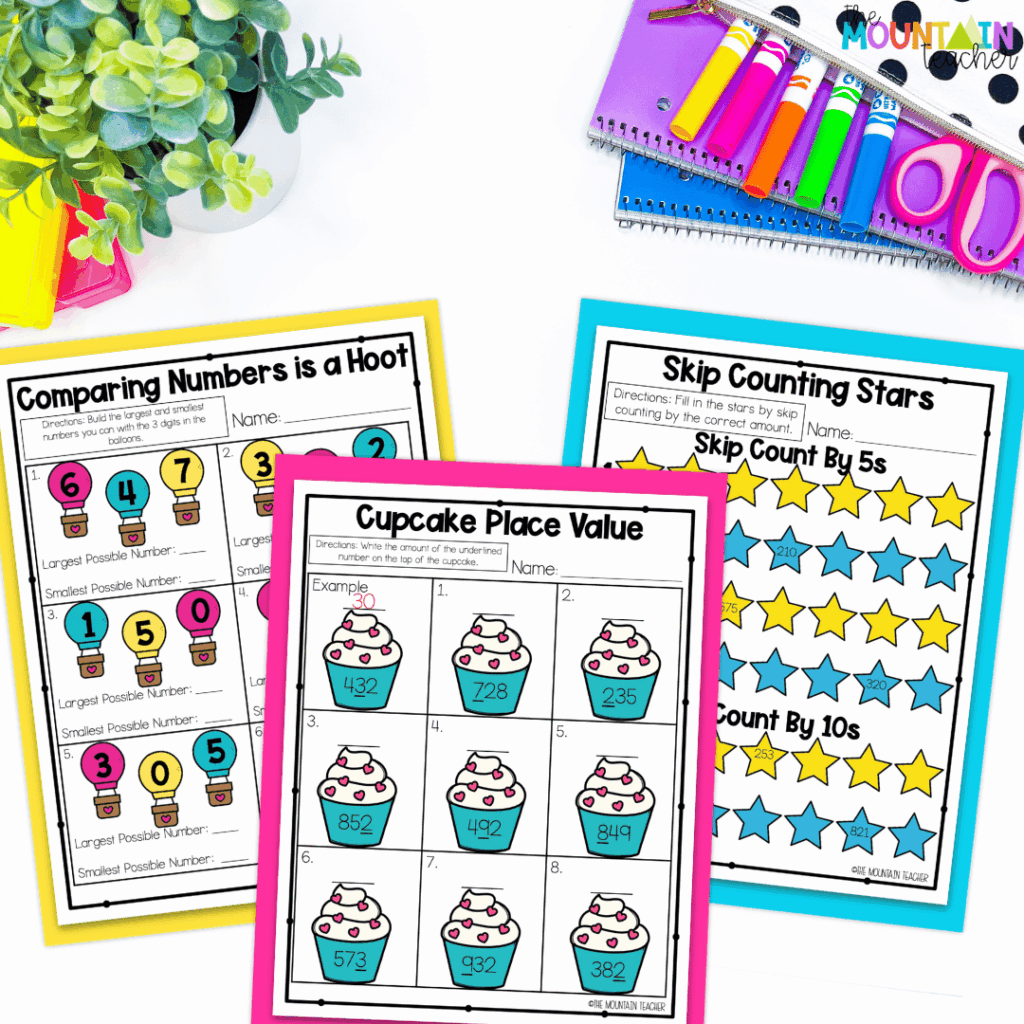
Warm-Up
Start with a quick review, like skip counting by 10s or identifying the value of a digit in a number.
Mini Lesson
Model the skill step by step using your anchor chart and manipulatives.
Hands-On Practice
Students build or draw numbers to match the lesson.
Independent Practice
Students complete a worksheet that directly matches the skill.
This routine keeps lessons predictable and helps you quickly spot who needs extra support.
Make Place Value to 1000 Feel Easy
Teaching place value to 1000 doesn’t have to feel overwhelming. When you combine strong visuals, hands-on learning, and consistent practice, your students start to see how numbers really work. And once that understanding is there, everything else in math becomes easier. That’s where having ready-to-go activities is a lifesaver.
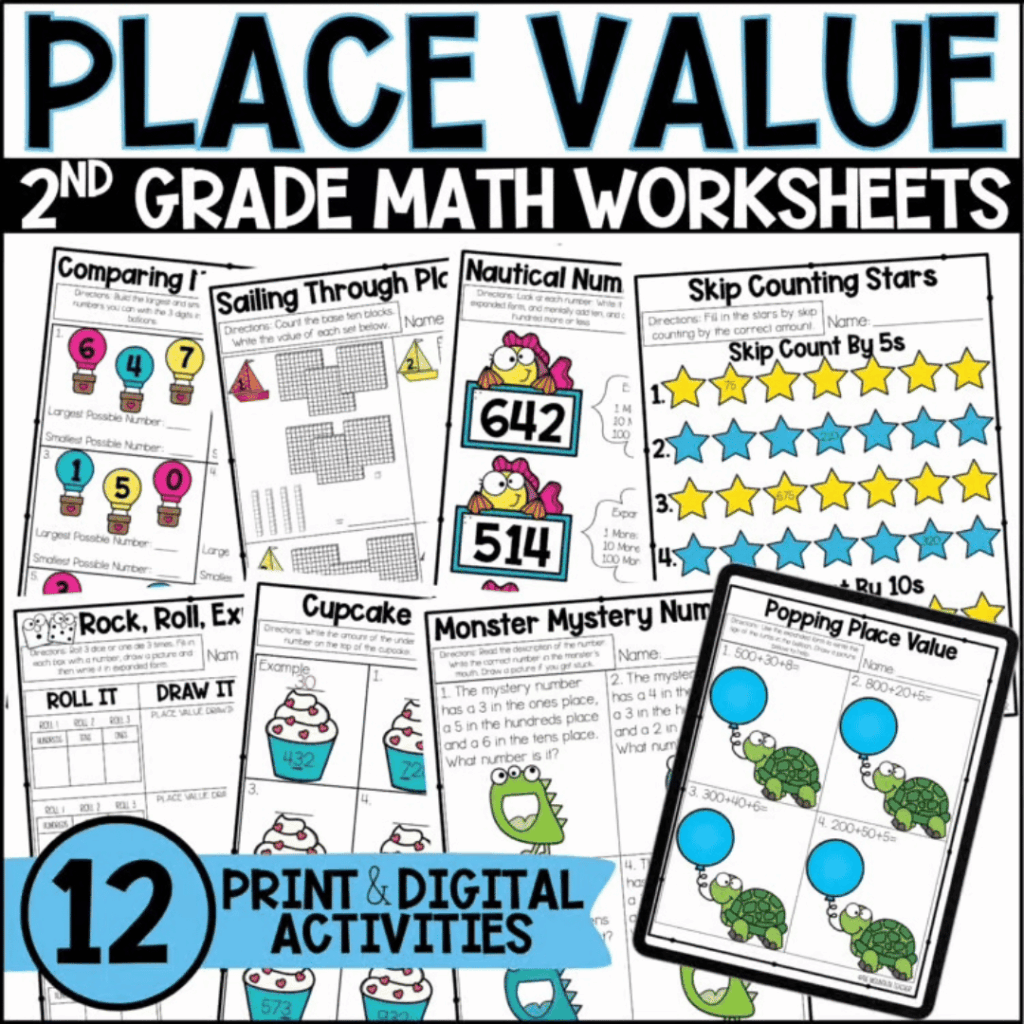
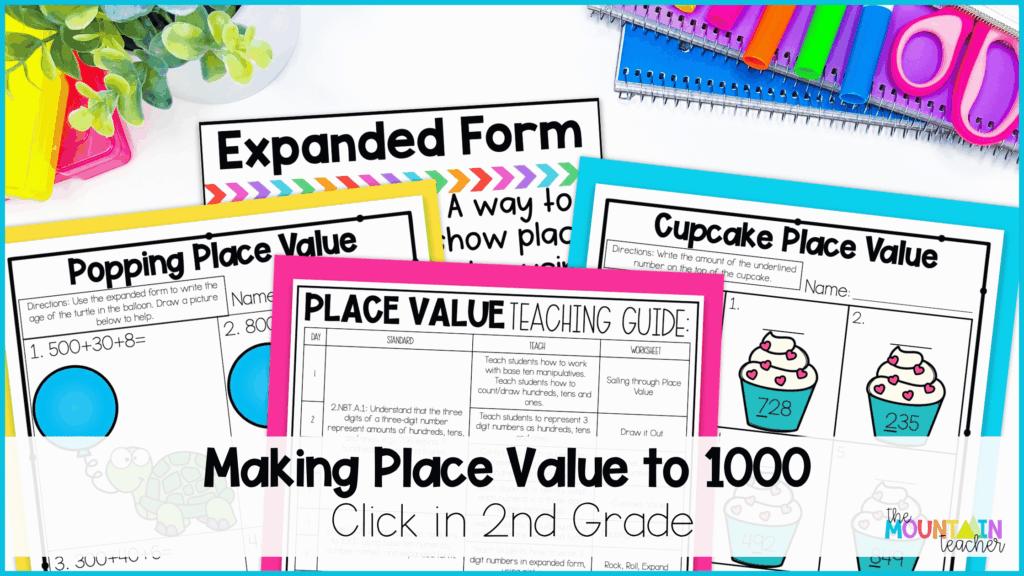
Inside my Place Value to 1000 Unit, everything is already organized for you. You get:
- 26 pages of place value to 1000 worksheets and activities
- 3 weekly homework pages
- Pre and post tests
- A teaching guide to map out your lessons
- Anchor charts for hundreds, tens, ones, and more
- Answer keys
- A 30-page Google Slides workbook
- A 30-page Easel activity set
Each lesson focuses on one specific skill, like representing 3-digit numbers, expanded form, or comparing numbers. That way, students aren’t overwhelmed, and you always know exactly what to teach next.
If you’re ready to make your place value lessons simple and stress-free, go take a closer look at the Place Value to 1000 Unit. You can preview the lessons, see exactly how everything is organized, and grab it to start using right away in your classroom.
Want Your Whole Math Year Planned?
If having a unit like this ready to go makes your teaching life easier, imagine having your entire year mapped out the same way! The 2nd Grade Year-Long Math Bundle takes the guesswork out of planning and gives you a clear path for the whole year. Inside, you’ll get:
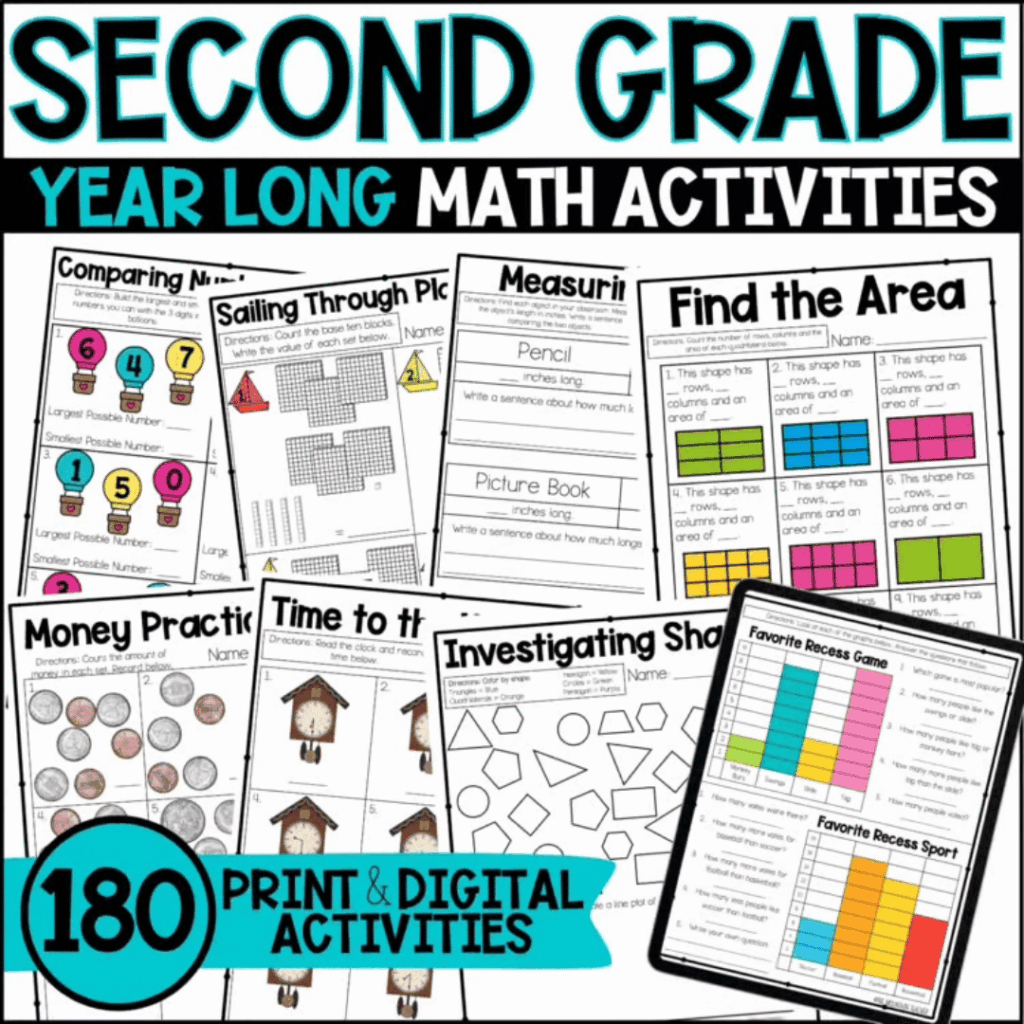
- 9 complete math units
- Teaching guides for each unit
- Assessments and practice tests
- Weekly homework
- Anchor charts and posters
- Answer keys
- Bonus benchmark tests for beginning, middle, and end of year
- A full year scope and sequence
You can use these lessons for whole group, small groups, math centers, review, or even sub plans.
If you’re ready to simplify your planning and feel more confident in your math block, go check out the bundle and grab it so you can start your next unit with everything already done for you.
More Math Teaching Ideas
If you are looking for more practical tips and ideas on teaching math in the primary classroom, make sure to check out these blog posts.
- Setting Up Practical Math Centers that Show Results
- 5 Simple Ways to Try Math Task Cards
- How to Make Back to School Math Activities Successful
Save This Post
Make sure to pin this post on Pinterest so that you have these ideas at your fingertips!