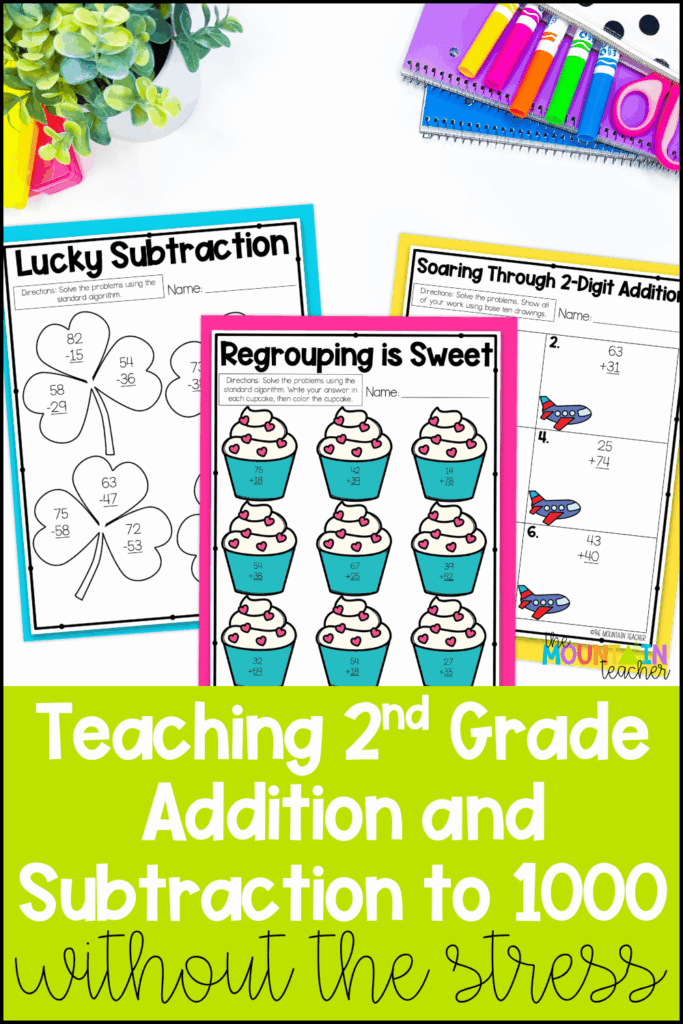
Teaching 2nd-grade addition and subtraction to 1000 can feel like a huge jump for students. One day, they’re confidently solving simple equations, and the next, they’re staring at regrouping problems, wondering where all those extra numbers came from! Some students quickly grasp this new skill, while others struggle to understand why they need to regroup in the first place. Add in the challenge of moving between horizontal and vertical problems, learning the standard algorithm, and working with larger numbers to 1000… It’s easy to see why this math unit can feel overwhelming for both teachers and students. The good news? With a clear teaching sequence, strong visuals, and plenty of guided practice, students can build confidence with 2nd grade addition and subtraction to 1000. Let’s walk through the approach that makes this unit feel manageable, engaging, and much less stressful!
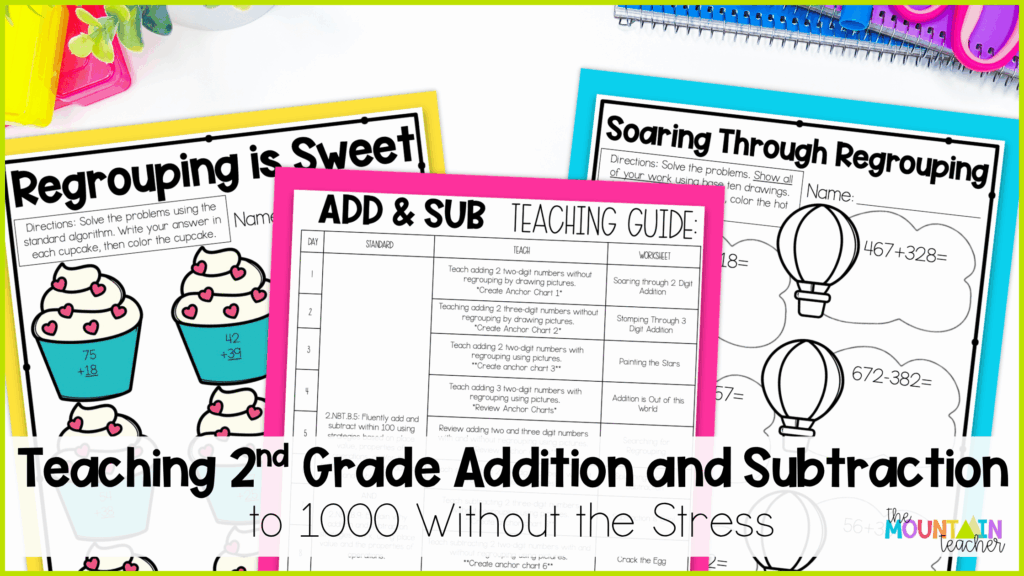
Why 2nd Grade Addition and Subtraction to 1000 Feels So Difficult for Students
When students first begin working with larger numbers, they’re suddenly expected to understand place value on a much deeper level. Instead of simply adding numbers together, they now need to recognize how hundreds, tens, and ones work together within an equation.
For example, students might understand that 34 + 27 equals 61 when using manipulatives, but then feel completely lost when solving the same problem vertically with regrouping. Others may line up numbers incorrectly, forget to regroup, or struggle to understand why regrouping is even necessary.
Three-digit addition and subtraction can feel even trickier because students are managing multiple place values at once. It’s a lot to process for young learners!
That’s why slowing down the process and teaching one skill at a time makes such a difference. When students first build conceptual understanding with visuals and hands-on practice, the standard algorithm becomes much easier to understand later on.
Start With Place Value and Base Ten Models
Before jumping into standard algorithm practice, spend time reviewing place value with base ten blocks and visual models. This step is HUGE!
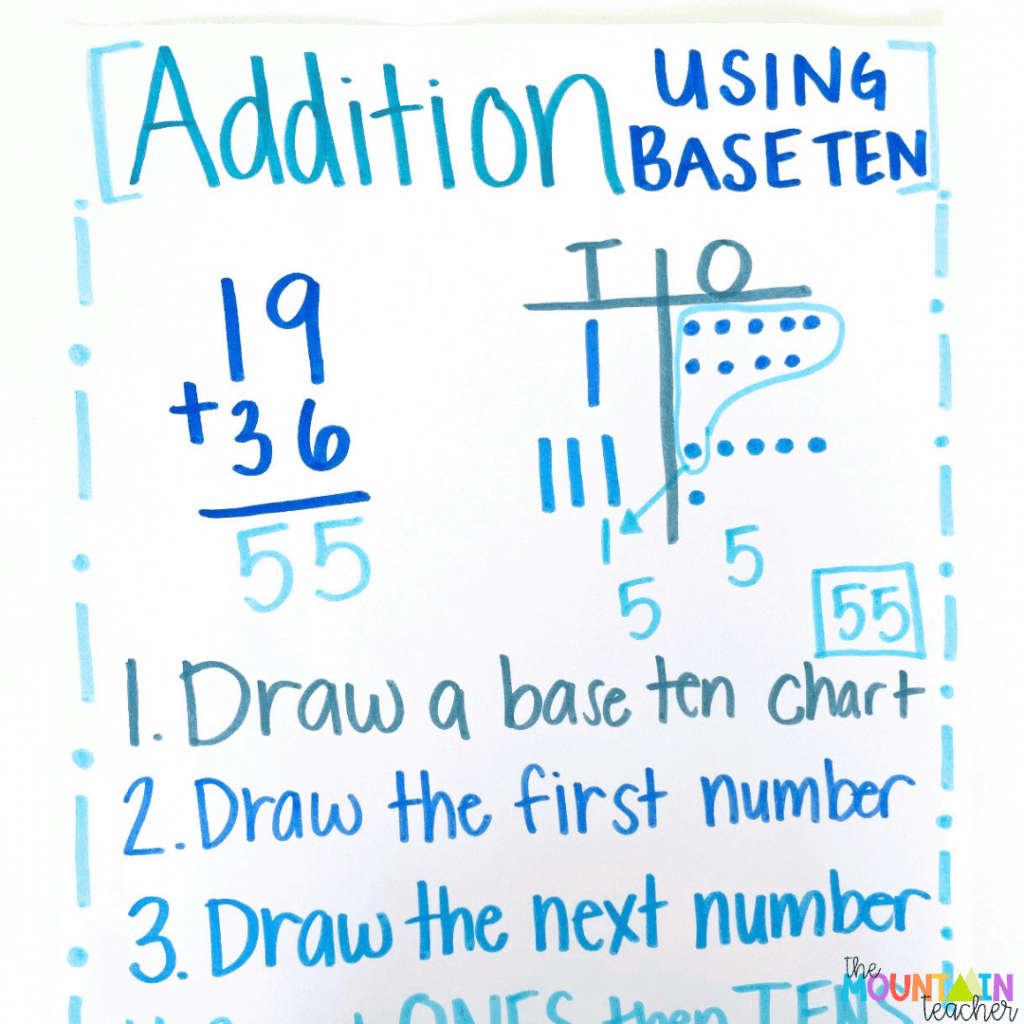
Students need to physically see what happens when ten ones become one ten or when ten tens become one hundred. Without that foundation, regrouping can feel like random steps to memorize instead of something that actually makes sense.
For example, when solving 19 + 36, build each number with base ten blocks first. Show students one ten and nine ones, then three tens and six ones. Combine the ones and physically regroup the ten ones into a new ten rod.
As you model, think out loud: “We now have 15 ones. Ten of those can become one new ten.” These verbal explanations help students connect the concrete model to the written equation.
Teacher Tip
Keep base ten blocks available throughout the entire unit, even once students begin solving equations independently. Many students still need visual support while learning regrouping strategies.
Move From Concrete to Standard Algorithm Slowly
Once students understand how regrouping works with manipulatives, you can begin introducing the standard algorithm. One mistake many teachers make is moving too quickly from hands-on practice to abstract paper-and-pencil problems. Students need time to connect the two.
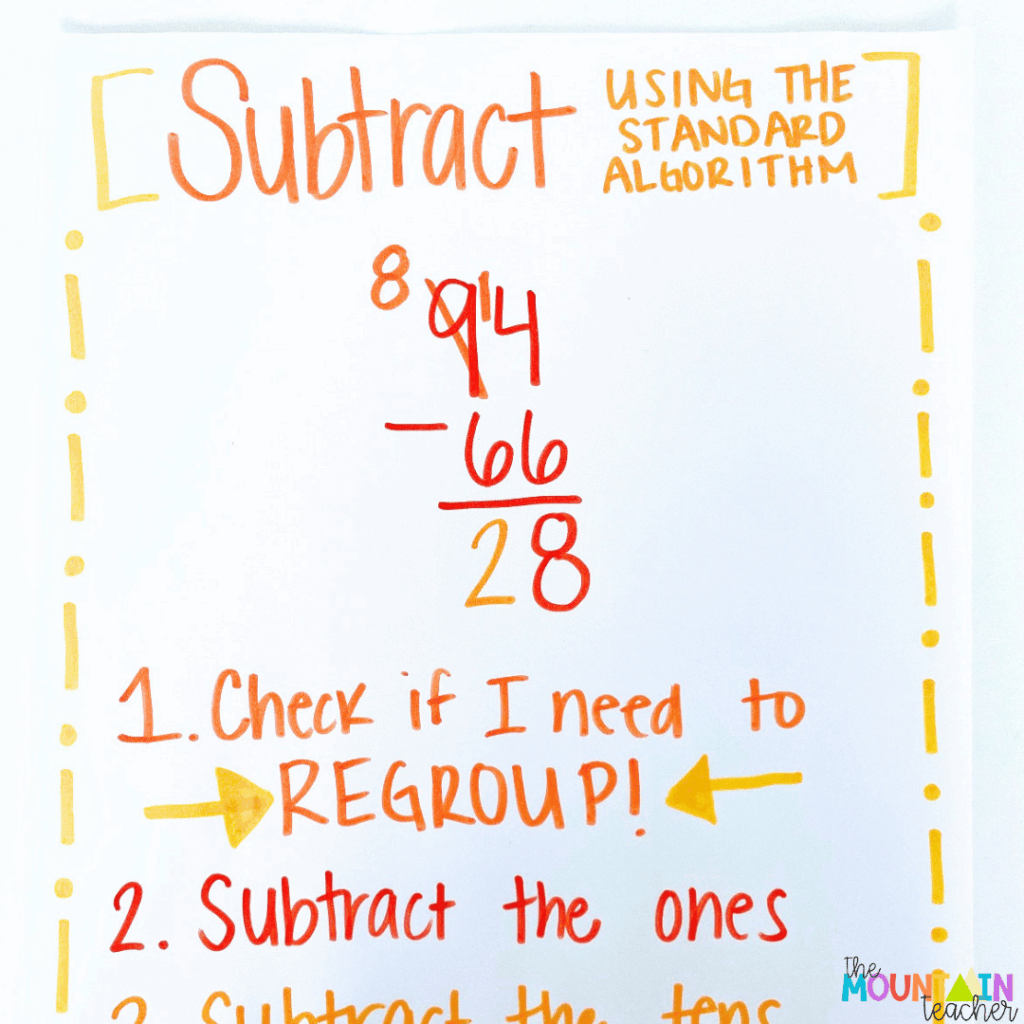
Start by solving problems side-by-side with manipulatives and written equations. For example:
- Build the number with blocks
- Solve the problem with regrouping
- Record the matching written steps underneath
This helps students understand why they are carrying or regrouping instead of simply memorizing procedures.
Teacher Tip
You can also model common mistakes intentionally. For example, solve a subtraction problem incorrectly by subtracting the smaller number from the larger number in each column, regardless of place value. Then ask students: “Does this answer make sense?”
These discussions help students think critically about the process instead of rushing through steps automatically.
Practice Both Horizontal and Vertical Problems for 2nd Grade Addition and Subtraction
Another important piece of building confidence is exposing students to problems in multiple formats.
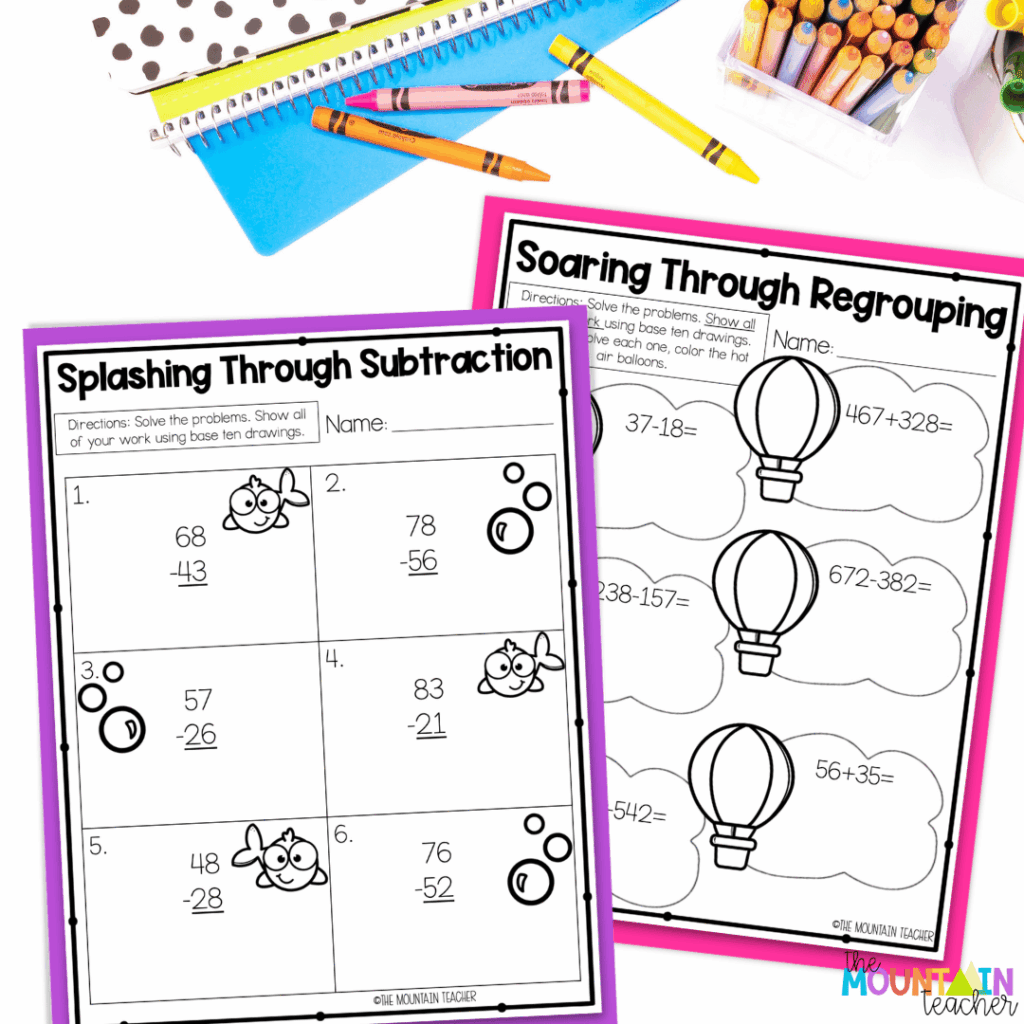
Many students become comfortable solving vertical equations but panic when the same problem is written horizontally. Others understand horizontal equations mentally but struggle organizing vertical work neatly on paper.
That’s why I love including both horizontal and vertical addition and subtraction practice throughout the unit.
Giving students repeated exposure to both formats helps strengthen number sense and flexibility while preparing them for different types of assessments and math tasks.
Teacher Tip
When introducing horizontal equations, encourage students to rewrite the problem vertically if needed. This simple strategy helps students organize their thinking while they build confidence.
Use Small Daily Lessons Instead of Long Math Blocks
One of the biggest things that helps students succeed with 2nd grade addition and subtraction to 1000 is keeping lessons focused and manageable.
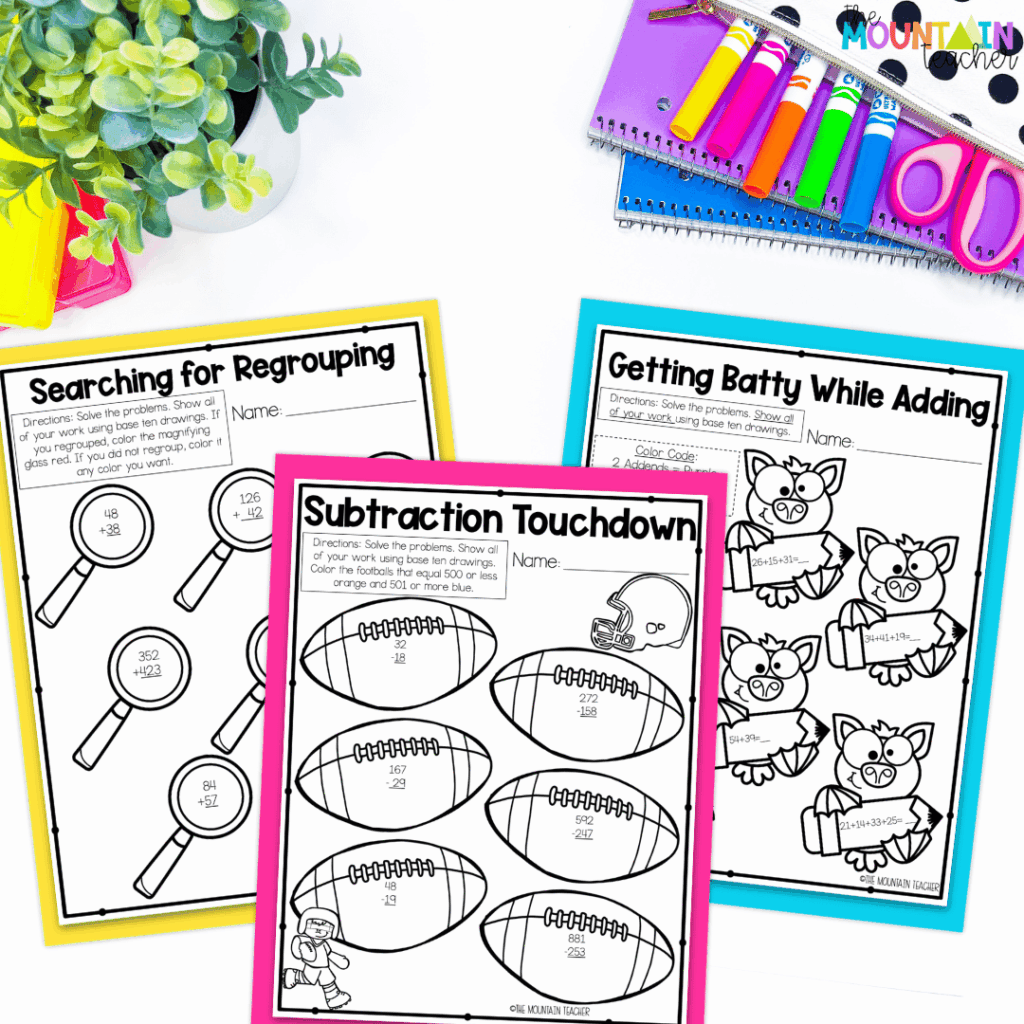
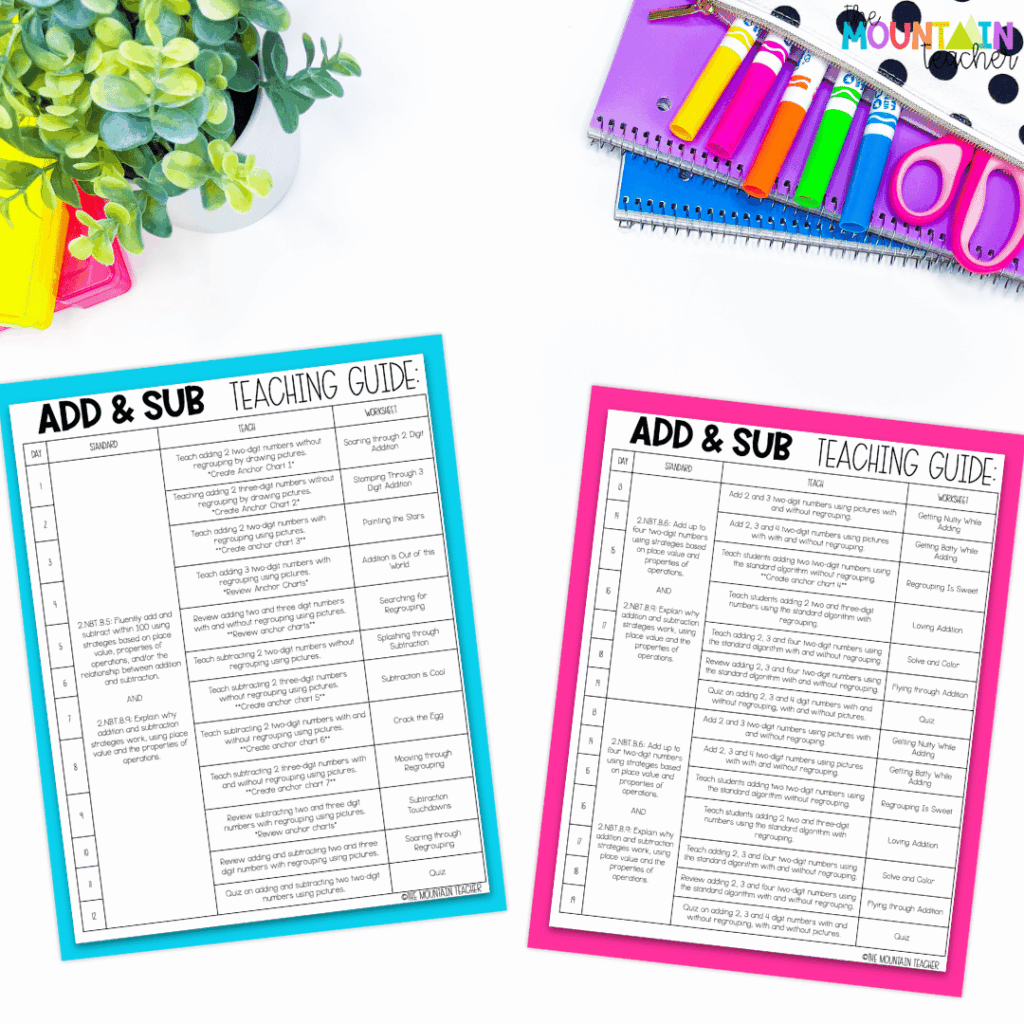
Instead of teaching multiple regrouping strategies at once, focus each day on one specific skill. For example:
- Two digit addition without regrouping
- Two digit addition with regrouping
- Two digit subtraction without regrouping
- Two digit subtraction with regrouping
- Three digit addition
- Three digit subtraction
- Expanded form connections
- Mentally adding and subtracting
This gradual pacing prevents students from feeling overwhelmed and gives them time to truly understand each concept before moving on.
Teacher Tip
Some students may grasp these new concepts quickly and be ready to move forward after just one day, but some will need more time. Building a flex day into your schedule will allow you to add extra review where it is needed, or move forward to the next topic.
Don’t be afraid to be flexible!
What This Looks Like in a Real Classroom
In my classroom, our math block follows a very predictable structure during this unit:
Warm-Up
We start with a quick place value review or mental math problem. This helps students activate prior knowledge before the lesson begins.
Mini Lesson
Next, I introduce the day’s skill using anchor charts, base ten blocks, and guided examples.
Guided Practice
Students solve problems together while explaining their thinking aloud. This is where I catch misunderstandings early, before independent work begins.
Independent Practice
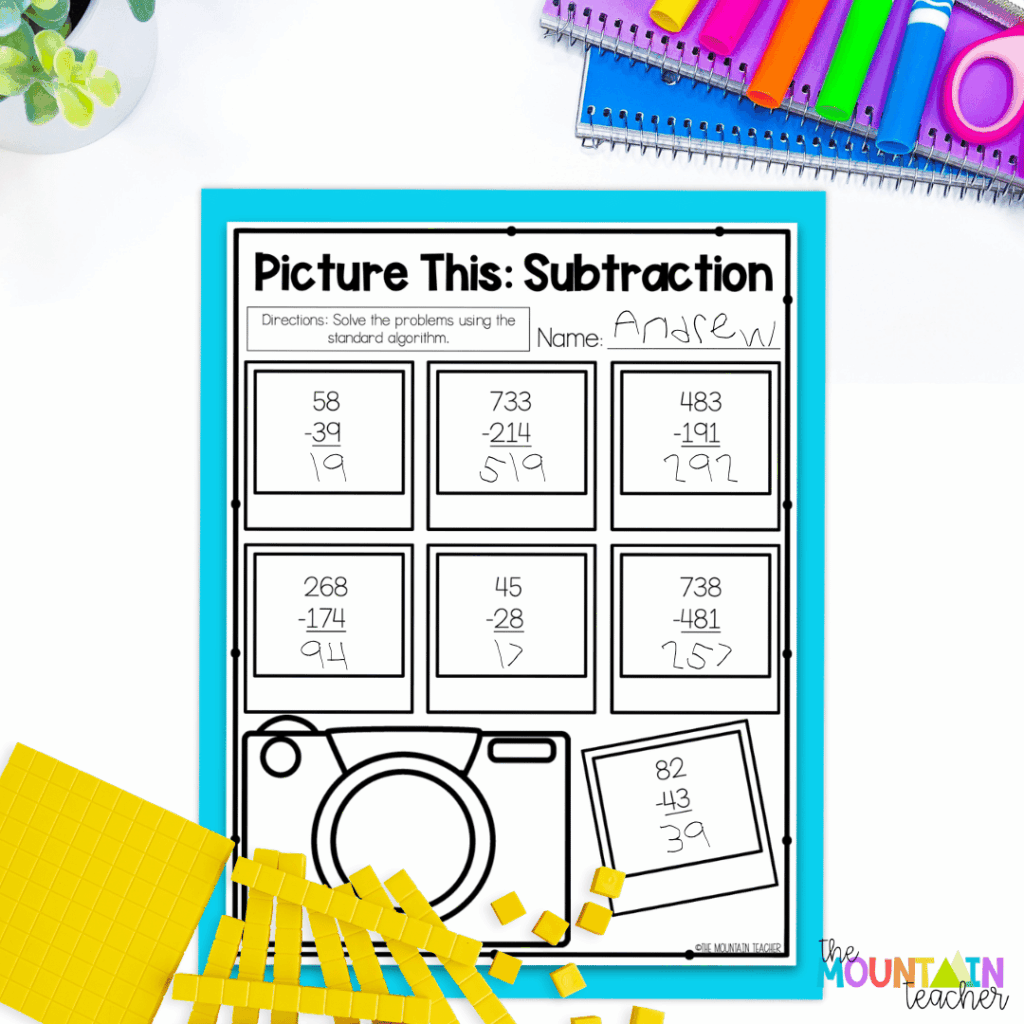
Finally, students complete a worksheet that directly matches the skill we practiced together.
Having this consistent structure helps students know what to expect each day and keeps the math block running smoothly.
2nd Grade Addition and Subtraction Practice Activities That Build Confidence
Once students understand the strategy being taught, they need lots of meaningful practice opportunities. That’s exactly why I created my 2nd Grade Addition and Subtraction to 1000 Unit.
This resource was designed to walk students step-by-step through addition and subtraction with and without regrouping while giving teachers a clear daily plan to follow. Inside the unit, you’ll find:
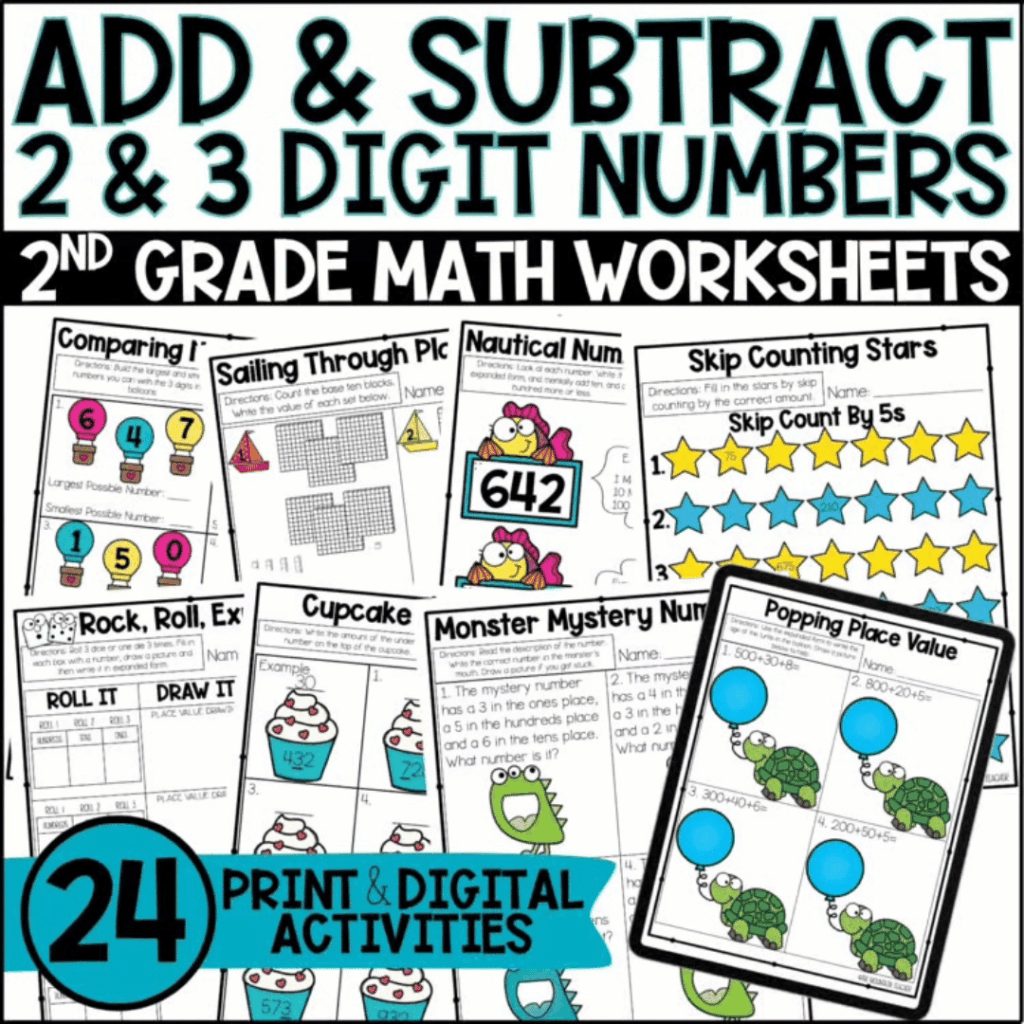
- 27 printable worksheets and activities
- A 54-page digital workbook
- A complete teaching guide
- Anchor chart ideas
- 2 quizzes
- A pre/post assessment
- 6 homework pages
- Answer keys
- Printable, Google Slides, and Easel options
The lessons cover two digit addition and subtraction with and without regrouping, as well as three digit addition and subtraction with and without regrouping. Students also practice using base ten blocks to solve problems, working with the standard algorithm, and adding multiple two digit numbers to 100. The skills are introduced in a clear, step-by-step sequence so students can build confidence as they move through the unit.
Because the lessons are already organized into a clear sequence, you don’t have to spend hours figuring out what to teach next or searching for matching practice pages. Everything works together to help students build understanding one step at a time.
Make Teaching 2nd Grade Addition and Subtraction to 1000 Easier
Teaching 2nd grade addition and subtraction to 1000 does not have to feel overwhelming. When students move from hands-on models to written strategies gradually, regrouping becomes much less confusing.
If you’re ready to make your math block more organized and less stressful, grab the 2nd Grade Addition and Subtraction to 1000 Unit and start teaching with confidence. The teaching guide, anchor charts, worksheets, assessments, and digital activities are all ready to go, so you can spend less time planning and more time helping your students succeed.
Want Your Entire 2nd Grade Math Year Planned?
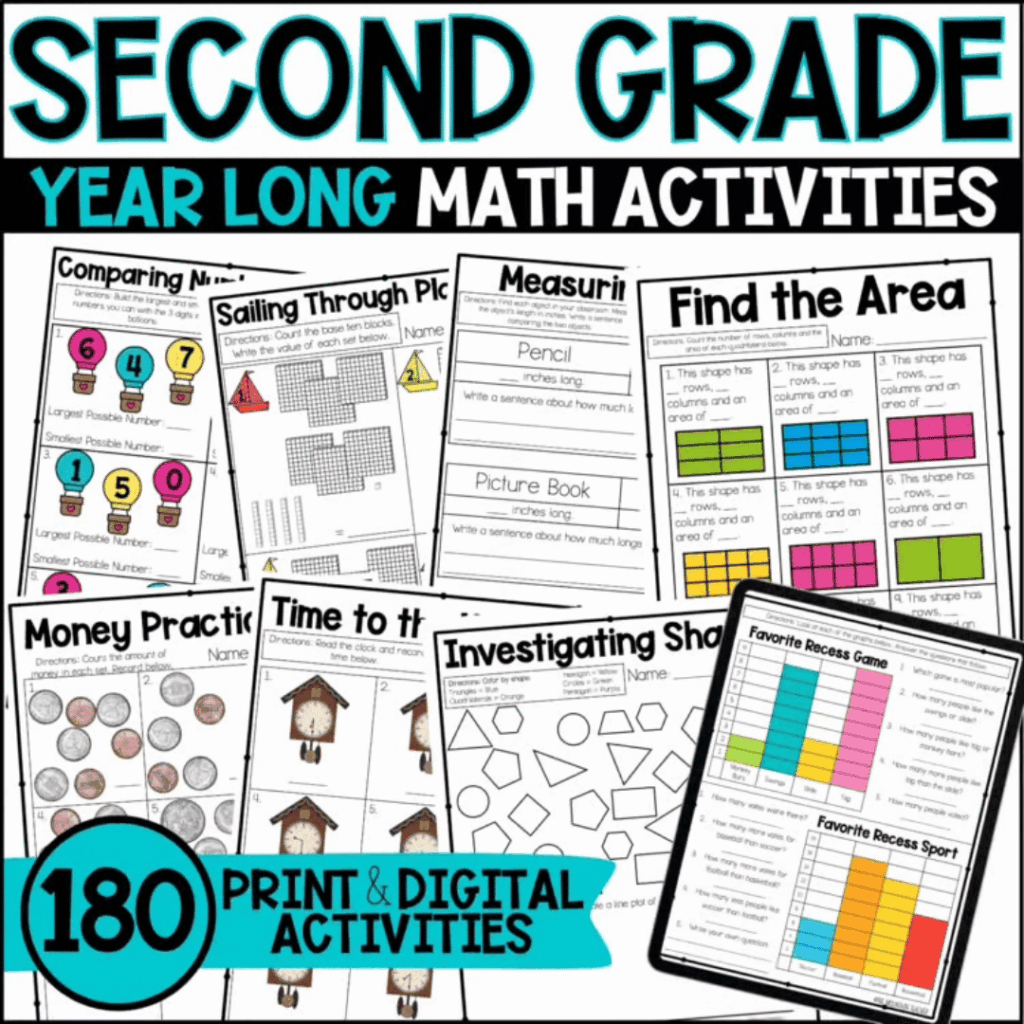
If having a unit like this ready to go makes your teaching life easier, the 2nd Grade Yearlong Math Bundle will completely streamline your math planning all year long.
Inside the bundle, you’ll get:
- 9 complete 2nd grade math units
- Teaching guides for every unit
- Assessments and practice tests
- Weekly homework pages
- Anchor charts and posters
- Printable and digital formats
- Benchmark tests for BOY, MOY, and EOY
- A yearlong scope and sequence
The bundle includes units for Place Value, Addition and Subtraction to 1000, Word Problems, Data and Graphing, Measurement, Geometry, Money, Time, and Arrays.
Whether you’re teaching whole group lessons, small groups, math centers, remediation, or enrichment, this bundle gives you consistent routines and ready-to-use resources for the entire year.
If you’re ready to simplify your planning and feel more confident walking into your math block each day, grab the 2nd Grade Yearlong Math Bundle and make your year so much easier!
Looking for More Math Teaching Tips?
Be sure to check out these posts next for more classroom tips, lessons, and ideas!
- Setting Up Practical Math Centers that Show Results
- Teaching 2nd Grade Measurement Made Easy
- The Best Measurement Activities for 2nd Grade
Save These 2nd Grade Addition and Subtraction Ideas for Later
Make sure to pin this post on Pinterest so that when you’re ready to teach 2nd grade addition and subtraction to 1000, you’ll have all the tools you need at your fingertips!