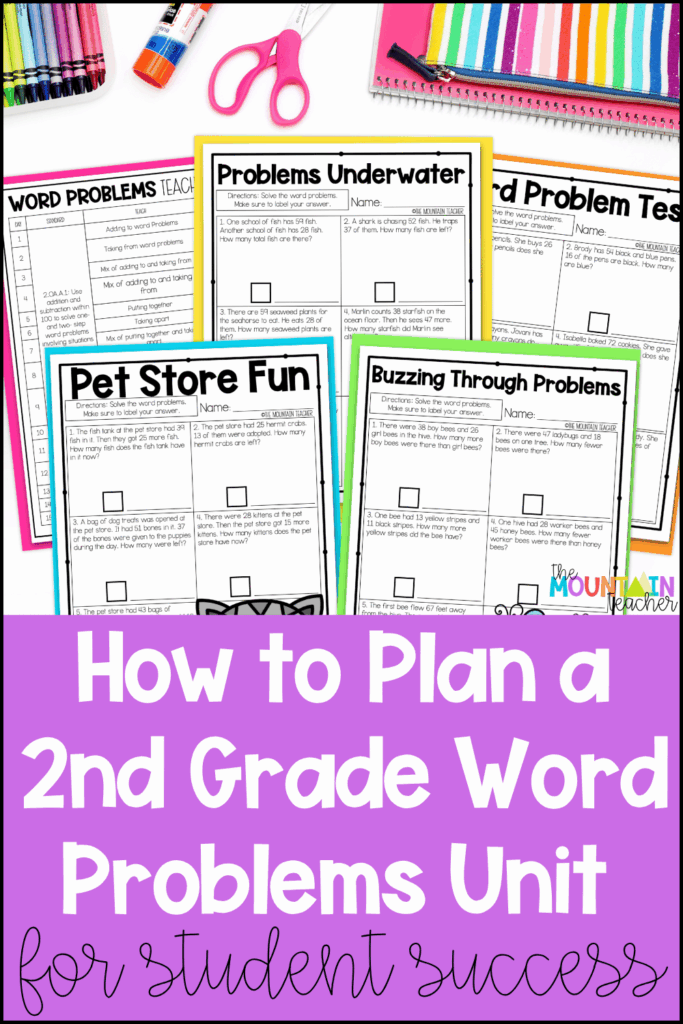
2nd grade word problems can feel like the moment your students suddenly forget everything they know about math. One minute, your students are confidently adding and subtracting, and the next, they’re staring at a short story problem like it’s written in a completely different language. The good news is this does not have to feel overwhelming for you or your students. With a clear structure, intentional pacing, and consistent routines, word problems can become one of the most confidence-building parts of your math block instead of the most stressful.
Why 2nd Grade Word Problems Feel So Overwhelming for Students
Word problems ask a lot of young learners all at once. In 2nd grade, we expect students to read a problem, understand what is happening, decide what operation to use, solve, and finally explain their thinking. That is a big mental load!
A common breakdown happens when students skip straight to numbers without understanding the story. For example, a student reads “There were 24 apples, and 18 were eaten. How many are left?” they may immediately subtract without really processing what “left” means in the situation. Others may rely on keywords instead of understanding context.
When this happens, word problems start to feel like guessing instead of thinking. The missing piece is not more practice. It is a clear, step-by-step structure that teaches students how to slow down and make sense of the problem first.
How to Ditch the Overwhelm with a Clear 2nd Grade Word Problems Plan
If you are sitting down to plan your 2nd grade word problems unit, it can feel like a lot to organize at once. Which problem types come first? How long should each skill take? What do students actually need to master?
You do not have to figure it out alone. A strong unit comes down to a few key pieces working together. Here is what we will focus on:
- Using a pre-test to guide instruction
- A clear pacing plan throughout the unit
- Visuals and modeling that show student thinking
- Daily practice that builds skill step by step
- A simple, predictable classroom routine
- Ongoing assessment to guide next steps
When these pieces are in place, word problems stop feeling random and start feeling structured, predictable, and much easier for students to understand. And the best news? I have all of this mapped out in my 2nd Grade Word Problems Unit!
Start With a Clear Picture of Student Understanding
Before teaching anything new, it helps to see what your students already know. A short pre-test or a few sample problems can give you a quick snapshot of their thinking.
At this point, you are not looking for perfection. You are looking for patterns. As you review responses, ask yourself:
- What do students do well?
- Do they understand what the problem is asking?
- Are they choosing operations based on understanding or guessing?
For example, you might notice some students can solve addition problems easily but struggle when the problem is phrased in a story. Others may need support representing their thinking with drawings. Still others might misunderstand what the question is asking, or make hasty decisions from what they read.
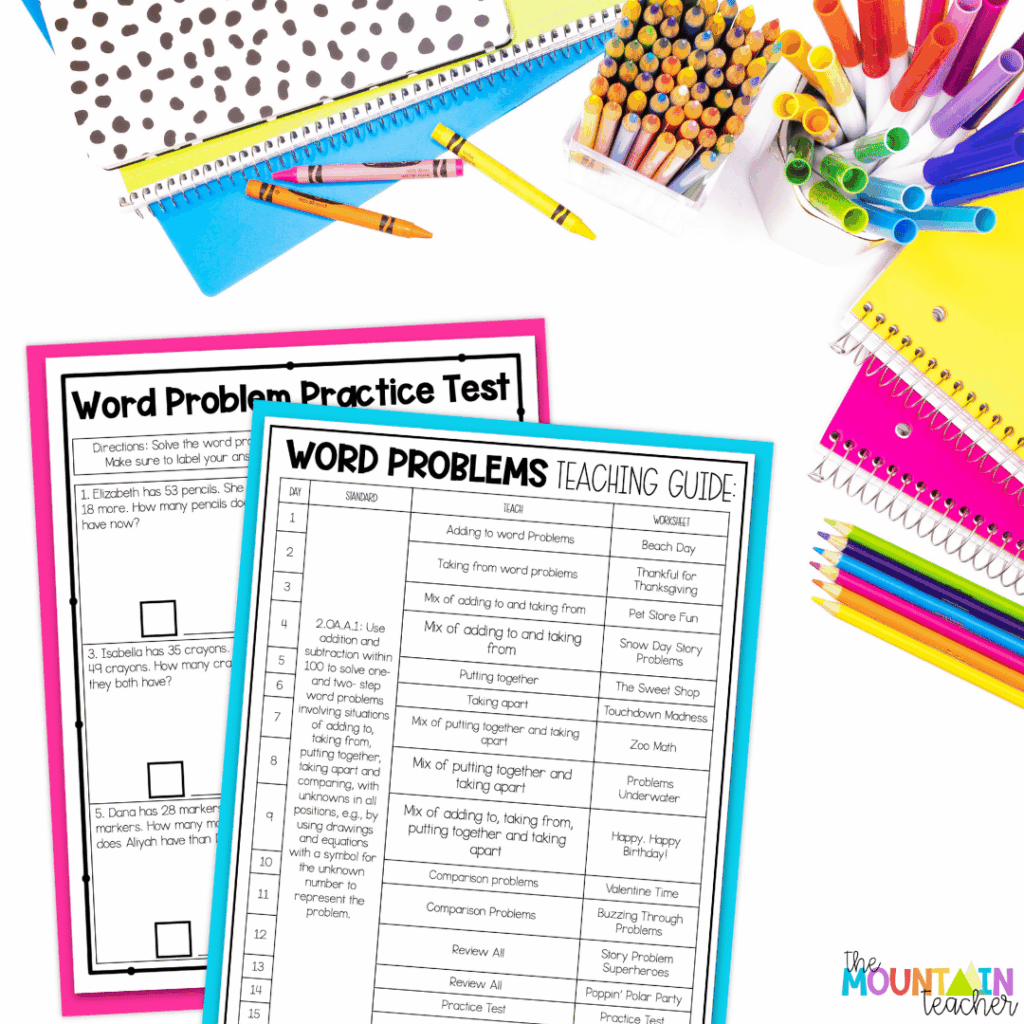
Inside the 2nd Grade Word Problems Unit, the pre-test is already included along with a 3-week teaching guide that shows you exactly what to teach each day, so you are never left planning from scratch.
Teach Word Problem Types in a Clear Progression
One of the easiest ways to build confidence is to teach word problems in a logical order instead of mixing everything at once.
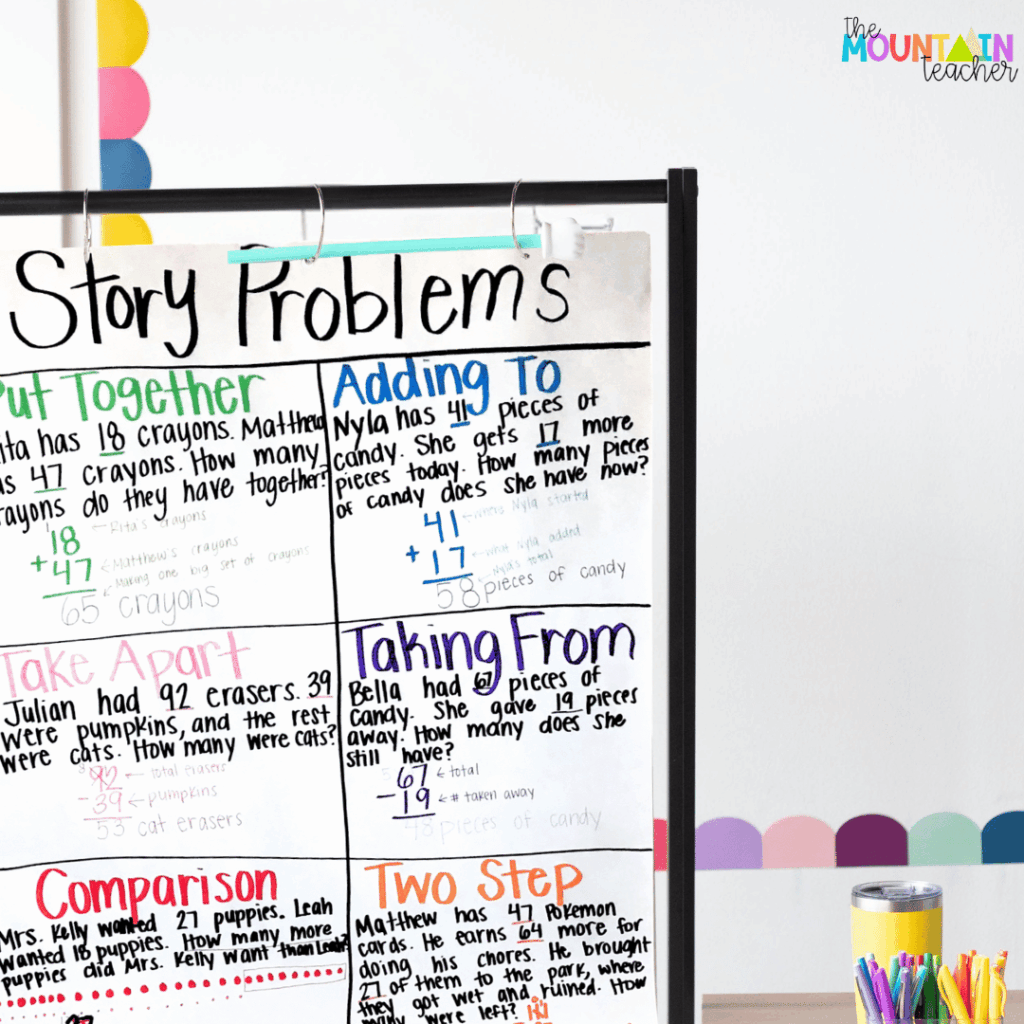
Start by adding to and taking from problems. These are the most concrete and often easiest for students to understand. For example, you can say something like, “Sarah has 15 stickers. She got 7 more.” At this stage, students should be modeling with drawings or counters while explaining what is happening.
Then move into putting together and taking apart problems. For example, students can physically show two groups of counters, combining or separating them to demonstrate the problem.
Next, bring in mixed practice so students can decide which strategy makes sense on their own. This step-by-step order helps students build understanding instead of guessing their way through different problem types.
Finally, introduce comparison problems that require students to think about differences. A helpful classroom move is to line up two groups of counters and physically compare which has more and which has less.
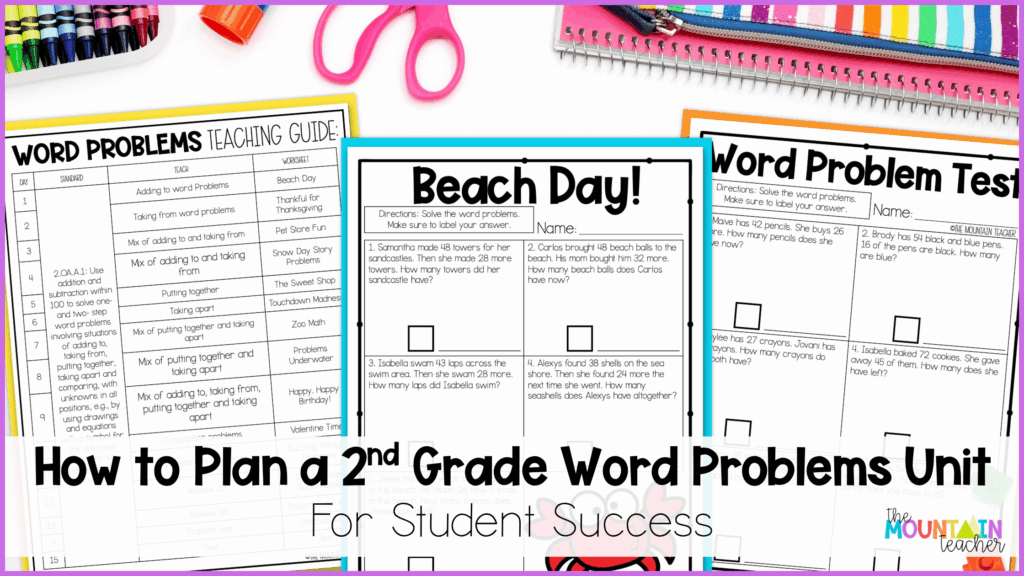
In my 2nd Grade Word Problems Unit, you will find a 3-week teaching guide with this exact pacing all mapped out for you. My goal here is to make it as easy as possible for you to implement a clear progression of skills. Just open the guide and teach! You can rest easy knowing everything is aligned to the standards!
Make Modeling the Heart of Every Lesson
No matter what specific skill or standard you’re teaching, one thing is for sure. . . modeling matters! Before students work independently, they need to see what strong thinking actually looks like.
Start your lessons by reading a problem aloud and modeling your thinking out loud. Use an anchor chart to guide the process so students can follow along.
A simple classroom script might sound like:
“First, I’m going to read the problem twice, once to just read it, and a second time to understand it. Now I’m asking myself, what do I know? What am I trying to find? Some apples were taken away, so I think subtraction is what we’re working on. Let me draw or demonstrate this with counters so I can see it clearly.”
Then physically model it. If apples are being taken away, remove counters as you talk through it. If groups are being combined, bring them together on the board or desk. This step is huge for 2nd graders because it shows them that solving word problems is a process, not a guess.
Daily Practice That Builds Confidence
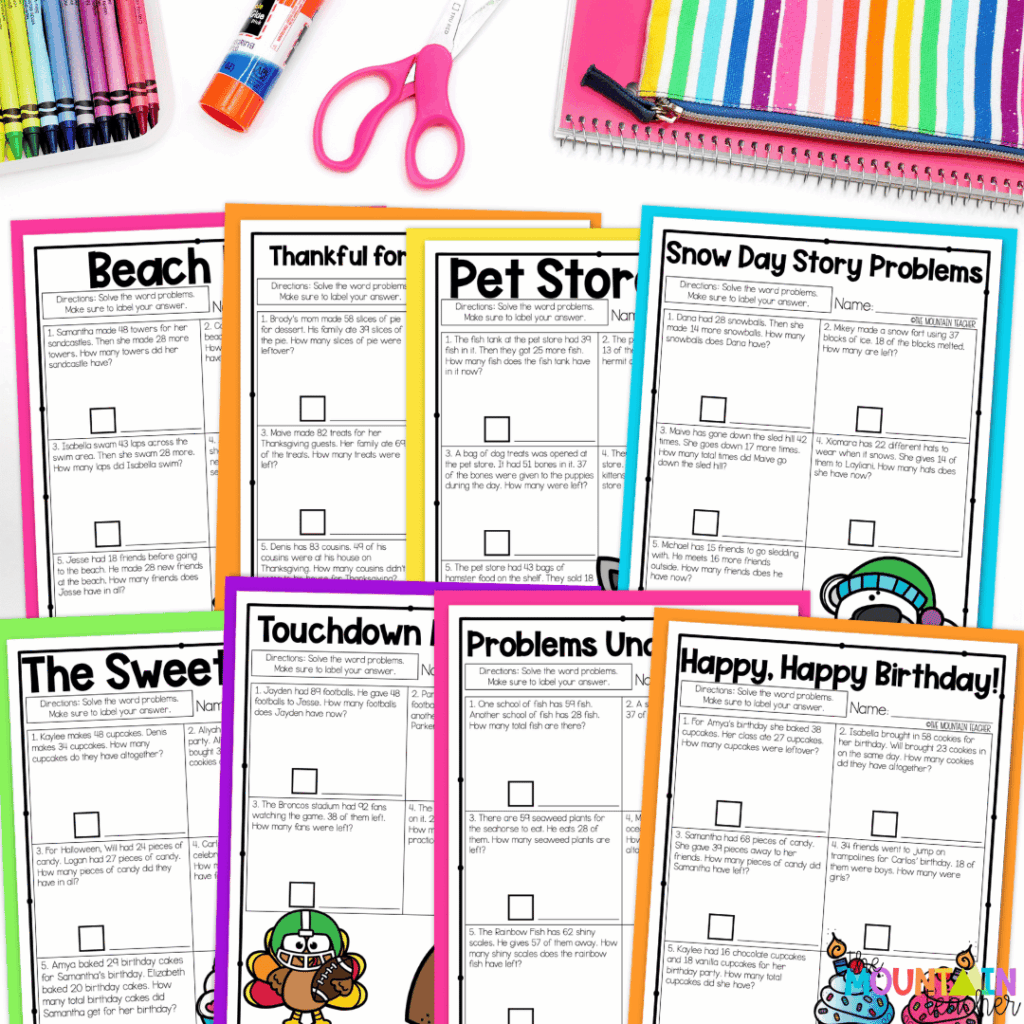
Once students have seen modeling, they need short, consistent practice to reinforce the skill. This unit includes 13 daily word problem worksheets that follow the exact teaching progression. Students will work through:
- adding to and taking from problems
- putting together and taking apart situations
- comparison problems
- mixed problems
Each worksheet is intentionally short and designed to provide ample space to work, so students can focus on the thinking, not just finishing. You also get digital versions in Google Slides and Easel, which work great for whole-class modeling, small groups, or centers.
Keep Your Daily Routine Simple and Predictable
Word problems go much more smoothly when students know exactly what to expect each day.
A simple routine might look like this in action:
You start by solving one problem together as a class. You model your thinking using the anchor chart while students watch and participate. Then you solve a second problem together using counters or drawings. After that, students complete their worksheet independently while you circulate and support. At the end, you bring everyone back together to share strategies.
This structure works because students always know what comes next. It also gives you time to catch misunderstandings in real time instead of waiting until the end. The included 3-week teaching guide walks you through this exact flow, so you do not have to plan it day by day!
Use Assessments to Guide Instruction
This unit includes a pre-test, post-test, and progress checks throughout the 3 weeks so you can adjust instruction as needed.
You may notice patterns like some students understand addition problems but struggle with comparison, or others need more support with drawing models before writing equations. These checkpoints help you slow down where needed and move forward when students are ready.
A Ready-to-Use 2nd Grade Word Problems Unit
If you want a fully planned unit that follows this exact structure, the 2nd Grade Word Problems Unit is designed to take the planning off your plate.
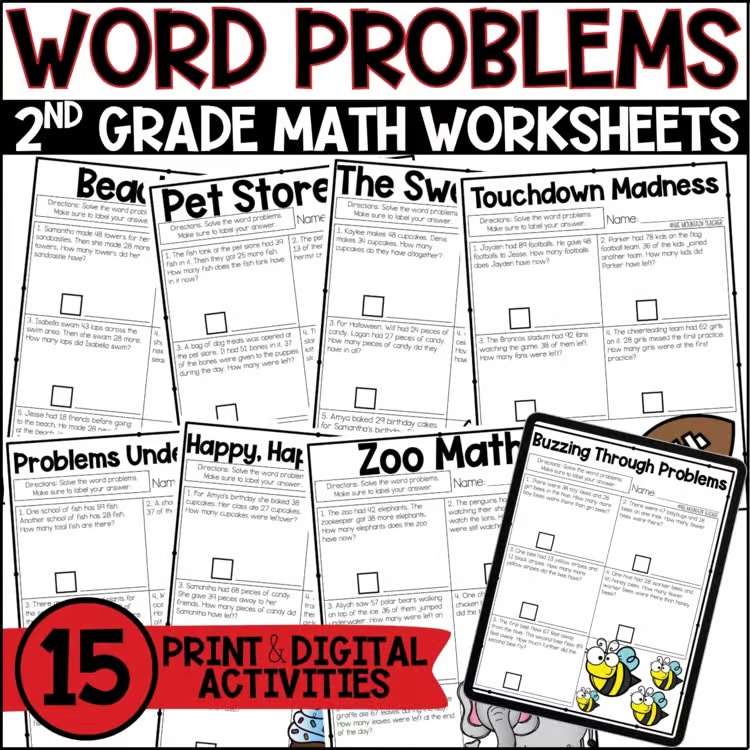
Inside you will find:
- 13 daily word problem worksheets (printable and digital)
- 3-week teaching guide with daily lesson plans
- Pre-test and post-test (printable and digital)
- 3 homework assignments
- Anchor chart ideas for teaching problem types
- Answer keys
Everything is laid out so students move step by step through word problem skills without confusion or overwhelm.
If word problems have felt inconsistent or hard to structure, this gives you a clear, ready-to-use plan you can follow immediately in your classroom. You can rest easy knowing that everything is planned for you, and your students will receive plenty of practice to master these skills.
Make Word Problems Feel Doable Again
I hope you are leaving this post feeling more confident about teaching word problems in 2nd grade. This does not have to be the most stressful part of your math block. When students are taught in a clear progression, see strong modeling, and get consistent daily practice, they begin to approach word problems with understanding instead of uncertainty.
If you want a step-by-step plan already laid out for you, start with the 2nd Grade Word Problems Unit. And if you want that same structure across your entire year, check out my 2nd Grade Math Bundle below as the next step to make planning simple and consistent.
2nd Grade Math For The Whole Year
If you love having your word problem unit organized and ready to go, the 2nd Grade Math Bundle brings that same structure to your entire year of instruction.
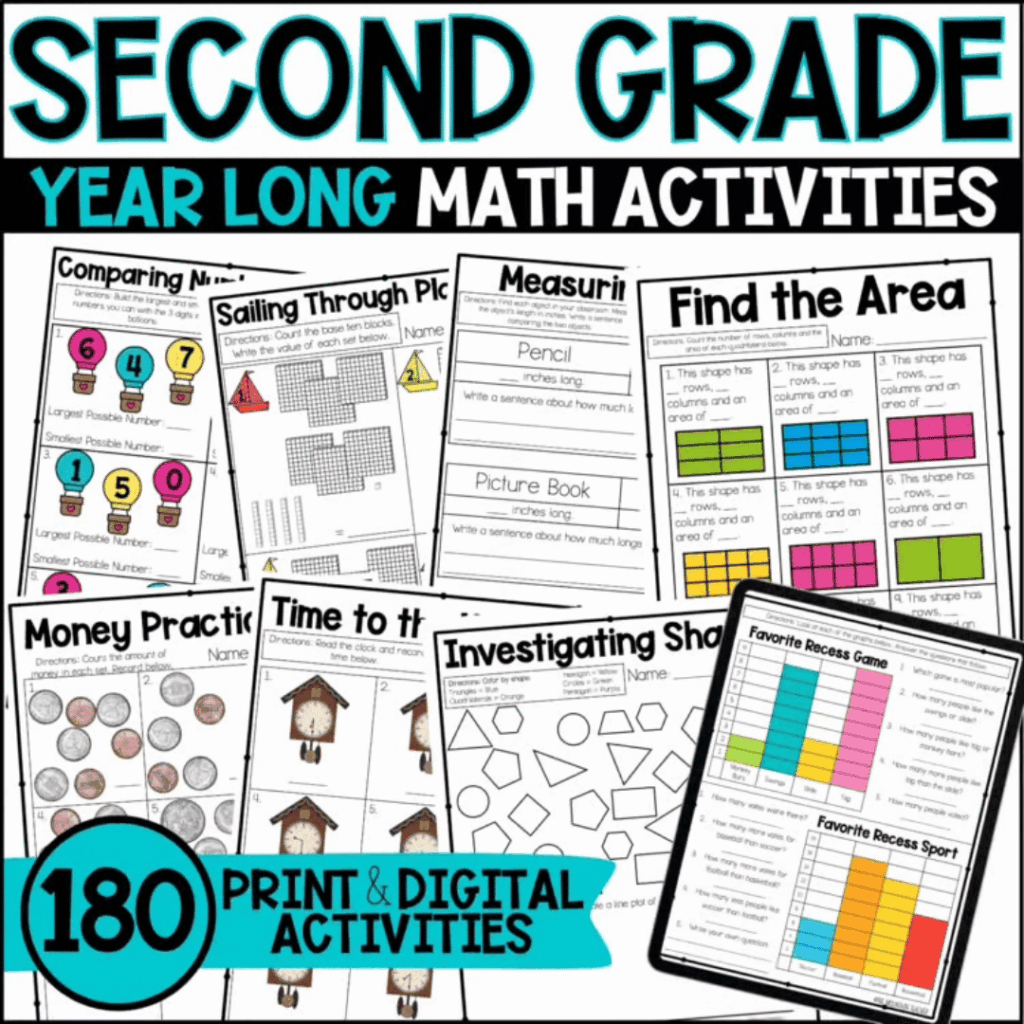
This bundle includes 40 weeks of math lessons, worksheets, review activities, homework, anchor charts, pacing guides, and assessments aligned to all major 2nd grade standards.
Inside you will find:
- 9 complete 2nd grade math units
- Teaching guides for each unit
- Tests and practice assessments
- Weekly homework pages
- Anchor charts and posters
- Answer keys
- Benchmark tests for BOY, MOY, and EOY
- Year-long scope and sequence
Units cover place value, addition and subtraction to 1000, word problems, data and graphing, measurement, geometry, money, time, and arrays.
If you are ready for more consistency and less weekly planning stress, this bundle helps you get there!
Read These Posts Next!
Pin This 2nd Grade Word Problem Unit For Later!
Make sure to pin this post on Pinterest so that when you’re ready to plan your 2nd grade word problems unit, you’ll have all these ideas at your fingertips!