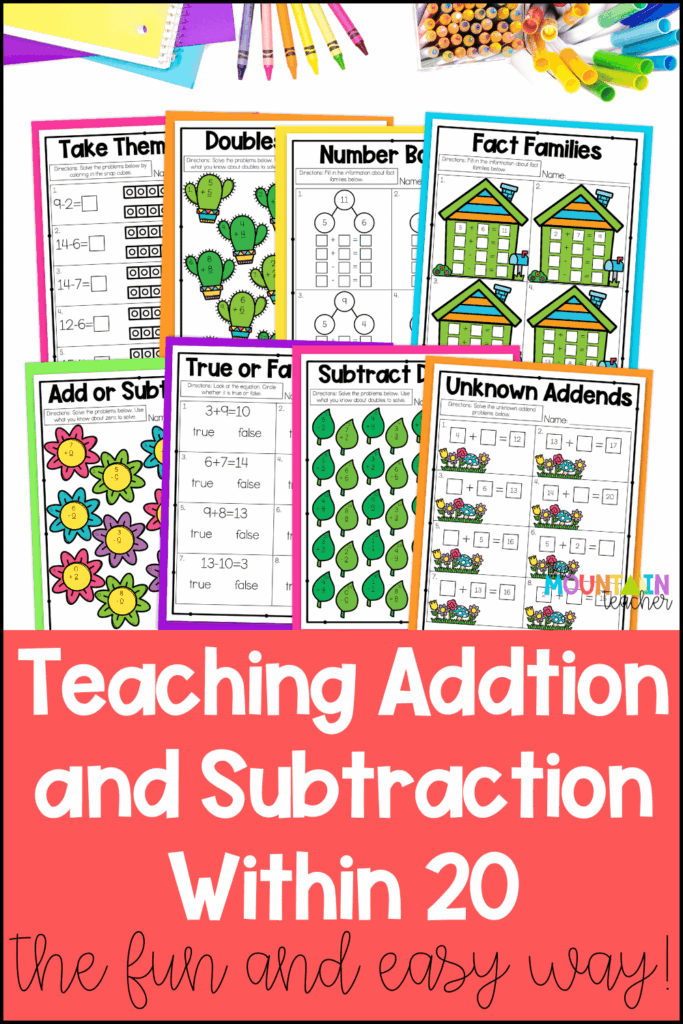
If you’ve ever taught addition and subtraction in 1st grade, you know this moment well: some students are confidently counting on, others are still counting every single object, and a few are staring at the equation like it’s written in another language. Addition and subtraction within 20 is one of the biggest math goals in 1st grade, and it’s also one of the hardest to teach well. There are so many strategies, so many standards, and so many ways kids can get stuck if the foundation isn’t solid. But don’t worry, friend! With clear visuals, hands-on strategies, and a consistent routine, addition and subtraction can finally start to click. And yes, it can feel doable to teach, too. Let’s do this the fun and easy way!
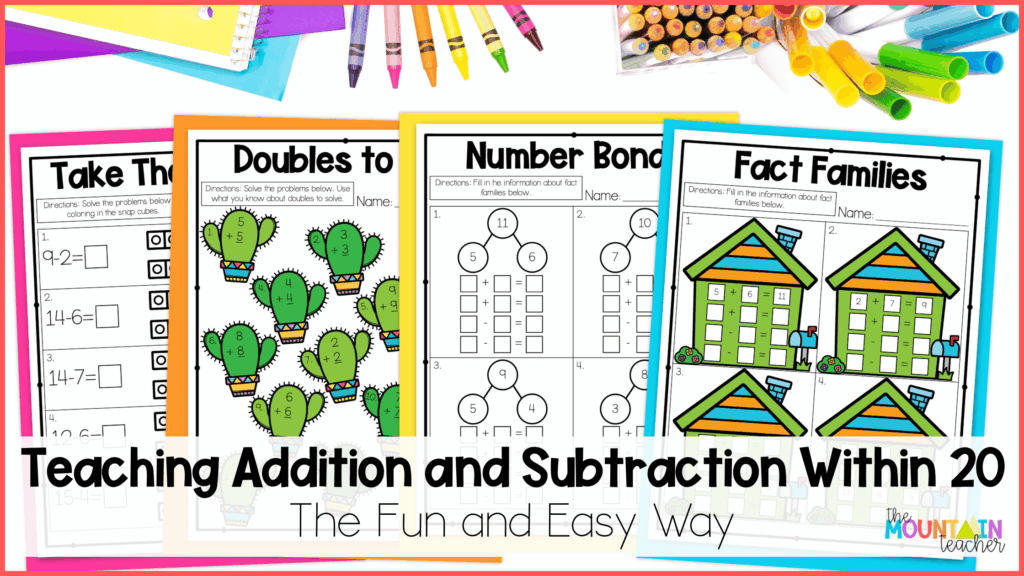
Why Addition and Subtraction Within 20 Feels So Big
On the surface, adding and subtracting within 20 sounds simple. But for 1st graders, it requires a lot of thinking all at once. Students are learning to use pictures and objects, count on and count back, work with number lines, make 10, and understand doubles and related facts. At the same time, they’re expected to understand unknowns, make sense of the equal sign, and decide whether equations are true or false.
Some students rely heavily on counting everything. Others guess because they don’t yet have strategies they trust. Many don’t realize that addition and subtraction are connected at all. This is why a strong teaching sequence and repeated exposure to strategies are so important during this unit.
A Clear, Low-Prep Way to Teach Addition and Subtraction
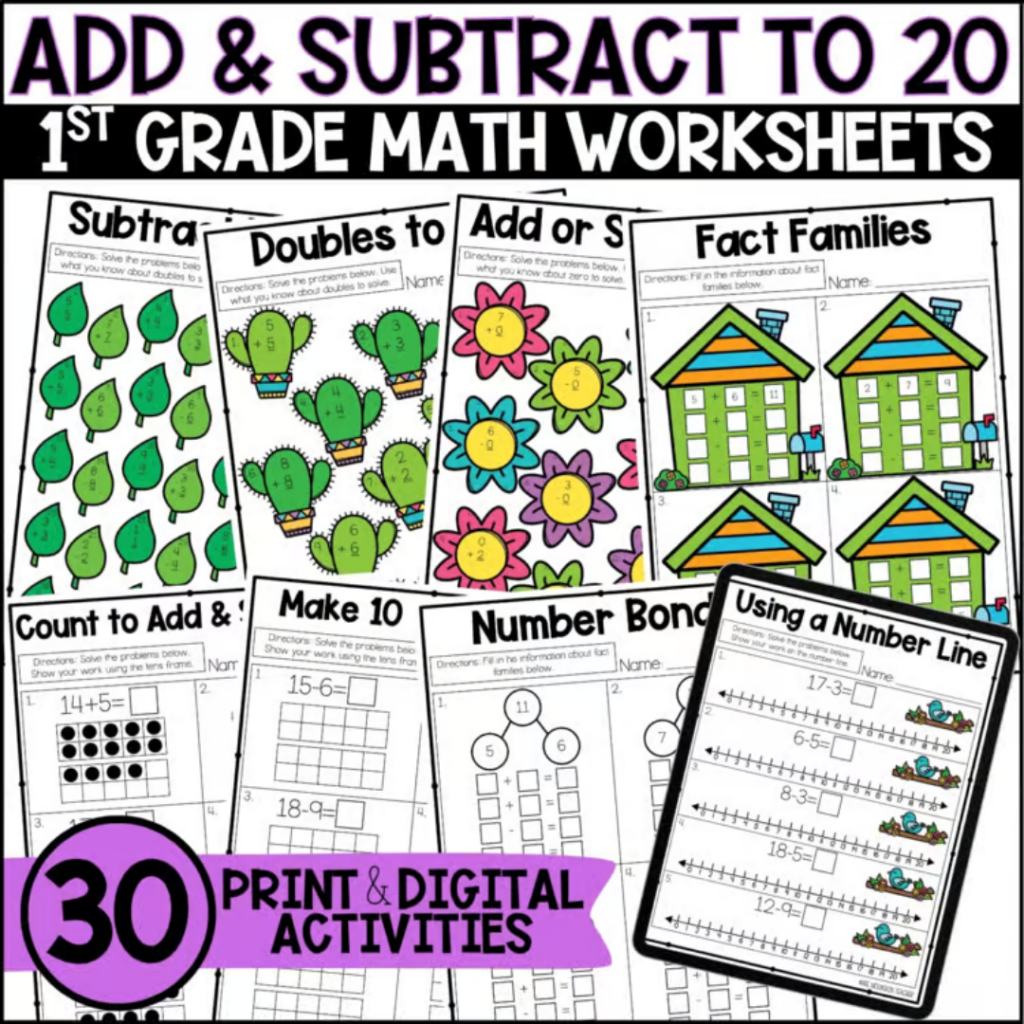
To take the stress out of planning, I created the Addition and Subtraction Within 20 Unit for 1st grade. This unit is designed to walk students through strategies step by step over six weeks, so nothing feels rushed or skipped.
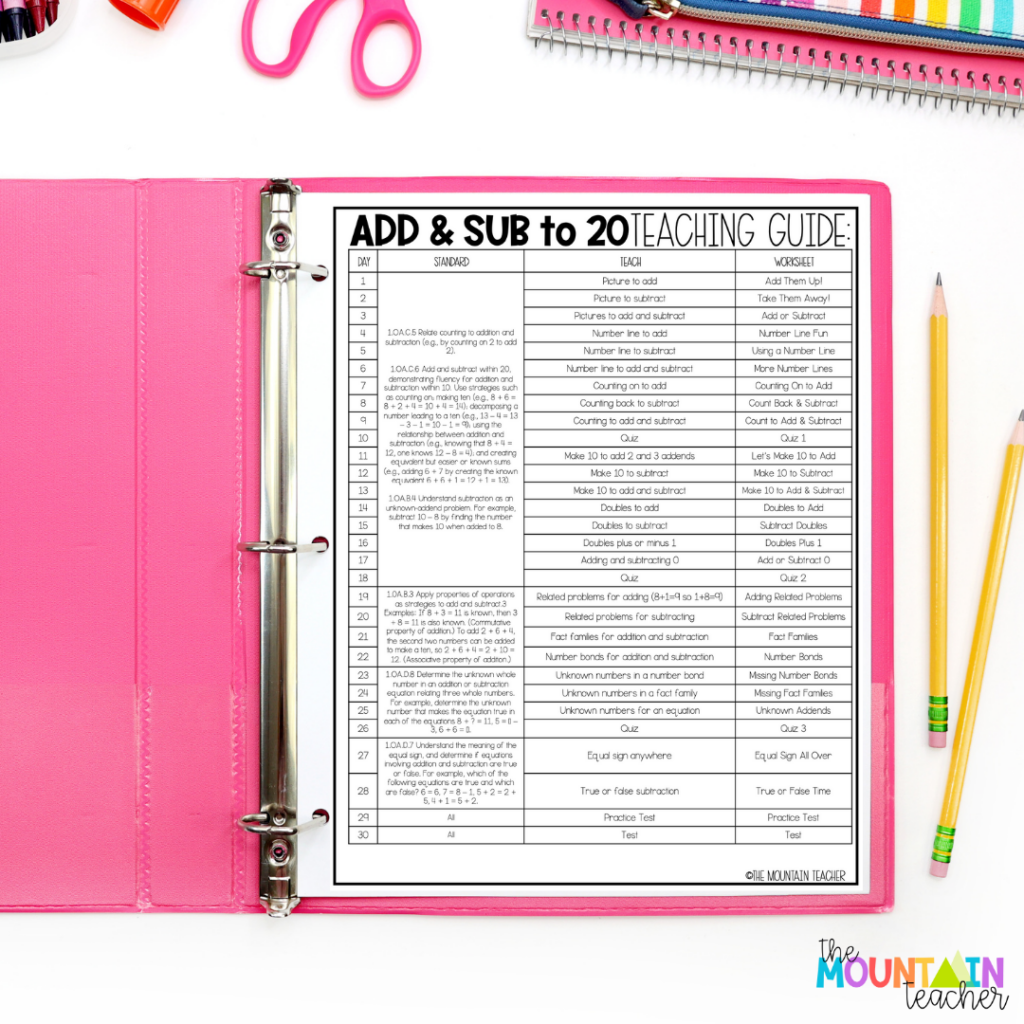
Instead of pulling worksheets from multiple places or wondering which strategy to teach next, everything is planned for you in a clear sequence. Inside the unit, you’ll find:
• 30 days of worksheets and activities
• A 30-day teaching guide
• Strategy anchor charts
• 3 quizzes
• A pre and post test
• Answer keys
• 55 printable worksheets and assessments
• 55 Easel activities for digital practice
Every lesson focuses on ONE strategy at a time. That means students aren’t overwhelmed, and you aren’t guessing what to teach tomorrow. Now, let’s take a look at how I recommend actually teaching these skills in a simple way that clicks with students.
Step One: Make Strategies Visible With Anchor Charts
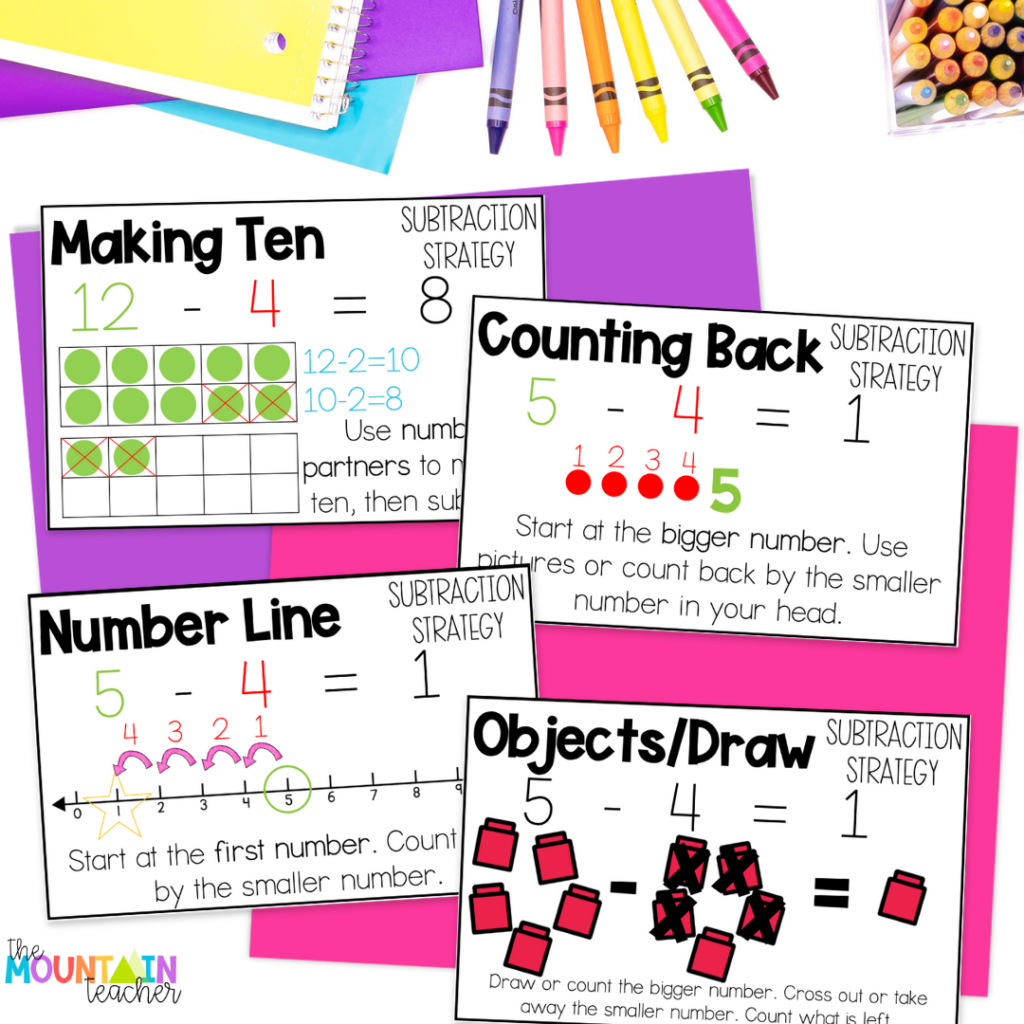
Addition and subtraction strategies need to be seen before they’re understood. Many students struggle because the math feels invisible to them. Anchor charts help solve that problem.
Each strategy in this unit has a clear visual that shows students what the math is doing. On Day 1 of a new strategy, I introduce the anchor chart and model exactly how it works using a real problem. For example, when teaching counting on, I start with a simple equation like 3+2 and show how we start at 3 and count forward instead of counting all.
I talk through my thinking slowly and repeat the language students will use themselves. These anchor charts stay posted all unit long and are referenced during lessons, guided practice, and independent work, so students always have a visual reminder to lean on.
Step Two: Hands-On Practice Before Worksheets
Before students are expected to solve equations on paper, they need time to touch, move, and model the math.
On the first day of a strategy, hands-on practice might look like using cubes to act out an addition problem, jumping forward on a floor number line, or building a ten with ten frames and counters. For subtraction, students might physically remove counters or act out a story problem together.
Each lesson in the unit includes clear suggestions for hands-on practice, so you never have to wonder what manipulatives to use or how to model the strategy. This step is especially important for new teachers because it shows students exactly how to think before asking them to work independently.
Step Three: Practice Pages That Build Confidence
Once students understand the strategy through modeling and hands-on work, they’re ready for independent practice. But we’ve got to keep it engaging, right?
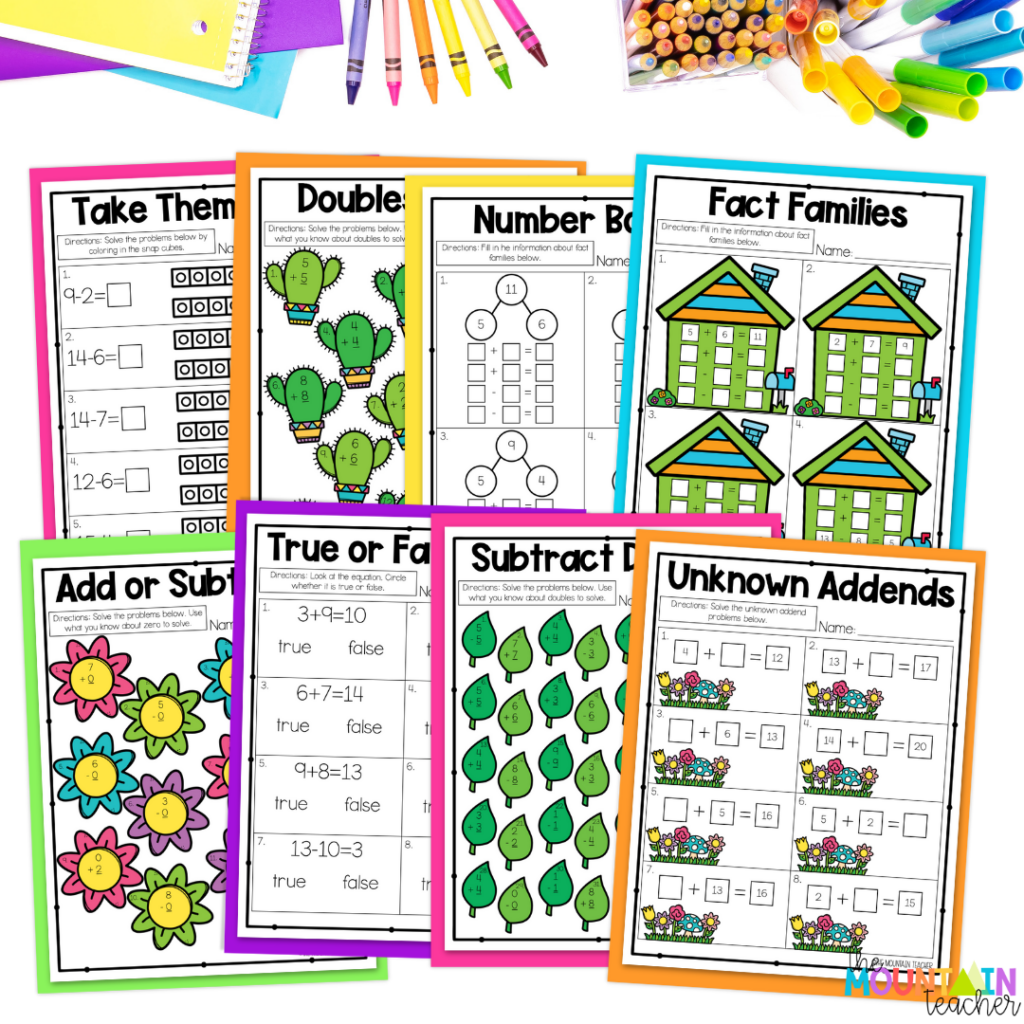
The worksheets in the Addition and Subtraction Within 20 Unit are intentionally simple and focused, while still being kid-friendly. Each page targets one specific skill, so students know exactly what strategy to use. They might draw pictures, circle number line jumps, break apart numbers to make 10, or decide whether an equation is true or false. The different types of activities keep it fun and engaging, while still getting plenty of practice in.
Because the worksheets directly match the lesson, students don’t feel lost, and you can quickly see who understands and who needs extra support. The goal is confidence and understanding, not speed or memorization.
A Simple Daily Routine That Works
If your math block ever feels rushed or chaotic, a predictable routine makes a huge difference. This is a simple, doable routine that utilizes the activities in the Addition and Subtraction within 20 Unit.
Warm-Up (2 minutes)
Ask a quick question like, “How could you solve 7 + 8?” Let students share strategies and explain their thinking. This gives you a fast check-in before the lesson starts.
Mini Lesson (5 minutes)
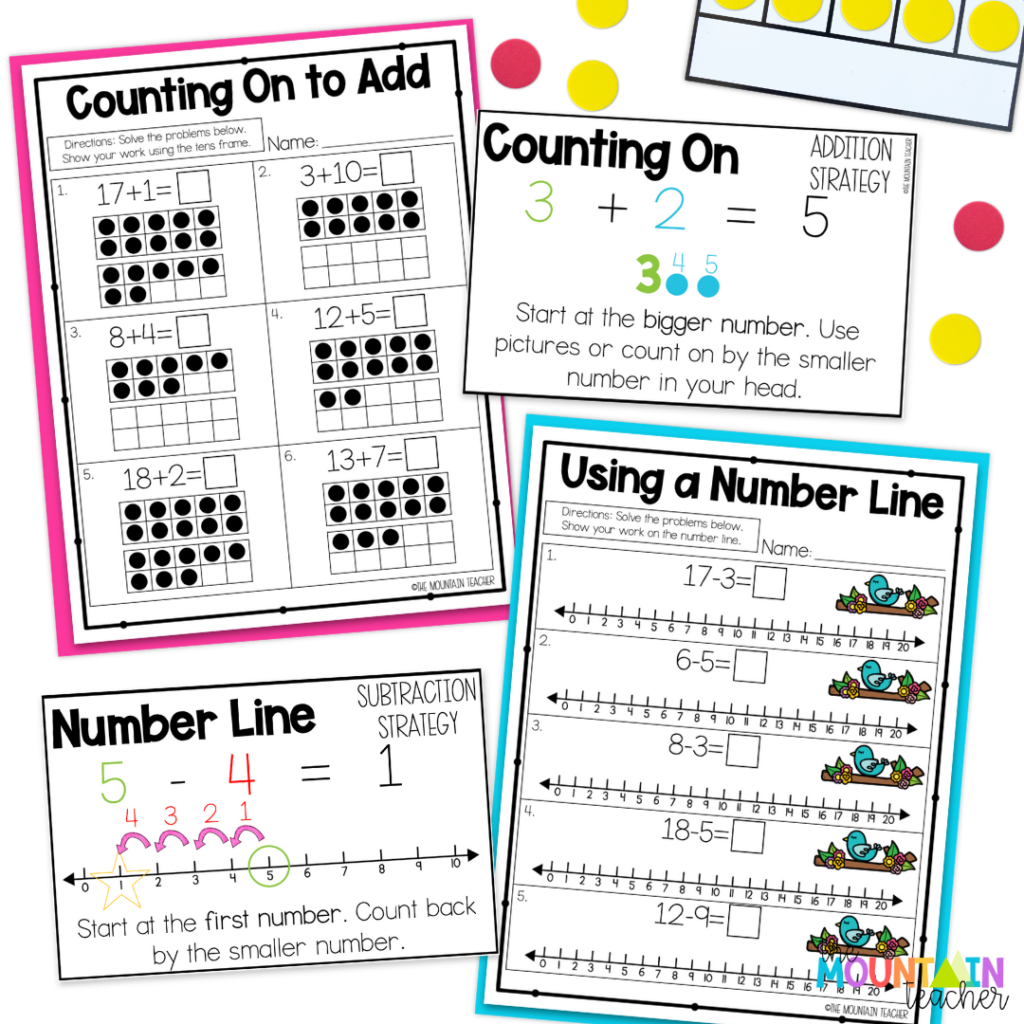
Teach ONE strategy using an anchor chart or manipulatives. The teaching guide tells you exactly what to focus on each day, which is especially helpful if you’re new to teaching math or struggle to cover all the standards.
Guided Practice (5 minutes)
Solve problems together. Build them, draw them, or model them on a number line. This is where misunderstandings get caught early.
Independent Practice (5 minutes)
Students complete the aligned worksheet while you observe, support, and take notes for reteaching or enrichment.
This simple routine keeps lessons focused, calm, and productive. Plus, it’s simple and easy to implement and won’t require you to restructure your whole day!
Make Addition and Subtraction within 20 Easy and Fun to Teach
If you want to walk into math knowing exactly what to teach and feel confident your students truly understand, this unit was made for you. You’ll have easy-to-use resources that students LOVE at your fingertips.
Ready to stop guessing what to teach next? Grab the Addition and Subtraction Within 20 Unit for 1st grade and get six weeks of fully planned, low-prep math lessons, done for you.
Want All Your 1st Grade Math Planned for the Year?
If you love the structure of this unit, the Year-Long 1st Grade Math Bundle makes planning even easier. Inside, you’ll get:
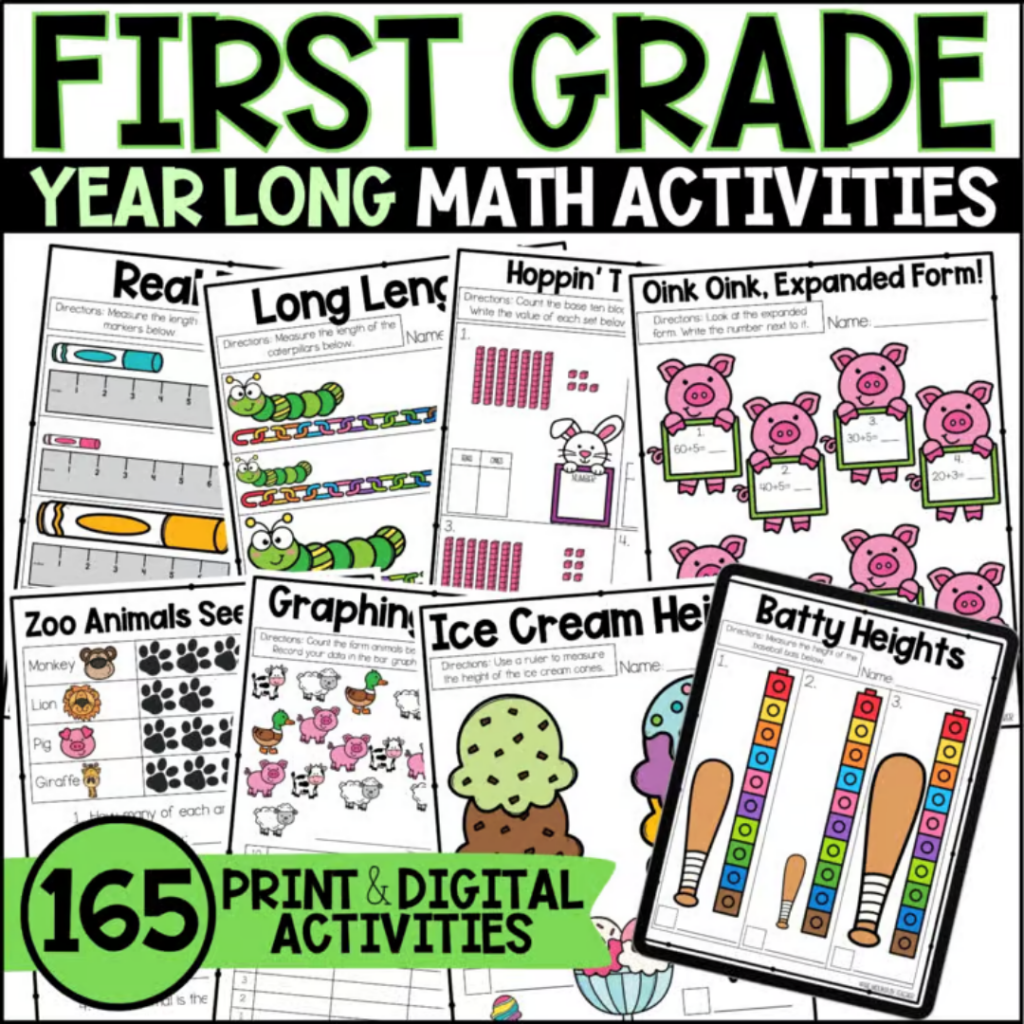
- 8 math units
- 165 worksheets and activities
- Teaching guides
- Tests and quizzes
- Anchor charts
- Answer keys
- Printable, Google Slides, and Easel formats
- BOY, MOY, and EOY assessments
- A year-long scope and sequence
If you want your entire 1st-grade math year planned and ready to go, the Year-Long 1st Grade Math Bundle has you covered. Snag it today and thank yourself later!
Looking for More?
Read this post next for more math tips and ideas:
- Setting Up Practical Math Centers that Show Results
- Teaching Kindergarten Geometry: Ideas for 2D & 3D Shapes
- Easy to Use Measurement Lesson Plans for 2nd Graders
Save This Post
Make sure to pin this post on Pinterest so that you can easily find it when you’re ready to tackle teaching addition and subtraction within 20.