Let’s be honest… measurement can feel tricky to teach in kindergarten. “Taller than,” “heavier than,” “longest,” “shortest”… it’s a lot of new vocabulary and hands-on skills all at once! But the good news? Kids LOVE it when they get to use real objects, compare things around the classroom, and see measurement in action. With the right mix of visuals, hands-on activities, and easy-to-follow routines, you can make measurement both meaningful and fun, no stress required.

Making Measurement Fun and Active

Kindergarteners are just starting to see patterns, compare quantities, and make sense of numbers in the world. That’s why concepts like “taller vs. shorter” or “heavier vs. lighter” don’t come automatically. Some kids need repeated hands-on practice to internalize these ideas, while others might need clear visuals or anchor charts to make the comparison concrete.
When we let students explore, measure, and compare in real life by touching, stacking, and moving objects, we’ll have much better results! This helps build a mental picture of what each measurable attribute actually means and looks like. So remember, measurement isn’t just about worksheets and rulers, it’s about helping kids notice the world around them. When they line up blocks to see which is tallest or stack objects to figure out the longest, they’re developing critical thinking, observation skills, and early problem-solving, all while having a blast!
But if you’re like most teachers, it can feel a little overwhelming to teach all.the.things, or even know the best way to sequence them. After all, it’s a lot! That’s why I designed a 3-week Kindergarten Measurement Unit that covers height, length, weight, and more. It includes everything you need to teach measurement confidently in the kindergarten classroom. Come along to see how this resource will change everything (in the best way) when it comes to teaching kindergarten measurement!
Hands-On Learning That Makes Measurement Click

Alright friends, let’s dive right in! The best way to teach measurement? Let students do the measuring! In this unit, your students will use everyday manipulatives, like snap cubes, links, inch rulers, and classroom objects, to practice:
- Measuring objects to the nearest inch
- Comparing heights: tallest, shorter, shortest
- Comparing lengths: longest, shortest
- Comparing weights: heaviest, lightest
To go along with your hands-on learning activities, I’ve included anchor charts and posters to support every lesson. You get colorful posters to help remind students how to measure, as well as definitions for different types of measurement. For best results, laminate these and display them on the carpet or include mini versions at each table. When students can reference visuals while measuring, they build independence and confidence, and you can circulate without feeling like you need to reteach every step.
What’s Included in the Kindergarten Measurement Unit
When I said that this resource has everything you need to teach confidently, I meant it! This is a true all-in-one resource for teaching measurement in kindergarten. Inside, you’ll find:

- 15 Days of Worksheets and Activities: Hands-on, no-prep practice for every skill
- 15-Day Teaching Guide: Step-by-step lessons for height, length, and weight
- Anchor Charts: Visuals for measuring, ordering, and comparing
- Post-Test: Quickly check understanding at the end of the unit
- Answer Keys: Save time and stay organized
It’s designed to fit any classroom, whether you’re supplementing your curriculum, providing enrichment for preschoolers, or reviewing with first graders. Special education teachers will also find this unit adaptable and versatile. The best part, though, is that you don’t have to worry about the sequence or the best way to teach these concepts. It’s all laid out for you in the trusty, 3-week teaching guide! Plus, you can slow the lessons down, speed them up, or revisit them as many times as your kids need!
How to Get Started
So how do we get started? So glad you asked! You don’t need a huge block of time to make measurement stick. Here’s a flexible, step-by-step approach that works well in small groups, whole groups, or independent practice.
Warm-Up with Observation (5 minutes)
Start your lesson with a quick warm-up using observation. Pick two classroom objects, like a pencil and a crayon, or two stuffed animals, and ask your students, “Which is taller?” or “Which is heavier?” Make it interactive by having students hold up hands for taller/shorter or line objects up on the floor so they can visually compare.
Encourage them to make predictions before measuring. Do this by asking questions like, “Which do you think is heavier? Why?” This helps build reasoning skills. Rotate the objects each day so students encounter a variety of heights, lengths, and weights, and pair students with different abilities together to encourage discussion and use of measurement vocabulary.
Mini Lesson with Manipulatives (5-10 minutes)

Next, move into a mini lesson with manipulatives. Grab snap cubes, inch rulers, or other classroom objects and model how to measure carefully, starting at zero and counting precisely. Demonstrate how to compare two objects, for example: “This block is 5 cubes tall, and this one is 3 cubes tall. Which is taller?”
Refer back to anchor charts to reinforce key vocabulary and steps. Highlight real-world connections too, like measuring a table to see if the chairs will fit underneath. Speak out loud so students can hear your reasoning. For example, “I know this block is heavier because when I lift it, it is harder to lift than the other one.” This models how to articulate measurement thinking and sets them up for success during independent practice.
Hands-On Exploration (10 minutes)
After modeling, give students time for hands-on exploration. Provide them with objects to measure using rulers, snap cubes, or links, along with clipboards or recording sheets to track their findings. As they measure, encourage them to explain their thinking to themselves or a partner. Give an example like, “I know this pencil is shorter than that crayon because it doesn’t reach as high on my ruler.”
Circulate the room to ask guiding questions, offer support, and celebrate successes. For emerging learners, start with just a few objects to measure and compare. For advanced learners, challenge them to order several objects from tallest to shortest, longest to shortest, or heaviest to lightest.
Independent or Partner Practice (10-15 minutes)

Finally, transition to independent or partner practice. Students can use the included worksheets and small manipulatives to further reinforce what you modeled. There are TONS of options, and the daily guide tells you exactly which pages to use for your lesson each day, so you won’t have to dig through all the pages to find a match.
Encourage partners to check each other’s work and discuss any differences: “Do you agree with your partner’s measurement? Why or why not?” Keep things fun by adding small challenges, like finding three objects taller than a pencil or measuring and comparing their stack of cubes to a friend’s. Short daily practice is enough to build strong measurement understanding and confidence. Rotate objects, tools, and activities to keep things fresh and engaging!
By following this simple, structured routine, your students will gain hands-on experience, practice using measurement vocabulary, and develop confidence in comparing and ordering objects. The best part? They’ll be learning important math skills while exploring the classroom and having fun.
Why You’ll Love This Measurement Unit
This unit is designed to make your life easier while giving your students high-quality, meaningful practice. Students will get:
- Hands-on, tactile experiences that make abstract ideas concrete
- Clear visuals and anchor charts to support independent work
- Repeated, scaffolded practice for mastering measurement vocabulary and concepts
- Flexible lessons that adapt to your students’ needs
And you get a stress-free, no-prep way to teach a core math skill in kindergarten. This includes everything in one place, ready to use, with support for guided instruction and independent work!
Ready to Make Measurement Fun?!
Teaching measurement doesn’t have to be overwhelming. With anchor charts, hands-on practice, and a structured 3-week plan, your students will not only understand height, length, and weight, they’ll enjoy discovering it themselves. Grab the full Kindergarten Measurement Unit today and watch your students grow more confident in math while having fun exploring the world around them. Your January math routine just got a major upgrade!

Want to Streamline All of Your Kindergarten Math Lessons?
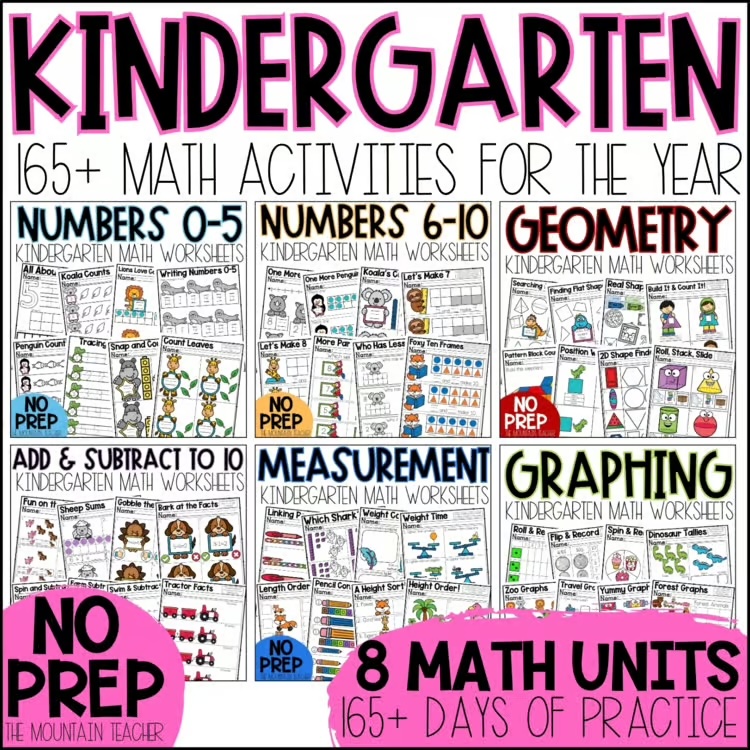
If you love the structure and simplicity of the Kindergarten Measurement Unit, you’re going to adore the Year-Long Kindergarten Math Bundle. This bundle gives you eight complete math units. Here’s a peek at what’s inside:
- Numbers 0-5 Unit
- Numbers 6-10 Unit
- Geometry 2D and 3D Shapes Unit
- Adding and Subtracting Within 10 Unit
- Teen Numbers Unit
- Place Value to 100 Unit
- Measurement Unit
- Graphing Unit
Each unit includes step-by-step teaching guides, hands-on activities, no-prep worksheets, anchor charts, and answer keys, so you can spend less time planning and more time teaching. Plus, because every unit follows the same easy-to-follow framework, your students quickly learn the routines and can jump into new topics with confidence. Say goodbye to late-night lesson prep and hello to a full year of engaging, stress-free math lessons your kids will love! Grab the bundle today and take one thing off your plate!
More Kindergarten Math Help
If you are looking for more practical tips and ideas on teaching math in kindergarten, make sure to check out these blog posts.
Save This Post
Make sure to pin this post on Pinterest so that you have these ideas at your fingertips!
