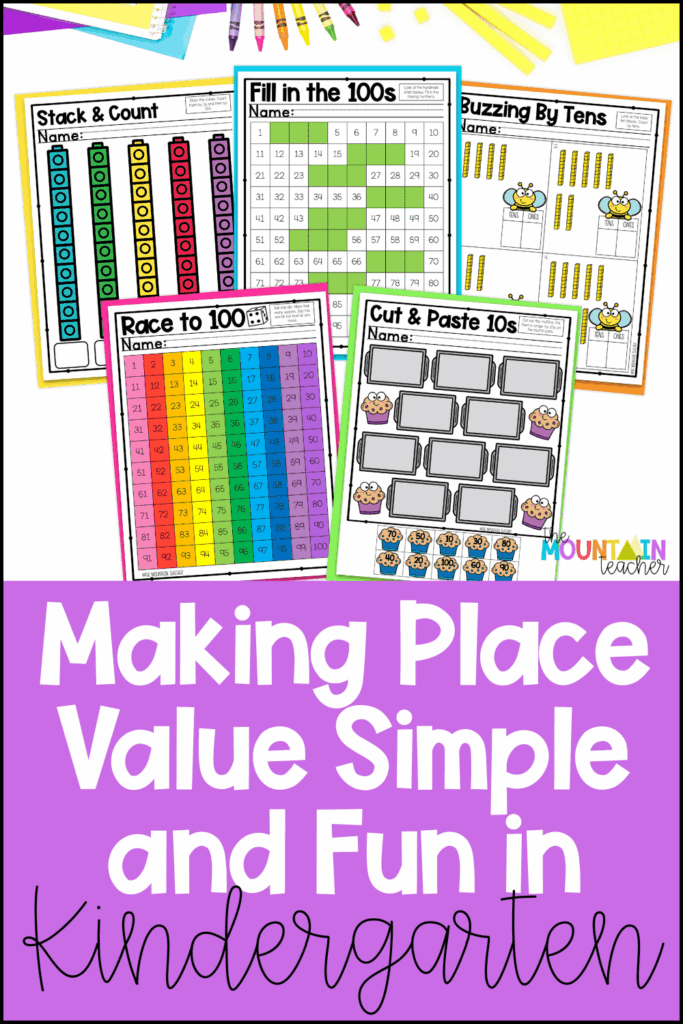
Place value to 100 can feel like a big leap for kindergarteners, but it’s also one of the most exciting milestones of the year! When students finally understand that numbers are made up of tens and ones, everything clicks. Suddenly, 37 isn’t just thirty-seven… It’s three tens and seven ones. That “aha!” moment is the foundation for addition, subtraction, and every math skill that follows. With the right visuals, routines, and hands-on practice, you can make place value simple, meaningful, and fun for every learner in your classroom. Come along to see how!

The Trouble with Teaching Place Value to 100
For many little learners, understanding tens and ones feels abstract at first. They’ve spent months counting objects one by one, so when we suddenly start grouping into tens, it’s a big shift in thinking! To them, “ten” has been just another number in the sequence, not a unit made up of smaller parts.

On top of that, number words can be confusing. For example, the number “14” sounds like “forty”, but means something totally different! It’s no wonder students can mix things up when they’re learning to read, write, and build numbers beyond 10.
That’s why strong place value instruction in kindergarten is so important. Students who understand that two-digit numbers are composed of tens and ones develop flexible thinking that later helps them with regrouping, mental math, and problem-solving. When you give them repeated, hands-on practice with grouping, bundling, and building numbers, you’re building the foundation for all future math learning.
If you’ve ever wondered how to teach these concepts without it feeling overwhelming (for you or your students!), take a deep breath. I’ve got a classroom-tested resource and teaching routine that works! It’s packed with visuals, hands-on learning, and playful practice that helps the learning stick. Ready? Let’s do this!
Start Strong with Visuals
Man oh man, I love a great math visual! They make all the difference when it comes to helping our kids grasp new concepts. Anchor charts are the heart of any good math unit, and place value is no exception. Kids need to see what tens and ones look like, over and over again. In our classroom, I use a couple of anchor charts throughout our lessons on place value.

The first is a hundred chart. This is essential! I like to laminate one for our math center, use one in small groups, and I even print one for each kid to keep in their math folder. These come in handy over and over again and really help my kids visualize what we’re learning. I also use a variety of colors on our hundreds chart to make it even easier to understand and less overwhelming.
As a bonus, if you laminate the charts, students can use dry-erase markers, build with snap cubes, or use mini base-ten blocks to match each number. This turns your charts into a hands-on learning tool and helps kids internalize that every two-digit number can be represented in multiple ways. I also like to use definition posters for ones and tens that include base ten block visuals and numbers. These are great for your lessons as well as a resource in your math center!
Introducing Tens and Ones: A Simple First Lesson
Once you have your posters or anchor charts ready, it’s time for a simple first lesson to introduce tens and ones. Start with something tangible that your students can see and touch. Grab ten-frame mats, base-ten blocks, or even small counters, and begin with a number like 12.
Show students one group of ten and then two extra ones, emphasizing that the “ten” is a full group and the leftover ones are separate. This is also where you can pull out the definition posters I mentioned above to further explain this. Say the number aloud, write it on the board, and have students repeat while pointing to the tens and ones.
Repeat with a few more numbers, gradually increasing the quantity. This hands-on introduction gives students a visual and kinesthetic way to understand that numbers are built from tens and ones, making abstract concepts feel concrete from the very first lesson.
Your One-Stop-Shop for Place Value to 100

After your introduction and simple initial lesson, you might be wondering how to continue teaching this math skill. Don’t worry, friend, I’ve got you covered! Remember that tried and true classroom resource I mentioned? Inside my Kindergarten Place Value to 100 Resource, you will find a 15-day teaching guide, no-prep printable practice activities, anchor charts, and even a test that will help you walk your students through place value concepts to 100. That’s 3 weeks of classroom lessons that are bite-sized, easy to understand, and totally customizable! Here’s how the lessons work:
Kindergarten Place Value Unit Lesson Topics
- Counting to 100 by 1s: Using objects, 100s charts, painting, coloring, and starting at any number to count on.
- Counting to 100 by 10s: Using tens frames, groups of tens, and stacks of tens to visualize counting patterns.
- Place Value to 100: Working with base-ten materials to build, decompose, and compare numbers.
This three-week sequence helps students move from rote counting to conceptual understanding. It’s flexible, too! You can adjust the pace, revisit concepts, or skip around to meet your students’ needs. Now, let’s take a look a closer look at the activities!
No-Prep, Engaging Practice Activities for Place Value to 100
In my lesson pack for teaching place value to 100, you will find a mix of guided and independent activities that keep things fresh while reinforcing understanding. The teaching guide makes it easy to teach counting, grouping, and understanding place value in a clear and organized way. Inside, you’ll find:
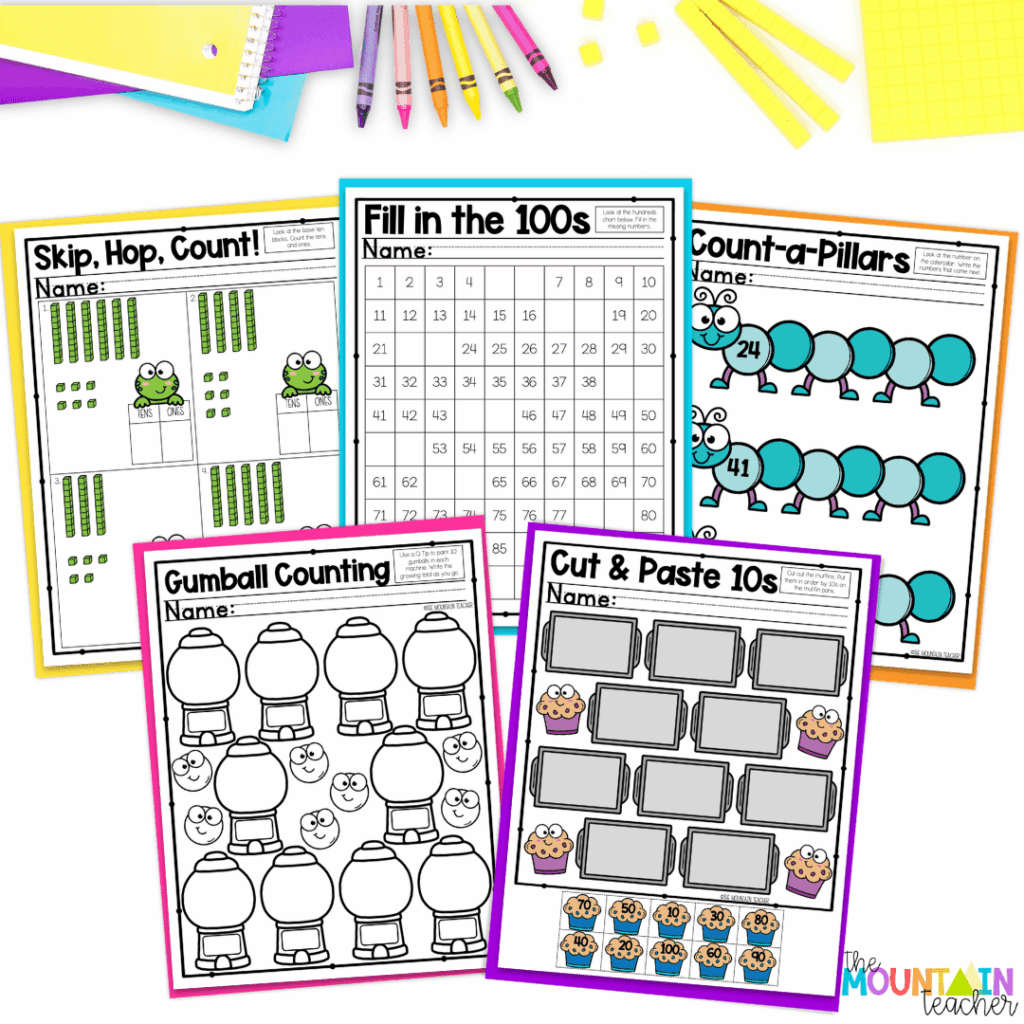
- 15 days of place value to 100 worksheets and activities
- A short post-test for counting to 100
- A 15-day teaching guide
- Anchor charts (100 chart, ones and tens)
- Answer keys
Each activity is designed to be short, meaningful, and developmentally appropriate, no busywork here! You’ll find many opportunities to work with manipulatives like tens frames and counters, base ten blocks, and other hands-on learning materials.
I’ve also got you covered with suggestions for use all the way through the unit! Whether you’re teaching your whole group, working in small groups, or sending practice home, every page builds on what came before, so your students progress with confidence.
How to Use the Place Value to 100 Activities in Your Daily Math Routine
Wondering how it all comes together? Consistency is key! A predictable daily structure helps students feel confident and allows you to quickly spot who needs extra support. Here’s a routine that works beautifully in small groups or whole-class lessons:
Warm-Up
Kick off the day with a quick, engaging counting warm-up. Count aloud together as a class by ones or tens, using a number chart, ten-frames, or a 100s chart. Make it interactive and have students clap, stomp, or use hand signals as they say each number. You can also sing counting songs or play short counting videos for extra engagement. This helps auditory and visual learners connect with the sequence. Try asking questions like, “If we are at 5 and add 10, what number will we land on?” or “What comes after 29?” to build mental math and number sense right at the start of the day.
Mini Lesson

Use your anchor charts, manipulatives, or the included teaching guide to introduce or review a concept each day. This can be done as a whole class lesson or in small groups. Remember to use the teaching guide so you don’t have to plan your topics or sequence on your own! For example, if you’re working on counting by ones to 100, you might use the hundreds chart to count aloud and point to each number as you go. Give your students a copy and a special pointer to follow along and count orally.
Hands-On Building
Remember how I said it’s SO important to include manipulatives in your place value lessons? I meant it! Children learn best with tactile, hands-on learning activities. After your mini lesson, use the same charts along with some fun mini erasers to count again, and this time, instead of pointing, place one small eraser on each number. You can also use base ten blocks and group the numbers in ten if you’d prefer! Either way, this adds another layer of visualization for your students.
Independent Practice
Finally, use the corresponding worksheets or supplementary activities for the day’s lesson. For example, to go along with counting by ones to 100, you might use the “Caterpillar Count and Color” worksheets in the resource. Students can dab paint on each number as they count orally, or color them. This will help reinforce what you’re learning and bring some more hands-on practice to the table!
With this routine, in just 10-15 minutes a day, you can build strong number sense and help every student feel successful! Best of all, with the pacing guide, no-prep activities, and teacher tools, you’ll have everything you need to make this approachable for your classroom routine!
Teach Place Value to 100 Like a Pro
I hope this post gave you some confidence to teach place value to 100 with ease! When you craft a simple routine that includes a fun warm-up, mini lesson, guided practice, and independent practice, it helps students build a deep understanding of numbers to 100. By combining the Kindergarten Place Value Unit, manipulatives, anchor charts, and interactive activities, students experience numbers in multiple ways, strengthening both number sense and confidence! Head on over to TPT to grab the full unit today!

Make Math Streamlined All Year Long
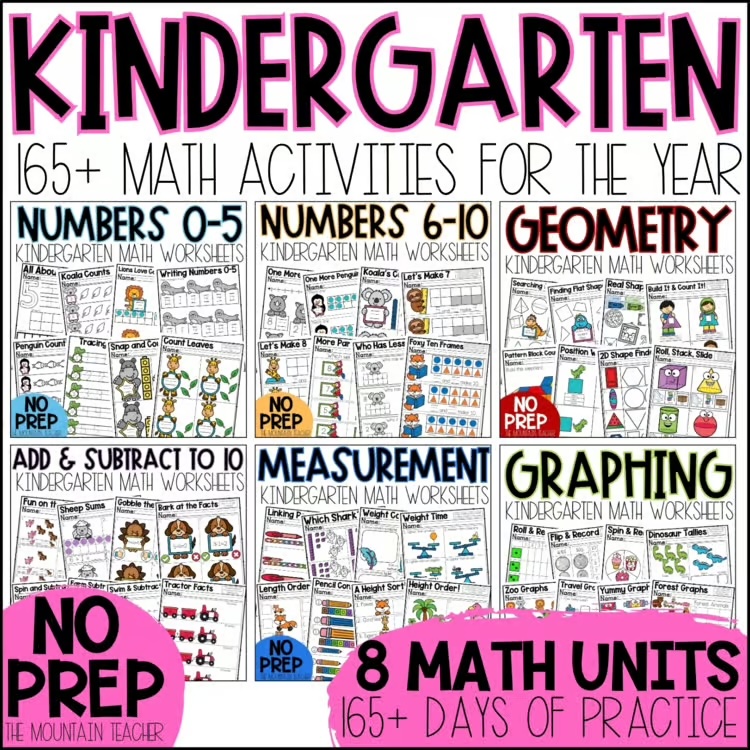
If you love the structure of this Place Value to 100 Unit, you’ll really love having an entire year of math lessons planned for you! My Year-Long Kindergarten Math Bundle includes 8 complete units with everything you need to teach kindergarten math with confidence. Inside you get:
- 8 Kindergarten Math Units
- Step-by-step Teaching Guides
- Unit Assessments and Tests
- Hands-on, No-Prep Activities
- Anchor Charts and Posters
- Answer Keys
Each unit follows the same simple framework, so once your students learn the routine, they can jump right into new topics with ease! If you’re ready to make math planning effortless (and say goodbye to late-night prep sessions!), check out the Year-Long Kindergarten Math Bundle. You’ll love how streamlined and stress-free your lessons become!
Looking for More?
Looking for more tips and ideas for teaching math in kindergarten? Check out these blog posts next:
- Teaching Numbers to 5 in Kindergarten
- 5 Fun & Easy Ways to Teach Numbers 0-10 in Kindergarten
- Teaching Addition and Subtraction in Kindergarten
Save This Post
Make sure to pin this post on Pinterest so you can come back to it when you’re ready!