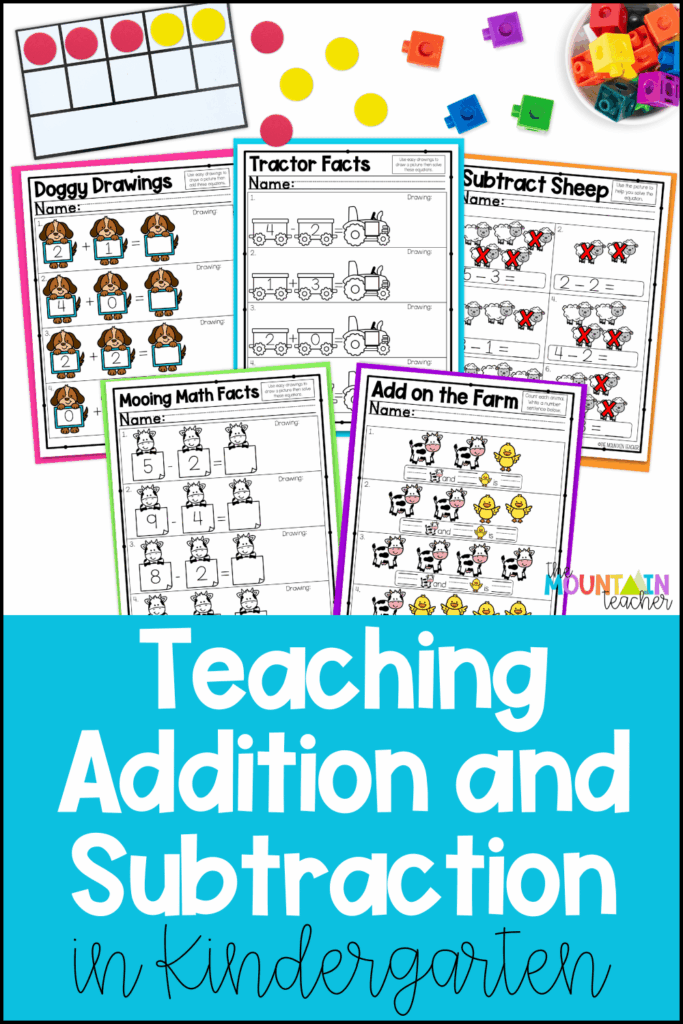
Learning to add and subtract within 10 is one of the biggest math milestones in kindergarten! It’s the point where students start connecting all those number concepts they’ve been building, such as counting, comparing, and making groups, into actual operations. And let’s be honest, seeing that lightbulb moment when it finally clicks is the best feeling! Talk about a teacher win! If you’re ready to support your kindergarteners in the BEST way through learning addition and subtraction, come along to see all my tips and tricks.
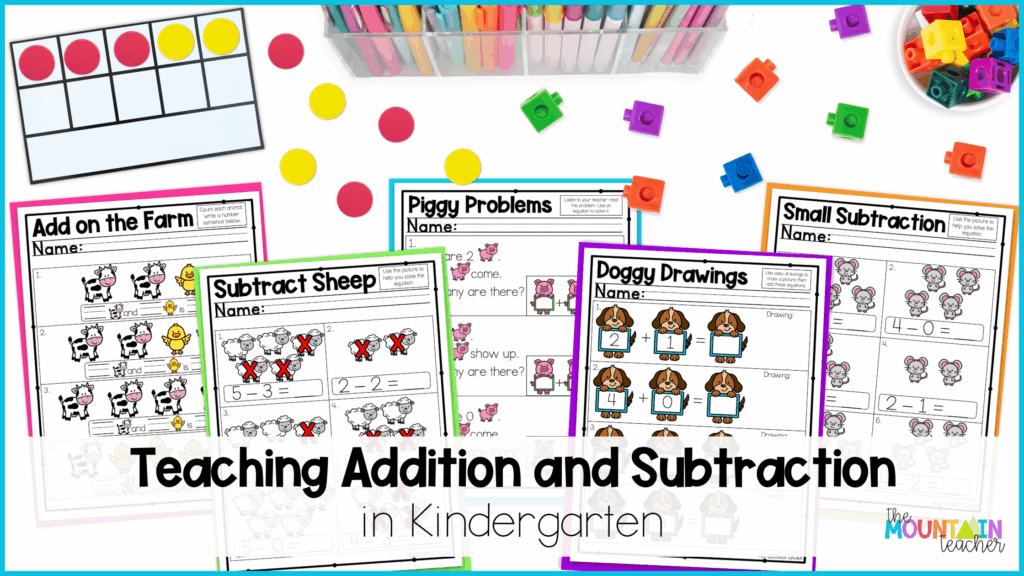
The Key to Teaching Addition and Subtraction Successfully
Teaching addition and subtraction in kindergarten can be surprisingly tricky! Not because the numbers are big, but because the concepts are! At this age, many students are just beginning to understand what numbers represent. Jumping too quickly into abstract equations can leave them feeling lost or frustrated. That’s why it’s so important to start with hands-on, visual learning experiences that make math feel concrete and meaningful.
When students can see how numbers come together or break apart, they’re not just memorizing facts. Instead, they’re truly building number sense. And that’s what we’re really after here, right?! Taking time to lay this strong foundation early on helps prevent confusion later. This will make the transition to more complex math skills smooth and successful. Now, let’s look at how you can do just that in your classroom!
Building a Foundation for Teaching Addition and Subtraction
The key to teaching addition and subtraction at this level is giving students tons of hands-on practice and visual support. You want them to see math as something they can play with, build, and explore, not just numbers on a page. Before diving into equations, students need a strong sense of what numbers mean and an understanding of the concepts of addition and subtraction.
Modeling Addition and Subtraction Concepts
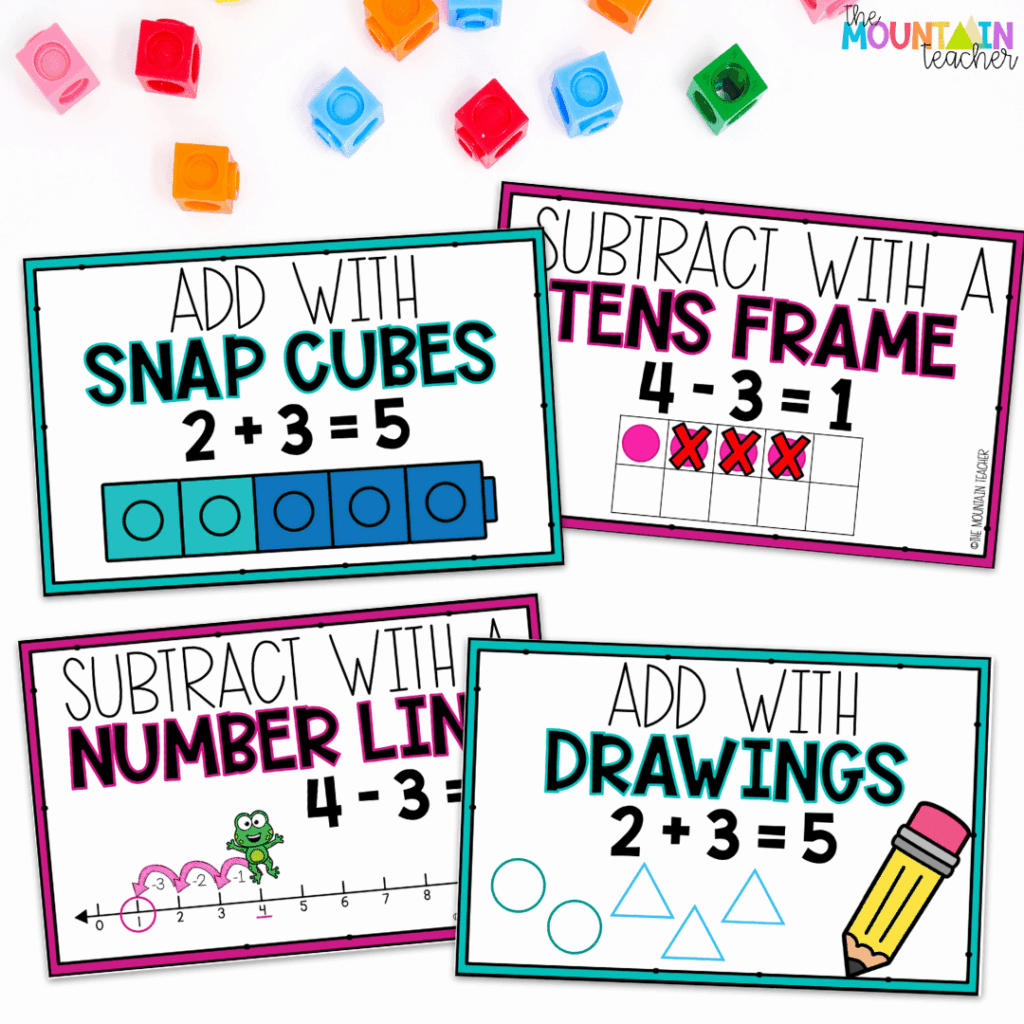
To lay this foundation, I like to start by modeling addition and subtraction concepts with manipulatives like snap cubes, counters, and five frames. When kids can see and touch what’s happening, the concept sticks so much faster.
For example, I might place 3 red snap cubes on the mat and say, “Here are 3 apples.” Then I will add 2 more cubes and model counting them all together while thinking aloud,“Three, four, five, so 3 and 2 more is 5.” Once students understand this joining action, then I will begin to connect that to the equation and equation language like “3 plus 2 equals 5.”
Next, I show the same problem on a ten-frame so students can visually see the group of 3 and the group of 2 join to make 5. Finally, we record the matching equation on the board and draw a quick picture. By exposing them to multiple ways to view the math concept, you increase the likelihood of students understanding the concepts. I always like to conclude by asking students to turn and tell a partner how they saw the answer, which helps to encourage math talk.
Intentional Practice
Once we have done this together a few times, I give students whiteboards or mini ten-frames to try a similar problem themselves while I circulate and coach. This sequence of using concrete manipulatives, visual representation, written equation, and partner explanation helps kids connect the action to the symbol and builds the strong conceptual foundation they need to master adding and subtracting. Keep this method in mind as you work through this concept in your classroom, and you’ll be in great shape!
Visuals for Teaching Addition and Subtraction
Now, let’s talk about some more visual supports you can try in your classroom. Anchor charts are a must when you are introducing new concepts to your students! Not only is it a great teaching tool, but by displaying them in the room, your students will have a visual connection to the lesson, which helps them recall what they learned.

In my Kindergarten Add and Subtract to 10 Unit, I’ve included anchor charts and visuals for every major skill, from adding on a number line to making 10 with rainbow pairs. These posters make it easy to introduce and review strategies again and again. Here are some of the ways I use them in the classroom:
- Visual aids: Hang anchor charts around the room to show how to add and subtract with number lines, drawings, or ten frames.
- Hands-on demonstrations: Model solving problems with cubes or playdough so students can follow along as you explain each chart.
- Story problems: Act out simple word problems with real objects. (“You have 3 pumpkins, and I give you 2 more. How many now?”)
- Math center resource: I also like to laminate a set of these to keep in the math center for quick and easy reference!
I know once you start using anchor charts in your lessons, you’ll be hooked! These visual aids come in super handy as you explain these concepts. Plus, you’ll have way more buy-in from your kids when math feels fun and interactive from the start!
Keeping Students Engaged with Hands-On Math

Let’s face it, group modeling is one thing, but hands-on learning. . . that’s where the REAL magic happens! That’s why I love using manipulatives to keep math active and fun! In this unit, you’ll find plenty of opportunities to use number lines, ten frames, and snap cubes as learning tools. I recommend using them alongside the no-prep worksheets (more on those below) to enhance learning. Here are a few favorite hands-on ideas that pair perfectly with the unit:
- Snap Cube Towers: Build addition and subtraction equations using colorful cubes. Students can physically add or take away to see what’s happening.
- Ten Frame Practice: Use the tens frames to model and practice. I love filling them with mini erasers! These are perfect for reinforcing concepts such as decomposing, making 10, and representing numbers.
- Playdough Math: Have students roll out playdough balls to represent each number in an equation and then squish them as they subtract! This one is everyone’s favorite!
- Number Line Hops: Use painter’s tape on the floor to make a giant number line. Students hop forward for addition and backward for subtraction as you call out numbers.
These simple activities help students visualize how numbers work together, and they love every second of it. You won’t have to fight for their attention or worry that someone is checking out. When math is hands-on and active, everyone stays engaged!
Practice That Builds Confidence
Once your students have explored addition and subtraction through hands-on learning, it’s time to reinforce those skills with structured practice. My Kindergarten Add and Subtract to 10 Unit includes 9 weeks of no-prep worksheets that gradually build fluency and understanding. Inside, you get 5 weeks of adding and subtracting to 5 and 4 weeks of adding and subtracting to 10. Here’s a look at what to expect:

- 2 Weeks of Addition within 5 (number line, counting, fives frame, drawings, snap cubes, true or false, word problems)
- 2 Weeks of Subtraction Under 5 (number line, counting, fives frame, drawings, snap cubes, true or false, word problems)
- 1 Week of Mixed Addition and Subtraction Within 5 (number line, counting, fives frame, drawings, snap cubes, true or false, word problems)
- 1 Week of Addition within 10 (number line, counting, tens frame, drawings, snap cubes, true or false, word problems)
- 1 Week of Making 10 or Parts of 10 (rainbow making 10, tens frames, snap cubes)
- 1 Week of Subtraction Under 10 (number line, counting, tens frame, drawings, snap cubes, true or false, word problems)
- 1 Week of Mixed Addition and Subtraction Within 10 (number line, counting, tens frame, drawings, snap cubes, true or false, word problems)
Each lesson is designed to focus on one small skill at a time and includes a step-by-step guide to make the process simple! The teaching guide breaks everything into a 45-day sequence, so you’ll always know exactly what to teach next. I’ve made sure to align each day with a standard, too, so you’ll be able to rest easy knowing you’re giving your kids exactly what they need to succeed! Plus, answer keys and a short post-test for day 46 are included to make assessing students a breeze.
Using This Resource to Streamline Addition and Subtraction Lessons

What makes this unit special is how manageable it is for real classrooms. You can easily adapt lessons for small groups, whole-group instruction, or independent centers. It’s also perfect for differentiation, whether you’re supporting students who need a little extra help or challenging those ready for more. And because every concept builds on the last, you can move confidently through the unit knowing your students are hitting the key standards without gaps.
Oh, and don’t forget friends, you can tailor this unit to YOUR needs. Pause, review, backtrack, and reteach as needed. While the lesson follows a 45-day sequence, you can take a long as you need to teach your way through it! Here’s everything that’s included in the Kindergarten Addition and Subtraction Unit:
- 45 days of activities and worksheets
- 45-day teaching guide (aligned with standards)
- Anchor charts for all major strategies
- Post-test and answer keys
- Helpful tips and suggestions for making teaching addition and subtraction easier
It’s everything you need to teach addition and subtraction to 10 from start to finish, no extra planning required! If you’ve ever had one of those late-night, frantic planning sessions where you try to piece things together, I know you’ll love this resource! It takes the guesswork out of planning how you teach this essential math skill, while ensuring your kids stay engaged and excited every step of the way.
Kindergarten Addition and Subtraction Made Easy
Teaching addition and subtraction in kindergarten doesn’t have to be overwhelming. With the right visuals, hands-on activities, and a clear plan, you can make learning fun and accessible for every student. The Kindergarten Add and Subtract to 10 Unit has everything you need to keep lessons structured, engaging, and stress-free, and your students will love it!
Make Teaching Kindergarten Math Easier All Year Long!
If you’re super excited about having your kindergarten addition and subtraction lessons planned out, standards aligned, and ready to teach, I know you will absolutely love my Year-Long Kindergarten Math Bundle. This is a HUGE bundle of math activities that includes 8 different units and over 165 days of instruction for kindergarten math. Here’s everything that is included:
- 8 Kindergarten Math Units
- Kindergarten Math Teaching Guides for each unit
- Kindergarten Math Assessments or Tests for each unit
- Hands-on NO PREP activities
- Kindergarten Math Anchor Charts or Posters for each unit
- Answer Keys
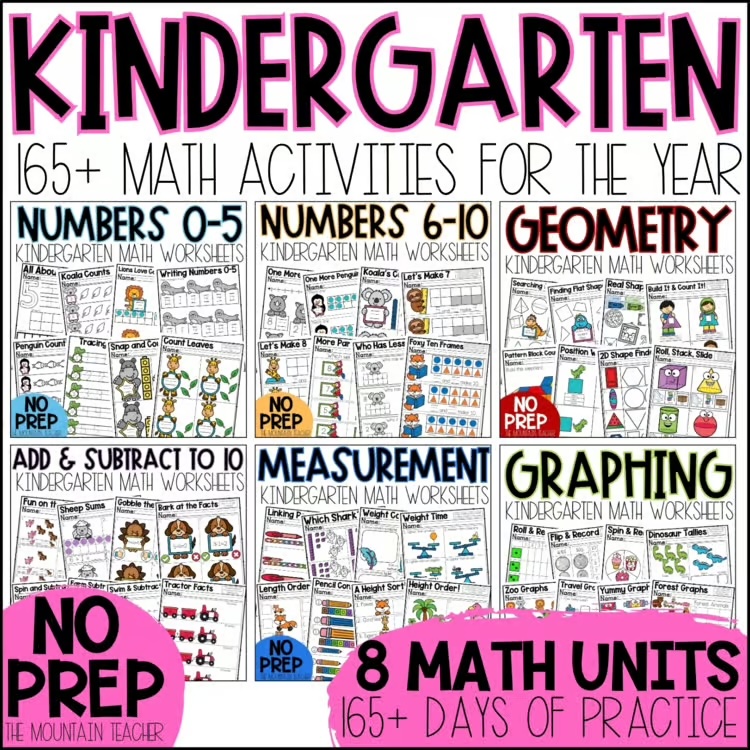
If you’re ready to take advantage of pre-planned, standards aligned, engaging math lessons, make sure to snag the bundle at a great price today! I know you’ll love taking planning kindergarten math lessons off your plate and focus on what you love most instead. . . teaching!
Looking for More?
Be sure to check out these posts next for more math ideas!
- The Best Numbers to 5 Activities for Kindergarten
- 5 Fun & Easy Ways to Teach Numbers 0-10 in Kindergarten
Save These Ideas!
Pin this to your favorite kindergarten Pinterest board so that you will have these ideas for teaching addition and subtraction in kindergarten right at your fingertips.