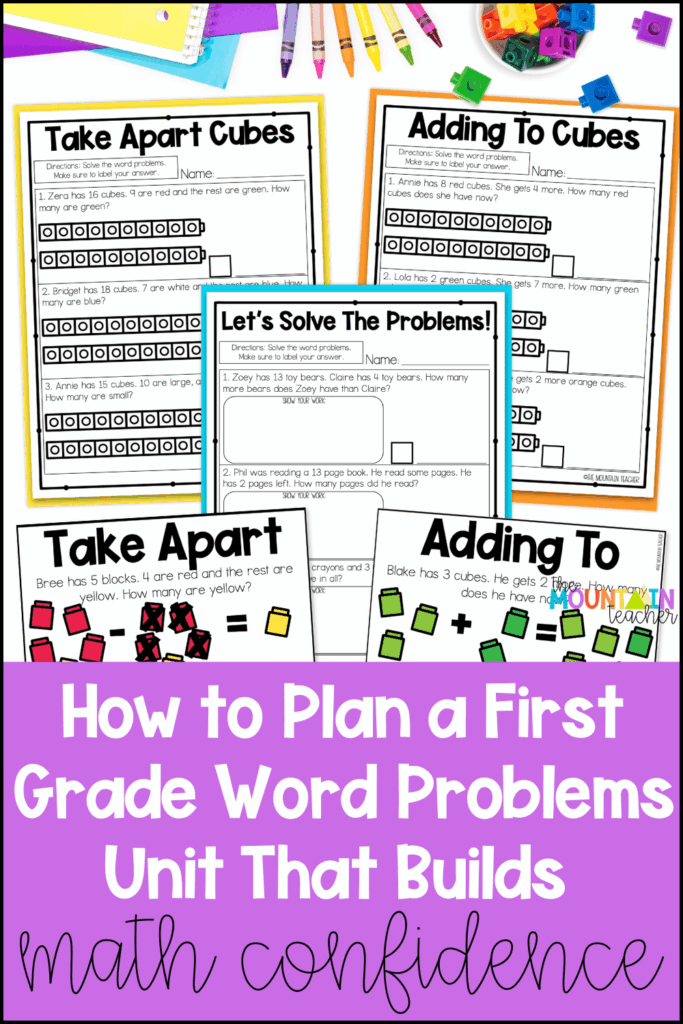
If word problems feel like the point in the year when your class energy dips and confidence starts to wobble, you’re not alone. For many first graders, word problems feel harder than computation. There’s reading, deciding what’s happening, choosing a strategy, solving, and explaining all wrapped into one task. When word problems get rushed or crammed into a short window, students often shut down or start guessing. The good news is, this doesn’t have to be the case. With intentional pacing and a clear plan, first grade word problems can actually become a confidence builder instead of a stress point. Come along to see how this works in a real classroom!
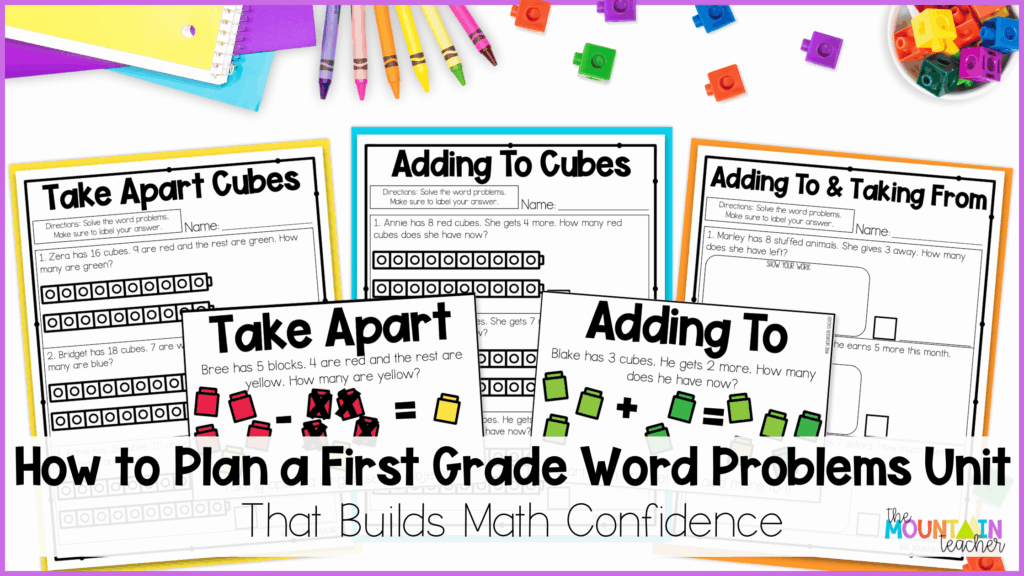
Understanding What Makes a Stellar First Grade Word Problems Unit
If you’re sitting down to plan your first grade word problems unit, you might not even be sure where to start. Luckily, I’ve thought this through in depth, so you don’t have to! I’ve discovered a few key pieces that add up to success. Today, I’m going to walk you through each piece and explain why it matters. Here’s what we’re talking about today:
- Proper pacing
- Pre-test tips
- Visuals & modeling
- Follow-up activities
- A simple daily routine
- End of unit ideas
With each of these pieces to the puzzle, you’ll be able to plan a first grade word problems unit that builds math confidence and makes teaching this skill fun! Ready? Let’s begin!
Why Pacing Makes Such a Difference
Alright, ready for the ultimate game-changer when it comes to first grade word problems? It’s all about proper pacing! Here’s why. . .
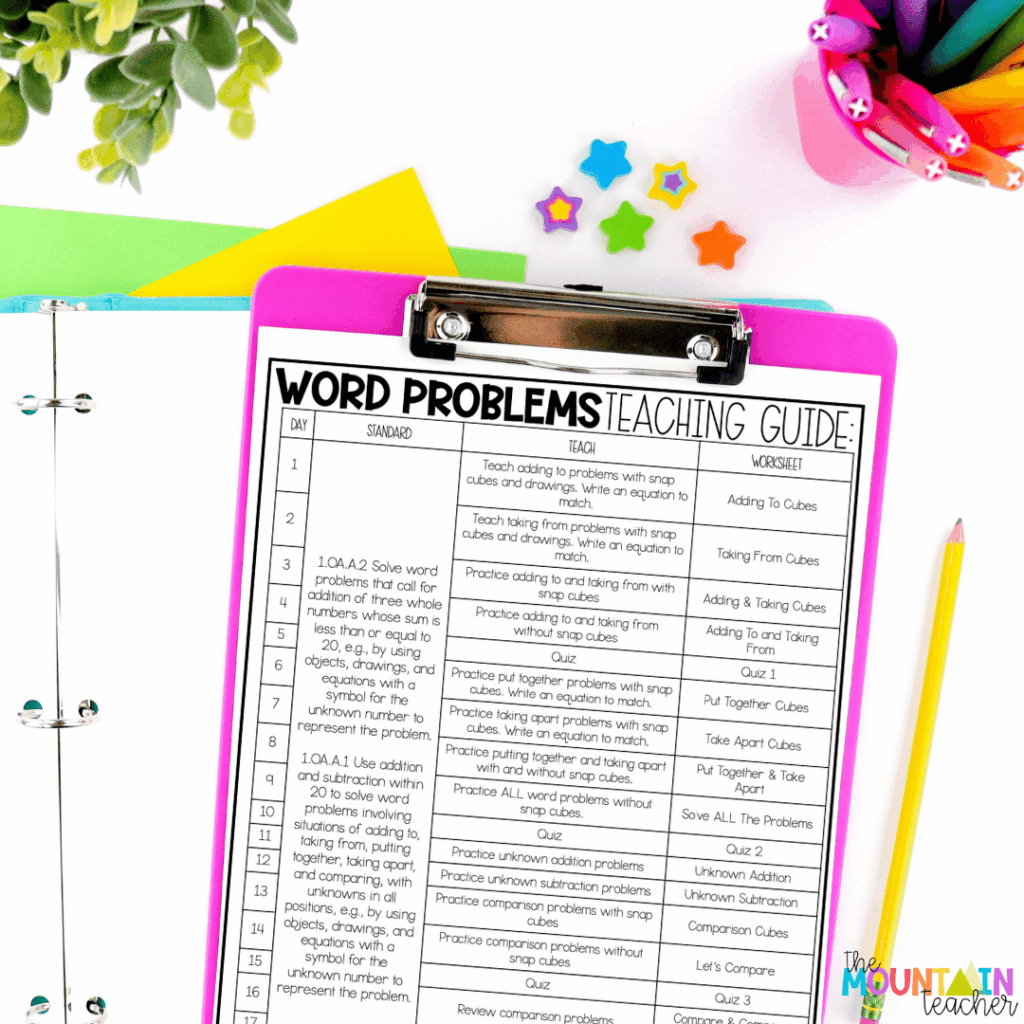
Word problems ask students to do a lot of thinking at once. When everything is introduced too quickly, kids may rely on key words or trial and error instead of understanding the math. Spreading word problem instruction over several weeks gives students time to make sense of each situation type. They learn what the problem is asking, how to model it, and how to stick with it, even when it feels tricky.
Instead of “covering” word problems, you’re teaching students how to approach them with confidence. This is why a thoughtful approach to pacing will make all the difference. And don’t worry, friends, I’ve done the heavy lifting here! In my First Grade Word Problems Unit, I’ve mapped everything out into a 20-day pacing guide, so you’ll know exactly what to cover each day.
Start with a Pre-Test
I’m all about clear visualization when it comes to lesson planning, because I think it helps us manage expectations and know how to work through a new unit. So, let’s take a minute to break this down, starting with how to prepare to start teaching first grade word problems.
First, you’ll start with a simple pre-test or a few sample problems. At this point, this isn’t about grades. It’s about noticing patterns. Can students explain what’s happening in the problem? Do they know how to show their thinking? Are unknown addends especially confusing? A pre-test gives you all the information and a clear starting point for instruction.
From there, you can group your kids by skill level and decide where each group needs to begin. As I mentioned already, the 20-day pacing guide removes the guesswork here and helps you focus on teaching instead of planning. You can see all the skills mapped out, so if you have some kids who are ready for something a little more advanced, you know just where to begin!
Modeling is a Must for First Grade Word Problems
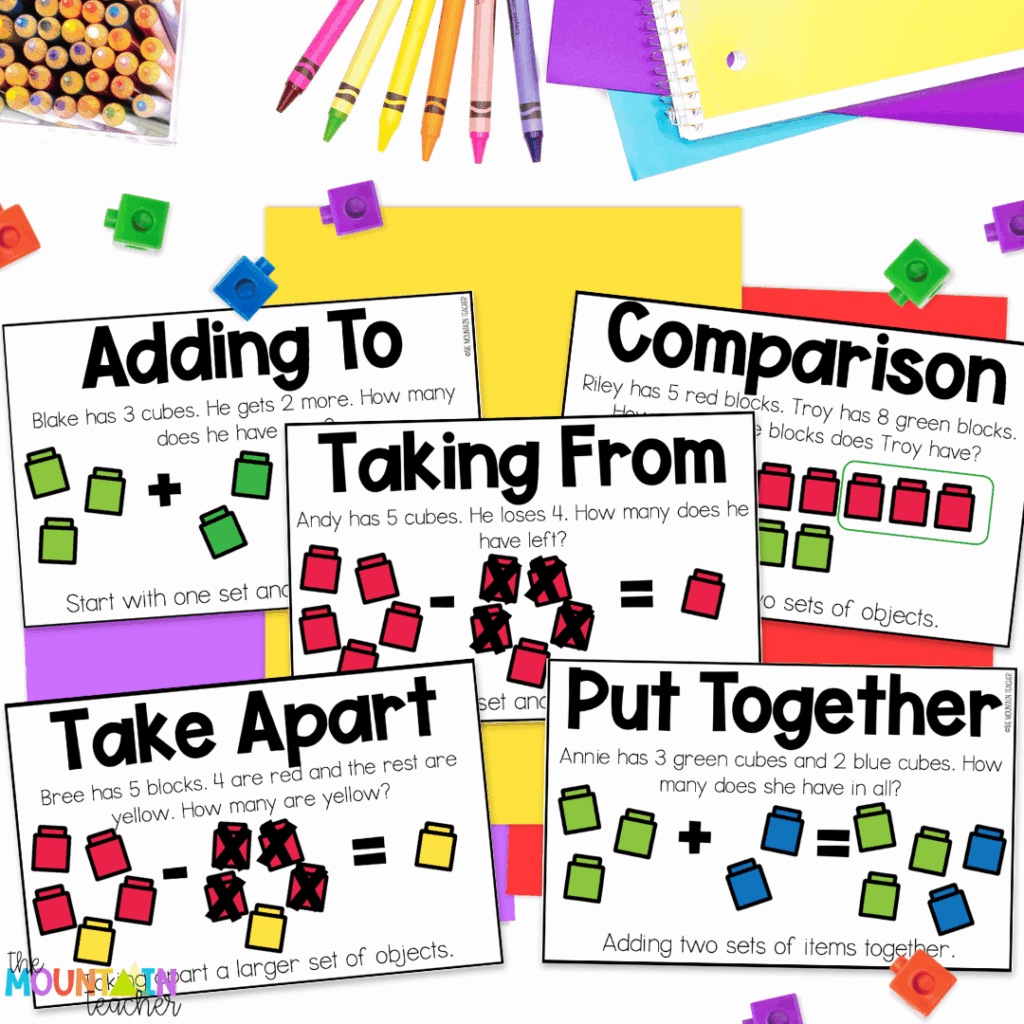
As you’re planning how to run your small groups or whole group instruction, you’ll want to make sure you also have a plan for how to model first grade word problems. This is a MUST when it comes to teaching this skill. Before students complete independent work, they need to see exactly what success looks like.
Anchor charts are especially helpful here! In my First Grade Word Problems Unit, I’ve included 6 different anchor charts that focus on different skills. Use these as you introduce new skills to further model when you’re focusing on. Keeping them visible gives students something to refer back to when they feel unsure!
After talking through an anchor chart, pull out some hands-on learning manipulatives for the best results. Read a problem aloud together and then build it using snap cubes or counters. Talk through what each part of the problem means. Then show how that model connects to a picture and an equation. On Day 1, this might take most of your lesson time, and that’s okay. Once students understand how to represent their thinking, worksheets become meaningful practice instead of a guessing game.
Choosing Meaningful Worksheets & Activities
After your visuals and modeling with manipulatives, it’s time for some follow-up practice. Worksheets are useful when they’re purposeful and aligned, but students benefit from variety. This is exactly why my First Grade Word Problems unit is jam-packed with engaging worksheets that are actually fun for students! They will get more opportunities to use manipulatives and show what they’ve learned. There are worksheets for all of the focus skills, including:
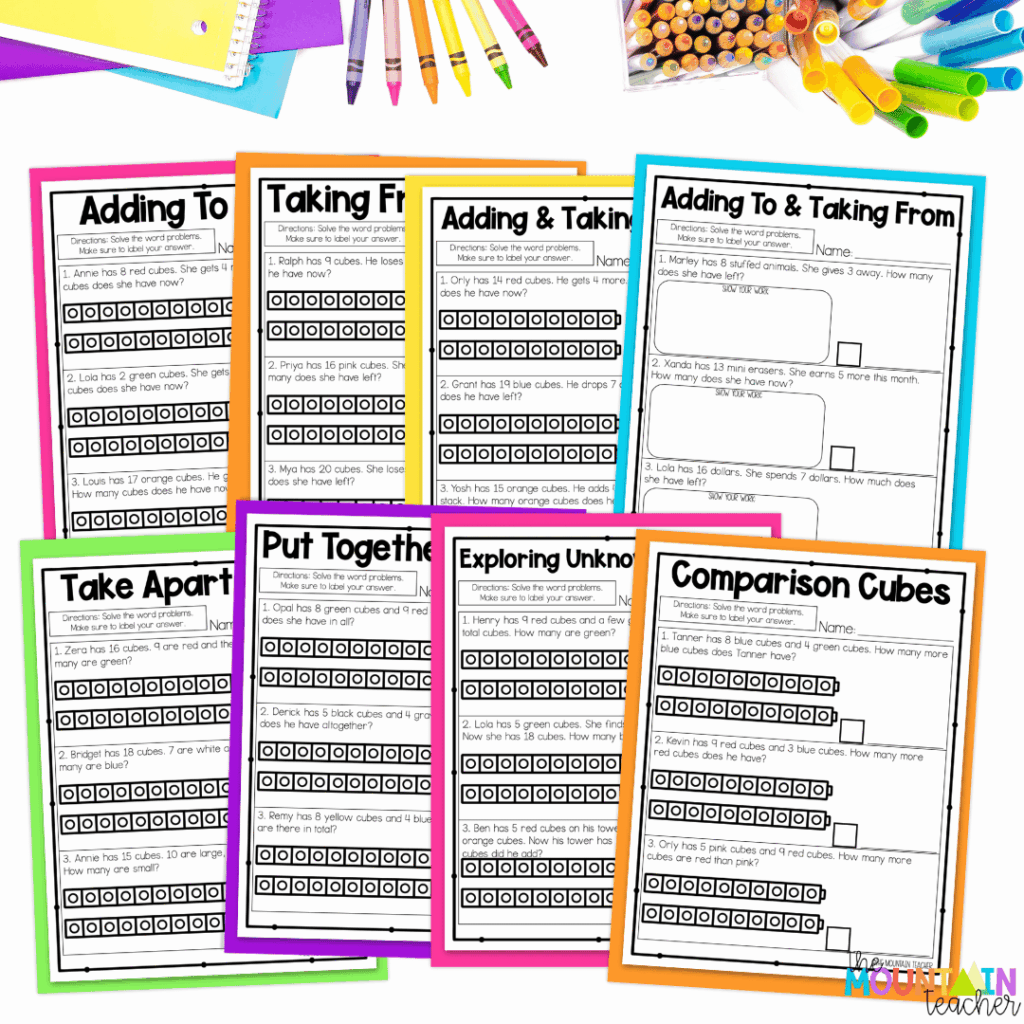
- adding to word problems
- taking from word problems
- putting together word problems
- taking apart word problems
- comparison word problems
- unknown addends word problems
- unknown subtraction word problems
- using snap cubes to show work
- using pictures to show work
- labeling answers
- addition and subtraction up to 20 word problems
In addition to the paper worksheets, I’ve also included digital options. These are great for 1:1 classrooms, technology centers, or even homework options. I also love to project the digital activities during our lesson for some interactive guided practice. No matter what you choose, the wide variety of skills and worksheet types means that kids get the practice they need without getting bored.
Your Daily Routine for Success with First Grade Word Problems
Now, let’s put it all together. A simple daily routine might look like this:
- Model together using anchor charts or digital activities
- Practice with manipulatives
- Complete a worksheet
- Share strategies
This structure keeps lessons predictable and helps students stay engaged. It also makes it easier for you to spot who understands and who needs extra support!
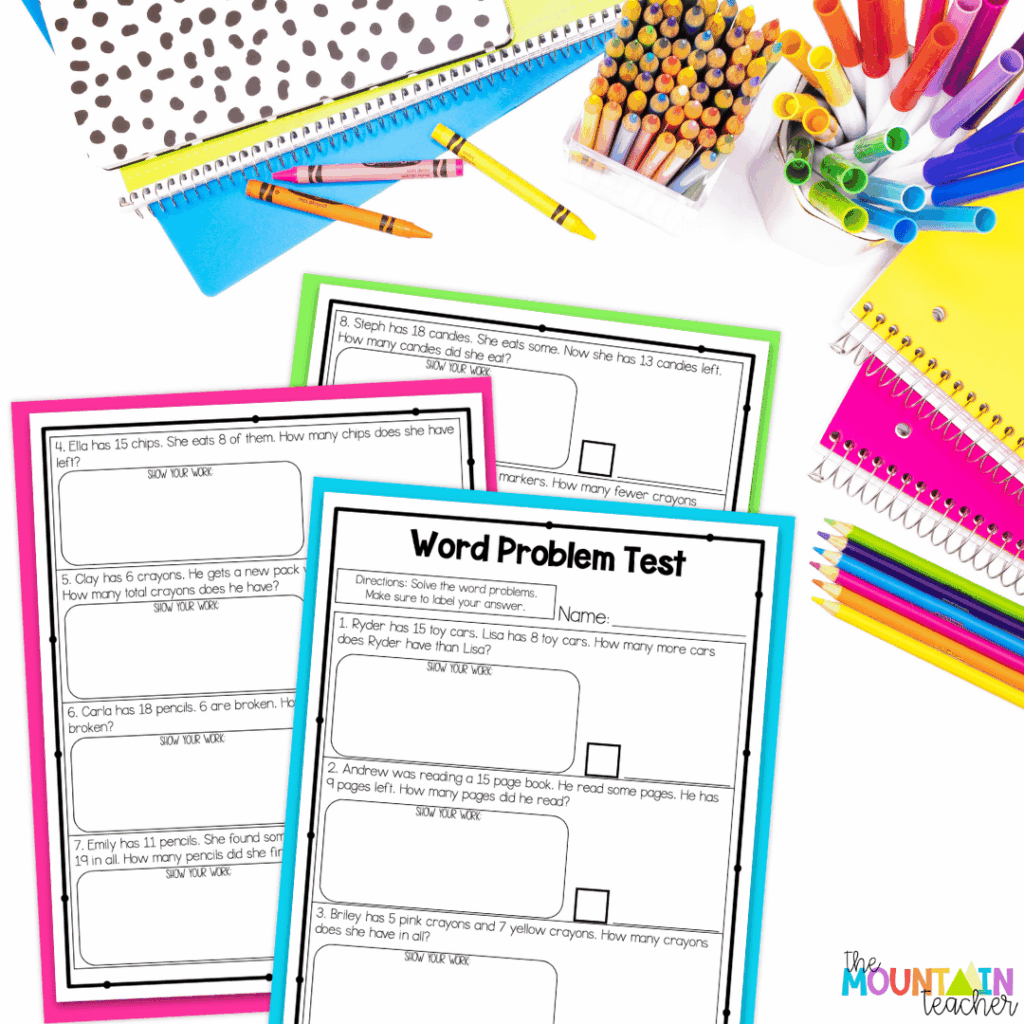
Assess and Test
Last, be sure to follow up with a post-test to see where your kids land when the unit concludes. This unit includes 3 quizzes and a post-test. These can be used over the 4-week teaching period to provide insight as you go. Reteach as needed, slow down, or speed up as you see fit. While the pacing guide is designed to make it super simple, it’s also made for you to adjust, as needed, to fit the needs of your classroom.
A Ready-to-Use Word Problems Unit That Supports This Approach
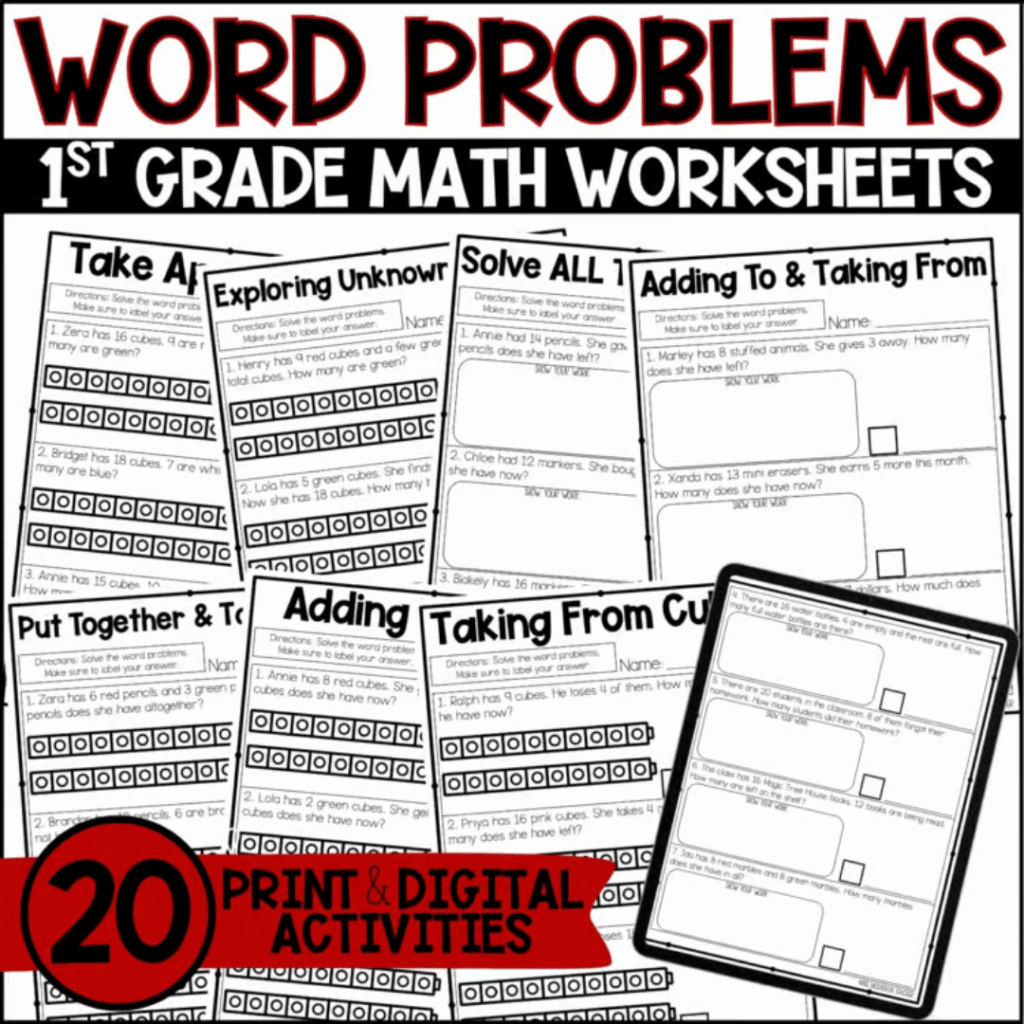
If you want a word problems unit that already follows this pacing and structure, the 1st Grade Word Problems Unit is designed to walk you through it step by step. It includes:
- 20 days of worksheets and activities
- A pre-test and post-test
- Quizzes for progress checks
- A 20-day teaching guide
- Anchor charts
- Printable and digital options
The lessons cover addition and subtraction word problems using objects, drawings, and equations, so students aren’t left wondering how to start. Everything is laid out clearly, which makes it especially helpful if this is your first year teaching word problems or if you want a smoother system. If word problems currently feel messy or inconsistent, this unit gives you a clear plan you can use right away. Grab it today to streamline your planning and make this topic fun and easy to teach!
Want This Kind of Structure for the Entire Year?
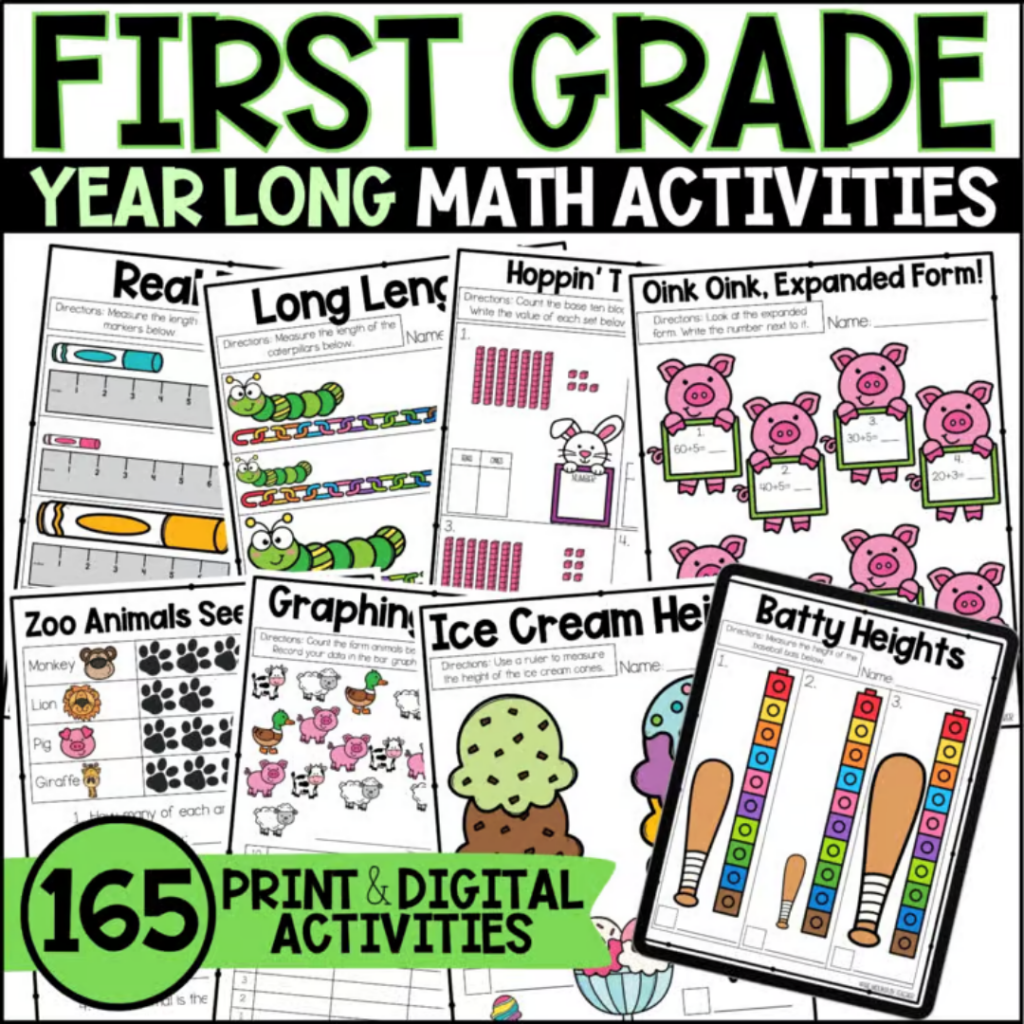
If you find yourself wishing every math unit felt this organized, the First Grade Math Bundle takes that same predictable routine and applies it across the whole year. Instead of planning unit by unit, you’ll have math lessons ready for all 37 weeks, complete with pacing guides, assessments, and consistent formats that students quickly get used to. The bundle includes:
- 8 full math units
- Teaching guides for each unit
- Quizzes and assessments
- Anchor charts
- Printable and digital versions
This is especially helpful if you’re tired of piecing things together or if you want math planning to feel calmer and more manageable from the start of the year. Grab the full-year bundle to take the guesswork out of planning for the whole year!
Make Word Problems Feel Doable Again
I hope you’re leaving this post with a surge of confidence to teach this topic. Word problems don’t have to drain energy or confidence. With steady pacing, clear modeling, and the right tools, students can learn to approach them with confidence and stamina.
If you want a ready-to-go plan that helps students understand word problems instead of fearing them, take a closer look at the First Grade Word Problems Unit. And if you want that same clarity and consistency across your entire math block, the First Grade Math Bundle can simplify planning for the whole year.
Looking for More?
Check out these posts next for more first-grade math ideas!
- How to Make Back to School Math Activities Successful
- Setting Up Practical Math Centers that Show Results
Save This Post
Make sure to pin this post on Pinterest so that you can come back to it when you’re ready to dive into teaching first grade word problems.